

Daily Dose Of Jazz…
Anthony K. Wright was born October 9, 1959 in London, England and began playing brass at school, before moving to clarinet at the age of 12, and later picked up the tenor saxophone. Turning professional in the early 1980s he played as a session musician and ran various rock bands in night clubs and on the gig circuit in London and South Wales. He maintained his interest in the clarinet, and in the early Nineties began playing jazz on the West Country ciecuit, whilst teaching Performing Arts at North Devon College.
Moving to Surrey late in the decade he is now widely known as a reeds teacher, with students ranging from adult beginners to advanced Grade 8 and Diploma-level specialists. His forte is improvisational jazz. leads a cool jazz band, Anthony’s AllStars, which features both clarinet and saxophone. He also plays with Riverside Shuffle Band and Vic Cracknell’s Swing Band, and other local bands.’
Tenor saxophonist Anthony Wright continues to perform and spends much of his time composing, arranging and creating his own recordings of what he has labeled intelligent pop..
Get a dose of the musicians and vocalists who were members of a global society integral in the making and preservation of jazz for over a hundred and twenty-five years…

More Posts: bandleader,clarinet,history,instrumental,jazz,music,saxophone
Daily Dose Of Jazz…
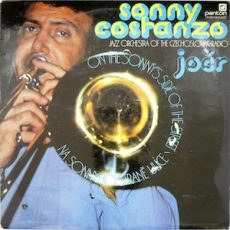
Sonny Costanzo was born Dominic on October 7, 1932 in Greenwich Village, New York City, New York. Academically trained, he received additional education from on-the-road experience playing trombone with big bands.
Costanzo was a member of the Clark Terry Big Band, Woody Herman And His Orchestra, Woody Herman And The Swingin’ Herd. He led the Sonny Costanzo Big Band, and the Sonny Costanza Orchestra,
He recorded five albums as a leader or co-leader with Na Sonnyho Straně Ulice, Glenn Zottola, Golden Strings of Prague and the Czech Radio Big Band. Two of them are quartet led.
Trombonist and bandleader Sonny Costanzo died on December 30, 1993 in New Haven, Connecticut.
More Posts: bandleader,history,instrumental,jazz,music,trombone
Daily Dose Of Jazz…
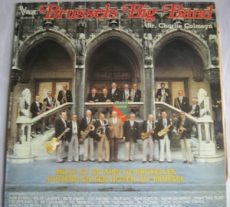
Alphonse “Al” Goyens was born October 1, 1920 in Wetteren, Belgium. He took piano lessons as a child but abandoned them at the age of twelve. In 1936, he bought a trumpet and began playing music again, teaching himself and playing with amateur bands. Completing a degree in industrial engineering, he was interned in Germany at the outbreak of the war and had to stop playing. Starting again he played too intensely, which paralyzed his lips, but overcame this situation through careful practice.
His return from captivity saw him a member of orchestras led by Henri Van Bemst and Jean Omer, making his first recordings with the latter. He then joined the orchestra of Léo Souris who played for the American army in Germany. Returning to Belgium, Al joined other musicians to form the Orchestre régulier du Cosmopolite , which gave him the opportunity to perform with major names of the jazz scene who were guests in Brussels.
In 1949 he and his orchestra again toured for the US Army, performing in Germany, the Azores, and the USA. Goyens led his orchestra for nearly a decade from 1949 featuring Jacques Pelzer, Bobby Jaspar, Francy Boland, Jean Warland, Freddy Rottier, and occasionally Don Byas and Kenny Clarke.
Once again he went on to work for the US Armed Forces and later with an international orchestra in Spain and the United States. Al later arranged and played in the Brussels Big Band. His favorite trumpeters were Clifford Brown, Dizzy Gillespie, and Clark Terry but his playing was more reminiscent of Harry Edison.
Trumpeter, arranger and orchestra leader Al Goyen played flugelhorn, and bugle, who never recorded as a leader, appreciated the sound of the muted trumpet, died on January 30/31, 2008 in Forest/Vorst, Belgium.
More Posts: arranger,bandleader,bugle,flugelhorn,history,instrumental,jazz,music,trumpet
Daily Dose Of Jazz…
Jerome Don Pasquall was born on September 20, 1902 in Fulton, Kentucky, and grew up in St. Louis, Missouri. As a child, he played the mellophone in brass bands. He served in the United States Army in 1918 in the 10th Cavalry Band, and picked up clarinet during this time.
Following his discharge, Pasquall played with Ed Allen in 1919 and then found work on riverboats playing with Charlie Creath and Fate Marable. He moved to Chicago, Illinois to study at the American Conservatory, and played with Doc Cook’s Dreamland Orchestra as a tenor saxophonist.
Departing for Boston, Massachusetts he attended the New England Conservatory of Music. In 1927 and 1928, he played with Fletcher Henderson. Following this he returned to Chicago and led his own ensemble, in addition to playing with Freddie Keppard, Dave Peyton, Jabbo Smith, Tiny Parham, and Fess Williams.
He toured Europe with the 1934 Blackbirds, Eddie South, Henderson again in 1936, and Noble Sissle from 1937 throught World War II in 1944. After the mid-1940s, he did freelance work in New York City with Tony Ambrose among others, and gradually receded from active performance.
Clarinetist, alto saxophonist, mellophonist Jerome Don Pasquall, who never led his own recording session, dies on October 18, 1971 in New York City, New York.

More Posts: bandleader,clarinet,history,instrumental,jazz,mellophone,music,saxophone
Daily Dose Of Jazz…
Joseph G. Cocuzzo was born on September 17, 1937 in Boston, Massachusetts and raised in a family of enthusiastic amateur musicians. He began playing drums as a small child, later studied extensively, and played in many bands in and around his home town.
In the late 1950s he was residing in Chicago, Illinois where he joined the big band led by Ralph Marterie before moving on to the Woody Herman band. By the early Sixties he worked with Don Ellis, Les and Larry Elgart, Gary McFarland and Tony Bennett. The mid-70s saw Joe returning to Bennett for a five-year engagement, then he was with Harry James before beginning a decade-long spell with Rosemary Clooney.
The subtle skills he displayed with Bennett and Clooney found him in demand as a singer’s accompanist and he also worked with Vic Damone, Julius LaRosa, Susannah McCorkle and Sylvia Syms. Throughout this period and on through the new millennium, Cocuzzo was in frequent demand for recording sessions, appearing on albums by many artists including Buddy De Franco and Dick Sudhalter.
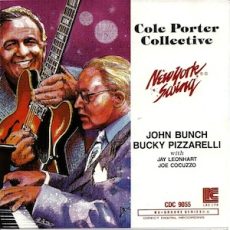
During his time with Clooney Cocuzzo had begun writing song lyrics, and he went on to collaborate with several composers, notably the Brazilian Ivan Lins. A smooth and swinging player, always aware of the subtly supportive role required by many leaders, especially singers, Cocuzzo was a member of New York Swing.
Drummer and songwriter Joe Cocuzzo, who never recorded as a leader but has 77 recordings as a sideman, died on July 31, 2008 in New Jersey.
<!– wp:paragraph —
More Posts: drums,history,instrumental,jazz,music,songwriter