

Daily Dose Of Jazz…
Mark Jay Levine was born on October 4, 1938 in Concord, New Hampshire and began playing the piano at the age of five, trombone in his early teens. Attending Boston University, graduating with a degree in music in 1960, he also studied privately with Jaki Byard, Hall Overton and Herb Pomeroy.
Moving to New York City in the Sixties he freelanced and then played with musicians Houston Person, Mongo Santamaría, and Willie Bobo from 1971 to 1974. Levine then moved to San Francisco, California and played with Woody Shaw for two years. His debut album was made as a leader for Catalyst Records in 1976.
He went on to play with the Blue Mitchell/Harold Land Quintet, Joe Henderson, Stan Getz, Bobby Hutcherson, Luis Gasca, and Cal Tjader. From 1980 to 1983, he concentrated on valve trombone, but then returned to playing mainly the piano. He then led his own bands, and recorded for Concord as a leader in 1983 and 1985. From 1992 Mark was part of Henderson’s big band. He created a new trio in 1996 and recorded it for his own, eponymous label. His Latin jazz group, Que Calor, was formed in 1997.
He put on his educator hat in 1970, teaching in addition to private lessons at Diablo Valley College, Mills College, Antioch University in San Francisco, San Francisco Conservatory of Music, Sonoma State University, and the JazzSchool in Berkeley. Levine wrote two method books: The Jazz Piano Book, and The Jazz Theory Book.
Pianist, trombonist, composer, author and educator Mark Levine, whose album Isla was nominated for a Grammy Award for Best Latin Jazz Album, died of pneumonia on January 27, 2022 at the age of 83.
Get a dose of the musicians and vocalists who were members of a global society integral in the making and preservation of jazz for over a hundred and twenty-five years…
Mark Levine: 1938~2022 | Clarinet, Composer, Educator, Director, Producer
More Posts: author,bandleader,composer,educator,history,instrumental,jazz,music,piano,trombone
Daily Dose Of Jazz…
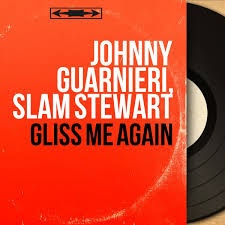
Sammy Weiss was born on September 1, 1910 in New York. He started in the 1930s with the Gene Kardos Society Orchestra, then gigged and recorded with Benny Goodman, Adrian Rollini, Wingy Manone, Miff Mole, Tommy Dorsey and Artie Shaw.
The 1940’s had Sammy concentrated on free-lance recording with Louis Armstrong and Johnny Guarnieri. He eventually led his own popular dance band in hotels and dance halls around Los Angeles, California.
He also worked with Louis Armstrong, Paul Whiteman, Louis Prima, and Erskine Hawkins, among others. After moving to California in 1945, Weiss led his own successful orchestra and worked freelance. He led bands throughout the ’60s, As an actor, Weiss was seen in Shower of Stars and The Jack Benny Program.
Drummer Sammy Weiss died on November 18, 1977 in Encino, California.

More Posts: drums,history,instrumental,jazz,music
Daily Dose Of Jazz…
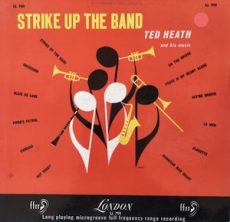
Roy Willox was born into a musical family in Welwyn, Hertfordshire, England on August 31,1929. At 16 he had a brief spell with Johnny Claes in 1945 and then with other bands before joining Ted Heath from 1950 to 1955.
About this time he worked in the jazz clubs in a group with Keith Christie, and with Jack Parnell followed with extensive freelance work in television, radio and the theatre. The jazz scene saw Willox in Harry South’s band during the 1960s and 1970s and returned to the Heath band for dates in the 1960s and 1970s.
He was in demand through the 1960s for many jazz big band dates, notably with Harry South and Tubby Hayes. He played throughout the 1990s and 2000s, first with The Ted Heath Band, (then led by Don Lusher), and in Lusher’s own big band until it’s last concert in 2007. He played in the Ted Heath band’s farewell concert at the Royal Festival Hall, London in 2000.
A fluent saxophonist, clarinetist and flutist Roy Willox, whose main instrument is alto saxophone, continues to perform and record.

More Posts: bandleader,clarinet,flute,history,instrumental,jazz,music,saxophone
Daily Dose Of Jazz…
Warren Daly was born on August 22, 1943 in Sydney, Australia. Early in his career, he visited the United States where he worked with distinguished artists, among them Buddy De Franco.
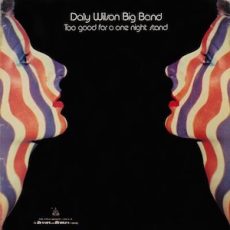
He co-founder of the Daly-Wilson Big Band with trombonist/arranger Ed Wilson in 1968. In 1975 with corporate sponsorship, the band toured internationally including the Soviet Union. With the band splitting up, Warren formed the Warren Daly Big Band.
In the 1991 Queen’s Birthday Honours, Daly was awarded the Medal of the Order of Australia (OAM) “for service to music as band leader and drummer”.
Drummer Warren Daly continues to perform and record.
More Posts: bandleader,drums,history,instrumental,jazz,music
Daily Dose Of Jazz…
Leslie Priestley Carew was born on August 15, 1908 in London, England but spent his formative years in Shipley, Yorkshire. The son of theatrical parents, it wasn’t till after working in the local mills in his post-school years that he found himself drawn to music and the trombone, upon which he progressed rapidly.
Known to the music world as Les, he began playing in dance bands and eventually returned to London and caught the eye and ear of Jack Hylton. In the 1930s he became a featured trombonist in the Jack Hylton Orchestra during their international heyday performing all over Europe.
He was known for his comedic performances, as an actor and a natural comedian, Carew appeared with his Hylton bandmates in films She Shall Have Music (1935), The Playboy (1938) and Calling All Stars (1937).
Leaving Hylton in the Forties he added vocals to his performance arsenal and recorded as a member of Bert Ambrose and His Orchestra. By the time World War II ensued, military service was curtailed by health deficiencies, and during the latter part of it he led the Ambrose Octet.
After the war Carew freelanced in London with Geraldo, Eric Robinson, Mantovani, George Melachrino and many others. In 1970 his first wife, Elsie, died and he subsequently married the music lecturer Avril Dankworth – founder of the children’s music camps bearing her name – a partnership which lasted the rest of his life.
Trombonist Les Carew died of Parkinson’s disease, shortly after completing his autobiography in 1994 in St Albans, Hertfordshire, England.