

Daily Dose Of Jazz…
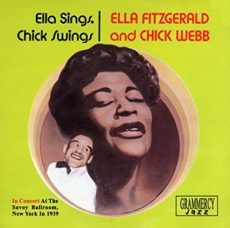
Beverly Peer was born on October 7, 1912 in New York City and started out playing piano professionally early in his career before switching to bass. He worked with Chick Webb from 1936 to 1939 and continued to play in the orchestra under the direction of Ella Fitzgerald.
In 1942 he joined the Sabby Lewis Orchestra and also worked extensively as an accompanist for Sarah Vaughan, Lena Horne, Johnny Mathis, and Barbra Streisand among others. The 1950s and 1960s saw him working with pianists Barbara Carroll and Ellis Larkins. Performing with Bobby Short from the 1970s into the 1990s, Peer was often heard performing with him at the Cafe Carlyle in New York City.
Among his many recording sessions were Ella Fitzgerald’s release Ella Sings, Chick Swings with the Chick Webb Orchestra and Lucky Thompson & His Lucky Seven with Harold “Money” Johnson, Jimmy Powell, Clarence Williams, Earl Knight, Beverly Peer and Percy Brice.
Aside from music, late in his career Peer also had cameo roles in films such as Hannah and Her Sisters and For Love or Money. Double bassist Beverly Peer passed away on January 16, 1997.

Daily Dose Of Jazz…
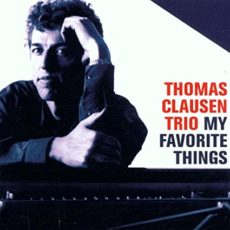
Thomas Clausen was born on October 5, 1949 in Copenhagen, Denmark and grew up in a musical home with his father playing a strong and able jazz piano in swing style, his mother from a family of singers. He began playing very young with great artists of jazz and his energetic and lyrical piano playing was discovered by Dexter Gordon in 196. During that same year he joined Palle Mikkelborg’s projects and groups and was soon playing regularly with the bass players Niels-Henning Orsted Pedersen, Bo Stief, and Mads Vinding, as well as with the drummers Alex Riel, Bjarne Rostvold, and Kasper Winding.
Accompanying a number of international jazz stars visiting Copenhagen, Thomas has performed with Ben Webster, Elvin Jones, Jan Garbarek, Joe Henderson, Phil Woods, Lee Konitz, Stan Getz, Chet Baker, Eddie ”Lockjaw” Davis, Jackie Mclean, Gary Bartz, and Johnny Griffin, just to mention a few. In the mid 80’s he was a regular member of the Peter Herboltzheimer International Big Band in Germany.
Clausen formed his own band in 1978, when he started Mirror, a group that recorded the first LP with his own compositions and included Jan zum Vohrde on saxophone and flute, bassist Ole Skipper Moesgaard, and Aage Tanggaard on drums. 1979 saw him leading his first jazz trio, with bassist Niels-Henning Orsted Pedersen and once again Tanggaard on drums, releasing two albums by 1983. Towards the end of the decade another trio emerged with Mads Vinding and Alex Riel and participated in the first Jazzpar Prize concerts in Copenhagen, Odense, and Paris in 1990, joined by with Gary Burton. The collaboration with Burton lasted a couple of years and led to two recording sessions.
Through the Nineties he delved into Brazilian music, recording and performing with many who were living in Denmark and Germany. His Brazilian Quintet continued into the new millennium, performing and touring throughout Europe. At 67, pianist, composer, arranger and bandleader Thomas Clausen has received the Ben Webster Prize, The Jasa Prize, The Fanfare Prize, and The Danish Society for Jazz, Rock and Folk Composers Prize, received support from the Danish Arts Foundation for fifteen consecutive years from 1993 to 2007 and continues to compose, perform as a leader and co-leader and to tour.
More Posts: piano
Daily Dose Of Jazz…
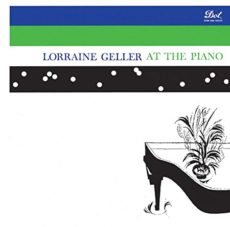
Lorraine Geller was born Lorraine Winifred Walsh on September 11, 1928, in Portland, Oregon. She started out with the all-female big band, Sweethearts of Rhythm, a successor to the International Sweethearts of Rhythm.
In 1950 she met alto saxophonist Herb Geller, who was then playing with Claude Thornhill, and married him the following year. Together they moved to Los Angeles, California where they played with many musicians of the West Coast jazz scene, such as Shorty Rogers, Zoot Sims, Stan Getz, and Red Mitchell to name a few. Lorraine also played on sessions with Charlie Parker and Dizzy Gillespie.
In 1957 she accompanied Kay Starr and performed at the first Monterey Jazz Festival in 1958. She recorded with Miles Davis and Chet Baker with the Lighthouse All Stars, Maynard Ferguson, Leroy Vinnegar and Conte Candoli. Sadly, pianist Lorraine Geller, who only recorded one album as a leader, passed away suddenly of heart failure on October 13, 1958 in Los Angeles at the age of 30.
More Posts: piano
Daily Dose Of Jazz…
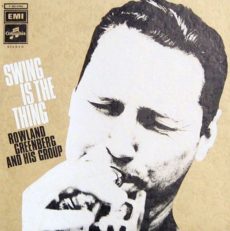
Rowland Charles Wentworth Greenberg was born on August 28, 1920 in Oslo, Norway who first began as one of the country’s leading cyclists. He was Oslo champion at 17 and the following year he won the team championships at the junior National Championships. Turning to music he fashioned his trumpet style was inspired by the English trumpeter Nat Gonella, and by 1939 he was guesting in leading orchestras such as the Hot Dogs and Funny Boys.
Making several trips to England between 1938 and 1939 with Vic Lewis and George Shearing, he was a central part of Oslo’s swing-jazz milieu. He led his own Rowland Greenberg Swing Band from 1939 to 1941 with Arvid Gram Paulsen on sax, Lulle Kristoffersen on piano and Pete Brown on drums. He also led his Rowland Greenberg Rytmeorkester from 1940 to 1944 with tenor saxophonist Gordon Franklin, Arvid Gram Paulsen on alto sax, Robert Normann on guitar, Kjell Bjørnstad, Frank Hansen, Lyder Vengbo on trombone, Fred Lange-Nielsen on bass. He release an album in 1942 that was banned by the German regime, and he was jailed for breaching the Rytmeklubbforbundet by viewing jazz films 1943.
After his release Rowland became active in Sweden with Cecil Aagaard, Thore Erling and Malte Johnson and in England with Jimmie Woode and Sam Samson. He toured Norway with his own band for two years beginning in 1948 playing bebop to the country. He was a part in the All-Star Trumpets session at the 1949 Paris Jazz Festival with Miles Davis, Bill Coleman, Jimmy McPartland and Aime Barelli, played with Charlie Parker, Louis Armstrong, and Down Beat gave him the first chart placing of his career. During the Fifties he played extensively in the orchestras led by Egil Monn-Iversen, Leiv Flisnes and Terje Kjær, led his own orchestras including Mikkel Flagstad on piano, Totti Bergh on saxophone, Knut Young on bass, Ivar Wefring on piano, Bjørn Krokfoss on drums until 1981, and played with Ben Webster and Teddy Wilson.
Trumpeter Rowland Greenberg recorded three albums as a leader and won two jazz awards before passing away on April 2, 1994.

More Posts: trumpet
Daily Dose Of jazz…
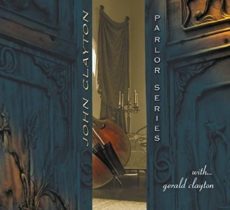
John Lee Clayton Jr. was born on August 20, 1952 in Venice, California. He began seriously undertaking the study of double bass at age 16, studying with bassist Ray Brown. By age 19, he had become a bassist on Henry Mancini’s television series The Mancini Generation. He later graduated in 1975 from Indiana University’s Jacobs School of Music with a degree in bass performance.
He toured with the Monty Alexander Trio and the Count Basie Orchestra before becoming the principal bass in the Amsterdam Philharmonic Orchestra in the Netherlands. Returning to the States after five years and moved towards jazz and jazz composition. Shortly after his return he founded the Clayton-Hamilton Jazz Orchestra with his saxophonist brother Jeff Clayton and drummer Jeff Hamilton. He and his brother also founded The Clayton Brothers which has featured instrumentalists such as Bill Cunliffe and Terell Stafford.
Clayton has composed and/or arranged for The Count Basie Orchestra, Diana Krall, Whitney Houston, Carmen McRae, Nancy Wilson, Joe Williams, Ernestine Anderson, Quincy Jones, Dee Dee Bridgewater, Natalie Cole, Till Bronner, and The Tonight Show Band. He won a Grammy for Instrumental Arrangement Accompanying Vocalist(s): “I’m Gonna Live Till I Die” (Queen Latifah) and was nominated for Best Jazz Instrumental Album, Individual or Group for Brother To Brother by The Clayton Brothers.
From 1999 to 2001 he served as Artistic Director of the Jazz for the Los Angeles Philharmonic program at the Hollywood Bowl, has conducted the All-Alaska Jazz Band and and has been president over the International Society of Bassists. In addition to performing, bassist John Clayton currently serves as Artistic Director for the Lionel Hampton Jazz Festival, Sarasota Jazz Festival, Santa Fe Jazz Party, Jazz Port Townsend Summer Workshop, and Vail Jazz Workshop. He is also an educator, teaching at the University of Southern California Thornton School of Music.

More Posts: bass