


Daily Dose Of Jazz…
Ivon Karel De Bie was born August 13, 1914 in Molenbeek-Saint-Jean, Brussels, Belgium. He received piano lessons from the age of six for ten years and around 1936 he began working as an amateur with Jimmy Turner, George Clais and with the Blue Blythe Players.
From 1938 onwards he directed his own bands as well as playing and recording beginning in the Forties in the groups of Fud Candrix, Jeff De Boeck and his metro band. In 1942 Ivon recorded his debut with a quartet with Andre Mersch, Gene Kempf and Jeff De Boeck on the Metrophone label. That same year he accompanied Django Reinhardt on a session for the Belgian label Rhythme, recording Vous et moi, Distraction, Blues en Mineur and Studio 24.
He went on to continue recording with Candrix in Berlin, with Hubert Rostaing in Brussels and with members of the Stanbrender Orchestra for the Olympia label. After the World War II De Bie directed a big band recordings for Decca Records, and also played with Robert De Kers.
From the 1950s, Ivon directed the orchestra recordings of the Middelkerke Casino played in bands led by David Bee, as well as with Brother Powell and His Dixie Rag-a-Jazz Band and The Original Syncopators Gang. In 1957 he became the artistic director of the Belgian department of RCA Victor and his last recordings were made in 1983 with the BRT Jazzorkest OLV under the direction of Etienne Verschueren.
Over the course of his career in the field of jazz he was involved in 41 recording sessions between 1941 and 1983. He wrote a series of jazz compositions such as Dixie Souvenir, partly under the pseudonym Don Bayo. His piano style was influenced by Billy Kyle, Bob Zurke, Earl Hines and Art Tatum. Pianist, composer and bandleader Ivon De Bie passed away in 1989 in Brussels.

More Posts: piano
Daily Dose Of Jazz…
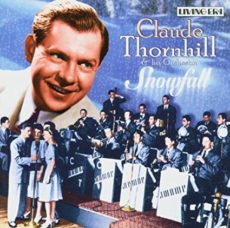
Claude Thornhill was born on August 10, 1909 in Terre Haute, Indiana and as a youth was recognized as an extraordinary piano talent and along with clarinet and trumpet prodigy Danny Polo, formed a traveling duo. While a student at Garfield High School he played with several theater bands before entering the Cincinnati Conservatory of Music at age sixteen.
He and clarinetist Artie Shaw started their careers together at the Golden Pheasant in Cleveland, Ohio playing in the Austin Wiley Orchestra. By 1931 they were in New York City and in 1935 he was playing on sessions with Glenn Miller, Paul Whiteman, Benny Goodman, Ray Noble, Billie Holiday and arranged Loch Lomond and Annie Laurie for Maxine Sullivan.
Later in the decade he moved out to the West Coast with the Bob Hope Radio Show and arranged for Judy Garland in Babes in Arms. In 1939 he founded the Claude Thornhill Orchestra with his old friend Danny Polo was his lead clarinetist. Although the band was a sophisticated dance band, it became known for its superior jazz musicians and for his and Gil Evans’s arrangements.
Encouraging the musicians to develop cool-sounding tones, the band played without vibrato. The band was popular with both musicians and the public and Miles Davis’s Birth of the Cool nonet was modeled in part on Thornhill’s sound and unconventional instrumentation. The band’s most successful records were Snowfall, A Sunday Kind of Love, and Love for Love.
1942 saw him enlisting in the Navy and playing across the Pacific Theater with Jackie Cooper as his drummer and Dennis Day as his vocalist. After his discharge in ‘46 he reunited his ensemble and Danny Polo, Gerry Mulligan and Barry Galbraith returned with new members, Red Rodney, Lee Konitz, Joe Shulman, and Bill Barber. For a brief time in the mid 1950s, Claude was briefly Tony Bennett’s musical director.
Pianist, arranger, composer, and bandleader Claude Thornhill passed away on July 1, 1965. A large portion of his extensive library of music is currently held by Drury University in Springfield, Missouri and in 1984 he was inducted into the Big Band and Jazz Hall of Fame.
Sponsored By


#preserving genius
More Posts: piano

Daily Dose Of Jazz…
Kamil Hála was born on August 1, 1931 in Most, Bohemia, Czechoslovakia and during his musical career he worked as a pianist and arranger with a number of renowned jazz and dance orchestras, among them he starred in the Zdeněk Barták Orchestra.
As a composer and arranger he spent time collaborating with the Karel Vlach Orchestra and also directed his own jazz big band. Together with Josef Vobruba, they worked as conductors at the Czechoslovak Radio Dance Orchestra and the Jazz Orchestra of Czechoslovak Radio .
Pianist, composer, conductor and arranger Kamil Hála, brother of trumpeter and music composer Vlastimila Hala, passed away on October 28, 2014 in Prague, Czechoslovakia.

More Posts: piano

Daily Dose Of Jazz…
Fletcher Allen was born on July 25, 1905 in Cleveland, Ohio and began his career in the mid-’20s as a member of Lloyd Scott’s Band in New York City. In 1927, he was off to Europe for the first time in a group under the direction of Leon Abbey, a bandleader whose pioneering efforts with jazz eventually led to a 1936 tour of India which he also participated in. In between, he went to Budapest with the Benny Peyton group in 1929 and hung out in Europe the following decade. While in Europe he performed on several collaborations with guitarist Django Reinhardt, among others.
Reinhardt recorded some of his arrangements and compositions, including the intoxicating Viper’s Dream. Allen also took advantage of the European base to take part in several tours involving top American performers such as Louis Armstrong, Freddy Taylor and Leon Abbey in the ’30s. It was during this time that he began leading his own band.
By 1938, he began performing with Benny Carter, something of a doppelgänger in that both men played alto saxophone and clarinet and had excellent reputations as arrangers and shows up several times in the extensive Carter discography. He went on to Later that year, Allen went to Egypt as a member of the Harlem Rhythmakers group during an era when American jazz musicians held court at swank Cairo hotels, a situation that would be quite inconceivable in modern times.
As World War II escalated Fletcher returned home to the States and at first found little work but eventually left the docks when he found that his new skills on baritone sax meant work filling in the sections of various New York big bands. His last job of any notoriety began in the early 70s with the big band of Fred “Taxi” Mitchell, meaning he was one New Yorker who always managed to find a taxi.
Saxophonist, clarinetist and composer Fletcher Allen, whose composition Viper’s Dream has become a jazz staple, passed away on August 5, 1995.
Sponsored By

#preserving genius

Daily Dose Of Jazz…
Kenneth Napper was born July 14, 1933 in London, England. He started out on learning to play the piano as a child, then picked up the bass as a student at Guildhall School of Music. Entering the British military in the early 1950s, he played and recorded with Mary Lou Williams in 1953 while on leave. After completing his term of duty, he went on to play with Jack Parnell, Malcolm Mitchell, Vic Ash, and Cab Calloway.
During the late Fifties and early 1960s Kenny was the house bassist at Ronnie Scott’s Jazz Club for several years and played with many British and American jazz musicians. These musicians include Alan Clare, Ronnie Scott, Stan Tracey, Tubby Hayes, Tony Kinsey, Tony Crombie, Jimmy Deuchar, John Dankworth, Pat Smythe, Phil Seamen, Zoot Sims, Carmen McRae, and Paul Gonsalves.
By the late Sixties he worked with Ted Heath, Tony Coe, John Picard and Barney Kessel, as well as with Gonsalves, Tracey, and Dankworth. In 1970 he played with Stephane Grappelli prior to a move to Germany where he played with Kurt Edelhagen from 1970 to 1972. While residing there, Napper focused more on composition and arrangement and then in the late Seventies he moved to the Netherlands.
Through the remainder of the decade and and the Eighties he put down his bass, arranged for radio ensembles, was the staff arranger and conductor for the 50 piece Metropole Orchestra, and then directed his attention to teaching at the Royal Conservatory in The Hague. At 83 years of age, double-bassist arranger, composer, conductor and educator Kenny Napper, it is assumed he has retired and returned to the United Kingdom.
Sponsored By
#preserving genius
More Posts: bass