

Daily Dose Of Jazz…
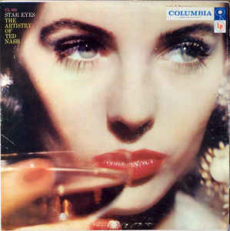
Theodore Malcolm Nash was born on October 31, 1922 in the Boston suburb of Somerville, Massachusetts. His goal was to become a classical flutist until he began playing saxophone in his early teens. His professional career began when he went on the road with a succession of dance bands, landing the solo tenor chair with the Les Brown band in 1944 where he rapidly made a name for himself.
His playing was notable for his mastery of the extreme altissimo register of the saxophone. He authored Ted Nash’s Studies in High Harmonics for Tenor and Alto Saxophone published in 1946, that is still in print.
In the late 1940s Ted became part of the thriving Hollywood movie and television recording industry. In 1956 he recorded with Paul Weston’s orchestra the hit album Day by Day, with vocals by his former colleague and close friend, Doris Day.
He was featured on The Music from Peter Gunn soundtrack album performing the bluesy, high-energy alto sax solo on the theme as well as the wistful alto sax solo on the second bridge of Dreamsville. Henry Mancini composed The Brothers Go to Mother’s from Peter Gunn as a feature for Ted and and his trombonist Dick.
From the mid 50s through the end of the Sixties he recorded sixteen albums with Georgie Auld. Henry Mancini, Elmer Bernstein, Pete Rugolo, Lalo Schifrin. Saxophone, flute and clarinet Ted Nash, who was a first-call session musician in the Hollywood recording studios, passed away on May 12, 2011.

Daily Dose Of Jazz…
Sterling Bruce Conaway was born on October 26, 1900 in Washington, D.C. and learned to play the banjo and mandolin. His early career was spent playing with fellow Washingtonian Duke Ellington in their hometown. Relocated to Chicago, Illinois he joined the band of Carroll Dickerson.
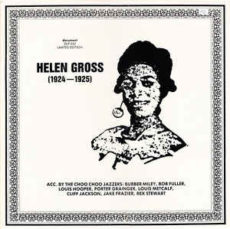
He played in Cyril Fullerton’s band in 1924 and recorded with Helen Gross on ukulele. By the late 1920s he moved to Europe where he worked with Eddie South, Noble Sissle, Freddy Johnson, Freddy Taylor, and Leon Abbey. During this period in his career Sterling led several groups as well.
1936 saw him in Bombay, India playing with Crickett Smith, however, three years later returned to the United States. Banjoist and mandolinist Sterling Conaway continued to perform in big bands and leading his own groups until his passing away in November 1973.
Daily Dose Of Jazz…
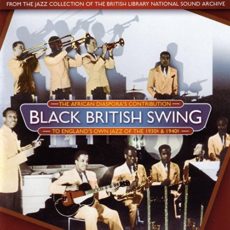
Cyril Blake was born October 22, 1900 in Trinidad and moved to England about 1918, where he sometimes performed under the stage name of “Midnight,” and quite often appearing well after midnight. He was an essential part of the freewheeling music scene of London in the decades both before and after World War II.
He became well versed in jazz, blasted away in rhythm & blues bands of various ethnic persuasions. and played in a British group called the Southern Syncopated Orchestra. Being a trumpet player and was working in both London and Paris clubs whilst the ’20s roared helped to skyrocket his career.
Working in Paris, France and London as a musician throughout the 1920s, in the 1930s he played in the bands of Leon Abbey, Happy Blake, Rudolph Dunbar, Leslie Thompson’s Emperors of Jazz, Joe Appleton, and Lauderic Caton. 1938 saw Cyril putting together his own band, which was centred on Jig’s Club in London but was also the house band for several other venues around Soho. He recorded several times with this ensemble and in the 1940s led his band behind Lord Kitchener for recordings on Parlophone Records, playing in a calypso style.
Late in his life he returned to Trinidad, where he continued to lead bands. Trumpeter Cyril Blake, along with Bertie King, Lauderic Caton and Brylo Ford were credited in the Who’s Who of British Jazz by John Chilton and influenced generations of British jazz musicians, passed away of an illness on December 3, 1951.

More Posts: trumpet
Daily Dose Of Jazz…
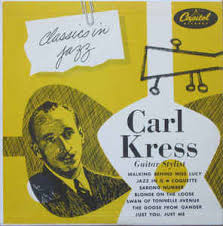
Carl Kress was born on October 20, 1907 in Newark, New Jersey and started on piano before picking up the banjo. Beginning in 1926, he played guitar during his brief time as a member of the Paul Whiteman orchestra. For most of his career, he was a studio musician and sideman buried in large orchestras, and his name was little known.
During the 1920s and 1930s Carl worked recording sessions with The Boswell Sisters, The Dorsey Brothers, Bix Beiderbecke, Hoagy Carmichael, Miff Mole, Red Nichols, Adrian Rollini, and Frankie Trumbauer.
Outside of orchestras, Kress played in several guitar duets with Eddie Lang and Dick McDonough in the Thirties, Tony Mottola in 1941, and George Barnes in the Sixties. The late Thirties saw him recording as a solo with Peg Leg Shuffle, Helena, Love Song, Sutton Mutton and Afterthoughts. During the 1940s, he played Dixieland jazz with Bobby Hackett, Pee Wee Russell, and Muggsy Spanier.
Moving to New York City with his wife Helen who sang with the Satisifiers, Perry Como, Frank Sinatra and Jo Stafford. Guitarist Carl Kress continued a career as a bandleader and session player until his passing away of a heart attack on June 10, 1967 while he was on tour in Reno, Nevada.

More Posts: guitar
Daily Dose Of Jazz…
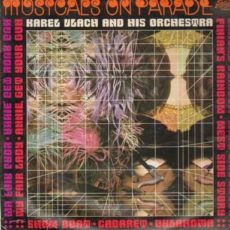
Karel Vlach, born in Prague, Czech Republic on October 8, 1911 and founded his first orchestra in 1938. Over the years many important composers, instrumentalists and arrangers of the Czech jazz scene went through his band.
From 1947 to 1948 Vlach’s orchestra performed at the V+W Theatre, recorded prolifically with Supraphon and his albums include both light classical, orchestral, jazz and pop arrangements for big band with strings.
During the decades from 1940to 1980 Karel arranged and conducted many Czech film scores, launched the singing careers of Czech artists Yvetta Simonová and Milan Chladil. He and his musical colleagues Dalibor Brazda and Gustav Brom also arranged and recorded many titles that are now a part of the Great American Songbook for British singer Gery Scott in the late 1950s.
Dance orchestra conductor and arranger Karel Vlach passed away on February 26, 1986 in Prague.