

Daily Dose Of Jazz…
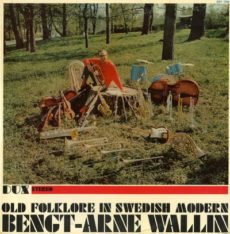
Bengt-Arne Wallin was born on July 13, 1926 in Linköping, Sweden and was also active under the pseudonym Derek Warne. He began his musical path with a homemade accordion. He then took up the trumpet and by the Forties he was playing trumpet in Linköping, followed by time spent in Gothenburg playing with Malte Johnsson’s Orchestra and in Stockholm Seymour Österwall at Nalen (National Palace) from 1951-1952.
In the years that followed from 1953-1965 he played in Arne Domnérus’s big band and between 1955 and 1965 was also in Harry Arnold’s radio band, after which he put the trumpet on the shelf.
Bengt took a position as an educator in 1972 and for the next twenty-one years he taught at the Music School of Stockholm. By the late 1990’s he started playing the trumpet again, now with his group Five to Five .
For the production show from Barnrike he was awarded the international radio prize Triumph Varieté. He went on to compose music for a variety of musicals and a larger number of television productions, such as The Magic Box. He was also the conductor of various major bands.
Trumpeter, composer, arranger, educator Bengt Arne Wallin, who was also trained in aeronautics, passed away November 23, 2015 in the Sollentuna Parish of Stockholm County, Sweden.
Sponsored By


#preserving genius
More Posts: trumpet
Daily Dose Of Jazz…
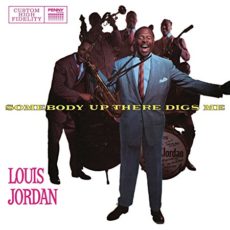
Louis Thomas Jordan was born on July 8, 1908 in Brinkley, Arkansas where his father was a music teacher and bandleader for the Brinkley Brass Band and the Rabbit Foot Minstrels. Losing his mother young, he studied music under his father, starting out on the clarinet, then piano and ultimately landed on the saxophone as his primary instrument. In his youth he played in his father’s bands instead of doing farm work when school closed. During his early career period he played the piano professionally, but alto saxophone became his main instrument. However, he would become even better known as a songwriter, entertainer and vocalist.
He briefly attended and majored in music at Arkansas Baptist College in Little Rock, but after a period with the Rabbit Foot Minstrels and with other local bands like Bob Alexander’s Harmony Kings, he went to Philadelphia and then New York. By 1932, Jordan was performing with the Clarence Williams band, and when he was in Philadelphia he played clarinet in the Charlie Gaines band.
1936 saw him joining the Savoy Ballroom orchestra, led by the drummer Chick Webb. A vital stepping-stone in his career, Louis introduced songs as he began singing lead, and often singing duets with up and comer Ella Fitzgerald. They would later reprise their partnership on several records, by which time both were major stars. In 1938, Webb fired Jordan for trying to persuade Fitzgerald and others to join his new band.
He became famous as one of the leading practitioners, innovators and popularizers of jump blues, a swinging, up-tempo, dance-oriented hybrid of jazz, blues and boogie-woogie. Jordan’s band also pioneered the use of the electronic organ.
Jordan was a talented singer with great comedic flair, and he fronted his own band for more than twenty years. He duetted with some of the biggest solo singing stars of his time, including Bing Crosby, Ella Fitzgerald and Louis Armstrong. An actor and a major black film personality, he appeared in dozens of “soundies” or promotional film clips, made numerous cameos in mainstream features and short films, and starred in two musical feature films made especially for him.
With his dynamic Tympany Five bands, Jordan mapped out the main parameters of the classic R&B, urban blues and early rock-and-roll genres with a series of highly influential 78-rpm discs released by Decca Records. These recordings presaged many of the styles of black popular music of the late 1940s, 1950s and 1960s and exerted a strong influence on many leading performers in these genres.
Known as The King of the Jukebox for his crossover popularity with both black and white audiences of the swing era, Louis was a prolific songwriter who wrote or co-wrote many songs that stayed in the top of the Billboard charts and that were influential classics of 20th-century popular music.
Pioneering alto saxophonist, pianist, clarinetist, singer, actor, songwriter and bandleader Louis Jordan, one of the most successful black recording artists of the 20th century, passed away on February 4, 1975 at age 66 in Los Angeles, California.
Sponsored By

#preserving genius
Daily Dose Of Jazz…
Chris White was born Christopher Wesley White on July 6, 1936 in Harlem, New York and grew up in Brooklyn. He graduated in 1956 from City College of New York, and in 1968 from the Manhattan School of Music. In 1974, earning his Master of Education from the University of Massachusetts. In 1994, he did postgraduate Advanced Computer Study at Berklee College Of Music.
An occasional member of Cecil Taylor’s band in the 1950s, he is credited on the 1959 Love for Sale album. From 1960 to 1961 White accompanied Nina Simone and subsequently he joined Dizzy Gillespie’s ensemble until 1966.
He later founded the band The Jazz Survivors and was a member of the band Prism. He would go on to collaborate with Billy Taylor, Eubie Blake, Earl Hines, Chick Corea, Teddy Wilson, Kenny Barron, Mary Lou Williams, Duke Ellington, Sarah Vaughan, Carmen McRae and Billy Cobham, among others.
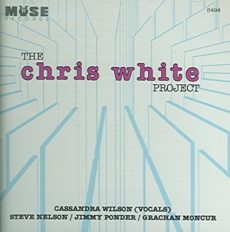
He recorded on album as a leader titled the Chris White Project with Cassandra Wilson, Marvin Horne, Jimmy Ponder, Grachan Moncur III, Michael Raye, Steve Nelson, Keith Copeland and Steve Kroon. He also co-led a session with Lou Caputo in 2010 on the Interface label. As a sideman he recorded with Kenny Barron, Ramsey Lewis, James Moody, Dave Pike, Lalo Schifrin and Quincy Jones.
As an educator he was a part of the creative arts and technology faculty at Bloomfield College in New Jersey. Bassist, arranger, producer Chris White, who won the Downbeat and Playboy Readers Polls among other awards, passed away on December 2, 2014.

More Posts: bass
Daily Dose Of Jazz…
Ray Biondi was born Remo Biondi on July 5, 1905 in Cicero, Illinois. As a child he started with violin and his early training was classical under the supervision of several teachers from the American Conservatory of Chicago. Mandolin followed at age 12 and it became his gateway into the world of string bands, and added guitar and then trumpet into his musical arsenal.
In 1926 he began playing professionally with the Blanche Jaros Orchestra, based out of Cicero, and the next year he started an eight-year period of heavy freelancing in Chicago, enjoying new contacts such as trumpeter Wingy Manone, reedman Bud Freeman, and Earl Burtnett put Biondi in his lineup as a violin and trumpet double. This band took him on a series of tours Kansas City, Cincinnati and New York. this led to a gig with clarinetist and saxophonist Joe Marsala and playing guitar whenever Eddie Condon double booked himself.
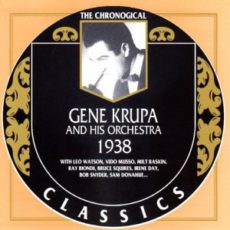
In 1938, Gene Krupa hired Ray solely as a guitarist except on an orchestra project where he double as a violinist. A year later he left the band and formed a series of small groups as a leader and one band had a long residency at Chicago’s 606 Club. He then opened a short-lived club himself, and Krupa took him back on the road in the early ’50s. He then began to get session guitar and mandolin work in some genres outside of straight jazz. With Pat Boone and the Crew Cuts as doo wop became a new musical style.
By 1961, he had begun a serious shift to teaching all of his instruments except the trumpet, but continued gigging with groups both large and small, including the orchestra of Dick Schory in the former case and stride pianist Art Hodes in the latter. Violinist Ray Biondi passed away on January 28, 1981 in Chicago, Illinois.
Sponsored By

#preserving genius

Daily Dose Of Jazz…
Carolyn Breuer was born on July 4, 1969 in Munich, Germany, the daughter of jazz musician Hermann Breuer. When she was 19 years old, she studied saxophone as a member of the Bundes Jazz Orchestra at the Konservatorium in Hilversum under Ferdinand Povel. After graduation, she moved to New York City where she took private lessons with George Coleman and Branford Marsalis.
She has worked with Coleman, Fee Claassen and Ingrid Jensen before starting her own label, NotNowMom!-Records. Breuer’s Serenade release won her the “Heidelberger Künstlerpreis” which is Heidelberg’s prize for artists in Amsterdam, Netherlands. She is the first jazz musician to receive this award, previously only given to classical musicians.
Breuer has toured internationally and and performed with WDR’s Big Band, the Berlin Jazz Festival and the North Sea Jazz Festival. Her album, Fate Smiles On Those Who Stay Cool, became so popular in the Netherlands that politician Klaas De Vries began a speech in parliament with exactly those words.
Alto and soprano saxophonist Carolyn Breuer has recorded six albums as a leader, two with her father and one with Fee Classen. She continues to perform, record and tour.

#preserving genius
More Posts: saxophone