

Daily Dose Of Jazz…
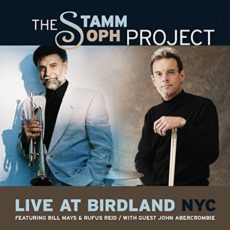
Edward Soph was born on March 21, 1945, in Coronado, California and was raised in Houston, Texas. In 1963 he e enrolled at North Texas State University, now the University of North Texas, as a music major, but switched his concentration to English during his sophomore year. While at UNT, he performed with the One O’Clock Lab Band, as well as summer tenures with the Glenn Miller Orchestra and Stan Kenton. Graduating in 1968 he joined Woody Herman upon a recommendation from Cannonball Adderley.
Moving to New York City in 1971, Ed began performing and recording freelance with the bands of Clark Terry, Bill Watrous and Woody Herman, Bill Evans, Marvin Stamm, Randy Brecker, Joe Henderson, Pat LaBarbera, Bill Mays, Cedar Walton, Dave Liebman, Chris Potter, Carl Fontana and Slide Hampton, among others.
As an educator Soph pursued a teaching career on the faculty at The Jamey Aebersold Jazz Workshops, The National Stage Band Camps and The University of Bridgeport. Returning to Texas in 1987 he is currently a Professor in the Jazz Studies and Performance divisions of the College of Music at the University of North Texas in Denton, Texas. Some of his students have been Ari Hoenig, Keith Carlock, Joel Rosenblatt, Jason Sutter and Dave Weckl.
Drummer Ed Soph is currently an Artist Clinician for Yamaha Corporation, the Avedis Zildjian Company, Evans Drumheads and Innovative Percussion. He continues to perform and record.

#preserving genius
More Posts: drums

Daily Dose Of Jazz…
Etienne Bouyer was born on March 18, 1982 in Saint-Denis on the island of Reunion and took violin lessons from age four to 11, opting to play the saxophone. In 1995 he played tenor saxophone in the big band of the Conservatoire d’Antibes and joined the Nice CNR in 1997, where he studied classical saxophone and contemporary music.
1999 saw Etienne gaining admittance to the Baccalauréat Général in Paris, France to study in the American School of Modern Music. For the next five years he studied saxophone, harmony, arrangement and composition, writing for big band and string quartet. Leading an active professional life while studying, he plays in numerous bands and orchestras of all styles including big band, salsa, gypsy and co-founded La Brocante, recording and performing in concert in France and Morocco.
In 2004 he joined the Didier Lockwood Music Center and where he studied with a host of musicians like André Villéger, Pierrick Pedron and Stéphane Guillaume among others. During this period Bouyer met many other musicians with whom he works regularly, taking part in the electro-jazz project Blözar and forming his quartet, the Etienne Bouyer Group with Pierre Antoine, Martin Berauer and Alexis Sébileau.
Following graduation he began teaching, studying privately in New York City with Dave Liebman and Sam Newsome, taking a week-long master class with Charlie Haden and began working with the Belgian violinist Cécile Broché, that led to recordings. He returned to Europe to study in Paris and Brussels, taking master classes with Bob Mintzer, François Jeanneau and creating the Collective Of Active Composing. Etienne has been a member of the Yuval Amihai Ensemble that won the Jazz Festival Tremplin in Saint-Germain-des-Prés.He has performed with Avishai Cohen, Rabih Abou-Khalil, Bojan Z, Kyle Eastwood and Manu Katché.
Tenor and soprano saxophonist Etienne Bouyer teaches at the Conservatory of Music and Dance of Châtenay-Malabry and the Conservatoire with Regional Radiation of Amiens Métropole. He currently Is the coordinator of the Jazz & Current Music Department at the Amiens Metropole Regional Conservatory and continues to perform, record and compose.
Sponsored By


#preserving genius
More Posts: saxophone
Daily Dose Of Jazz…
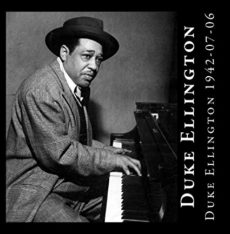
Junior Raglin was born Alvin Raglin on March 16, 1917 in Omaha, Nebraska. He started out on guitar but had picked up bass by the mid-1930s. He played with Eugene Coy from 1938 to 1941 in Oregon, and then joined Duke Ellington’s Orchestra, when Ellington returned to using two basses, then replaced Jimmy Blanton after his departure from the orchestra. He remained with Duke from 1941 to 1945.
After leaving Ellington, Raglin led his own quartet, and also played with Dave Rivera, Ella Fitzgerald, and Al Hibbler. He returned to play with Ellington again briefly in 1946 and 1955. Falling ill in the late 1940s, he quit performing;
Double-bassist Junior Raglin, who performed mainly during the swing era and never recorded as a leader, passed away on November 10, 1955 at age 38.
Sponsored By
#preserving genius
More Posts: bass
Daily Dose Of Jazz…
Sonny Cohn was born George T. Cohn on March 14, 1925 in Chicago, Illinois and started playing in small groups in his hometown with King Fleming while still a teenager. He sat in with Red Saunders’ group in 1945, while Saunders was out of the Club DeLisa and working with a sextet instead of his usual mid-sized band.
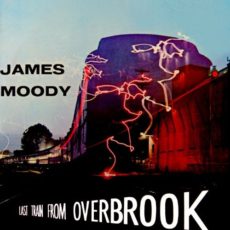
Fresh out of military service, on a recommendation from Leon Washington Sonny joined the Saunders group at the Capitol Lounge in Chicago. He was featured on Saunders’ first recordings as a leader for Savoy, Sultan, and behind Big Joe Turner on National. He performed on the records that Saunders made for OKeh Records from 1951–1953 and for Parrot and Blue Lake 1953–1954. In 1958 he was apart of the James Moody recording session on the Last Train From Overbrook on the Argo label.
Sonny Cohn survived several downsizings of the Red Saunders band, as well as the closure of the Club DeLisa, but eventually accepted an offer from Count Basie, with whom he worked from 1960 through 1984, and recording twenty-eight albums with the band..
After Basie’s death, he returned home and remained active for another two decades. Trumpeter Sonny Cohn, who never recorded as a leader, passed away on November 7, 2006 in Chicago at the age of 81.
#preserving genius
More Posts: trumpet
Daily Dose Of Jazz…
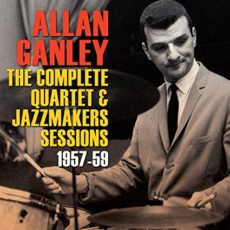
Allan Ganley was born on March 11, 1931 in Tolworth, Surrey, England and was a self-taught drummer. In the early 1950s Ganley played in the dance band led by Bert Ambrose. In 1953 he came to prominence as a member of Johnny Dankworth’s band, then the most popular modern jazz group in the UK. Throughout the 1950s, he worked with pianist Derek Smith, Dizzy Reece, clarinettist Vic Ash, Ronnie Scott and with visiting American musicians. Towards the end of the decade he was co-leader with Ronnie Ross of a small group known as the Jazzmakers.
By the early 1960s, Ganley was often performing with Tubby Hayes, with his small groups or occasionally assembling a big band. He was the house drummer at Ronnie Scott’s Jazz Club and played with numerous Americans including Dizzy Gillespie, Stan Getz, Jim Hall, Freddie Hubbard and Rahsaan Roland Kirk. By the early 1970s he took time out to study at Berklee College of Music in Boston, Massachusetts, then returned to the UK to form and lead a big band, which he maintained sporadically for ten years.
Throughout the Seventies and ’80s and Nineties, Allan appeared on many broadcasts and recording dates, playing jazz and effortlessly slipping from traditional to post-bop to big band to mainstream, all the while swinging with great subtlety. He accompanied pianists as different as Teddy Wilson and Al Haig and for singers from Carol Kidd to Blossom Dearie.
As an arranger, he provided charts for many leading British jazzmen and for the BBC Radio Big Band, thus enhancing the enormous yet understated contribution he made to the British jazz scene over the years. Drummer and arranger Allan Ganley passed away on March 29, 2008.
Sponsored By
Bronze Lens
#preserving genius
More Posts: drums