

Daily Dose Of Jazz…
Mel Wanzo was born Melvin F. Wanzo, November 22, 1930 in Cleveland, Ohio. At the age of twenty-two he served in the 36th Army Band with the Adderley Brothers and Junior Mance during the Korean conflict from 1952-54. After his discharge he returned home and joined Joe Cooper’s All-Stars at the Ebony Lounge, that hosted most of the national acts coming through the city.
By 1956 he was gaining experience playing with Choker Campbell’s band who baked such R&B-oriented singers as Joe Turner and Ruth Brown in the Fifties, after which he worked mainly with big bands. Leaving Campbell, he studied at Cleveland Institute of Music and then joined the studio band at WEWS TV.
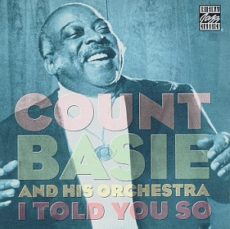
The latter-day big band trombonist played with the Glenn Miller Orchestra under the direction of Ray McKinley from 1966-1968. Woody Herman in the ’60s before joining Count Basie, with whom he worked from 1969-1980. He also recorded with the Capp-Pierce Juggernaut in 1981.
Wanzo rejoined the Basie band after its leader’s death in 1984. He continued with the group during the ’80s and ’90s under leaders Thad Jones, Frank Foster, and Grover Mitchell.
As an educator he was a mentor to the Wayne State University Trombone Ensemble from 1997 to 2002, and the Jazz Lab I Band beginning 2000. For the over forty years he has spent on the road he has performed with Duke Ellington, Ella Fitzgerald, Frank Sinatra and Sarah Vaughan among other jazz luminaries.
Trombonist Mel Wanzo, who has had command performances for the Queen of England, King of Thailand, the President of Finland and has performed at six Grammy Awards retired from the Basie band, moved to Detroit and remained active until his passing away on September 9, 2005.
Sponsored By

Voices From The Community

More Posts: trombone
Daily Dose Of Jazz…
Ben Thigpen was born Benjamin F. Thigpen on November 16, 1908 in Laurel, Mississippi. He played piano as a child and was trained by his sister Eva. He played in South Bend, Indiana with Bobby Boswell in the 1920s before moving to Chicago, Illinois to study under Jimmy Bertrand.
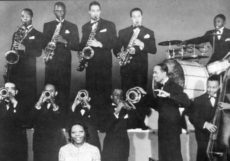
Chicago saw Ben playing with many noted Chicago bandleaders and performers, including Doc Cheatham. He played with Charlie Elgar’s Creole Band from 1927 to 1929 but never recorded with them. Following this he spent time in Cleveland, Ohio with J. Frank Terry, and then became the drummer for Andy Kirk’s Clouds of Joy, where he stayed from 1930 to 1947.
Much of his work is available on collections highlighting the piano work of Mary Lou Williams, who also played in this ensemble. After his time performing and recording with Kirk, his career was not well documented and it appears that he never recorded as a leader. He did however, lead his own quintet in St. Louis, Missouri, recorded with Mary Lou Williams, Booker Collins and Ted Robinson and also recorded Dixieland with Singleton Palmer in the 1960s.
Drummer Ben Thigpen, father of Ed Thigpen, who followed in his footsteps, passed away on October 5, 1971.

Take A Dose On The Road
More Posts: drums
Daily Dose Of Jazz…
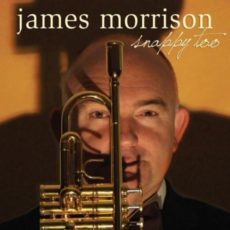
James Lloyd Morrison was born on November 11, 1962 in Boorowa, New South Wales, Australia. Though his father was a Methodist minister, he comes from a musical family with his mother playing alto saxophone, piano and organ, his sister is a trumpeter, and his older brother a jazz drummer. Due to his father’s ministry the family relocated to various locales in New South Wales before settling in Pittwater.
From the age of seven Morrison practiced on his brother’s cornet, attended Mona Vale Primary School and Pittwater High School, then he enrolled at Sydney Conservatorium of Music where he completed a jazz course. While there he met Don Burrows, who became his mentor.
In 1983 Morrison joined his brother John’s 13-piece group, Morrison Brothers Big Bad Band and a year later he was playing trumpet, trombone and piano, his brother on drums, Warwick Alder on trumpet, Paul Andrews on alto saxophone, Tom Baker on alto and baritone saxophones, Peter Cross on trumpet, Glenn Henrich on vibraphone, Jason Morphett on tenor saxophone, and Craig Scott on bass. The group released their debut album, A Night in Tunisia, in 1984 on the ABC Records label.
Morrison has performed with Dizzy Gillespie, Don Burrows, Ray Charles, B. B. King, Ray Brown, Wynton Marsalis, Graeme Lyall, Frank Sinatra, Cab Calloway, Jon Faddis, Woody Shaw, Whitney Houston, Arturo Sandoval, Phil Stack, George Benson, Mark Nightingale, Herbie Hancock, Quincy Jones, Gina Jeffreys and Red Rodney, just to name a few. His long association with composer and pianist Lalo Schifrin has led James to record a number of CDs for Schifrin’s Jazz Meets the Symphony series, with the London and the Czech National symphony orchestras.
Morrison sponsors yearly scholarships for young musicians, and is actively involved with several youth bands. He discovered his regular vocalist, Emma Pask, at a school concert when she was 16 and has since gone on to become an internationally renowned jazz singer. He is the chairman of Generations in Jazz, one of the largest youth jazz events in the world. He has been the hosts of the in-flight jazz radio station for Qantas Airways.
Morrison designed trumpets and trombones, built his own recording studio, recorded top Australian jazz musicians including Dan Clohesy, Jake Barden, Don Burrows, Liam Burrows, John Morrison, The Swing City Big Band, The Generations In Jazz Academy Big Band, Graeme Lyall and more. He was appointed a Member of the Order of Australia, was nominated for Best Jazz Album, in 1992 for Manner Dangerous, 1993 for Two the Max, a collaboration with Ray Brown, and was inducted into the Graeme Bell Hall of Fame.
He has received an honorary Doctor of Music from the Edith Cowan University and from the University by Griffith University, Morrison is also an Adjunct Professor of the University of South Australia and a Vice Chancellor’s Professorial Fellow. He continues to perform, record and tour.

Daily Dose Of Jazz…
Johnny Windhurst was born John Henry Windhurst on November 5, 1926 in New York City, New York and was a self-taught trumpeter known for his solos. He considered Bix Beiderbecke, Wild Bill Davison, and Bunny Berigan among his influences and his feathery vibrato and mobility was mixed with the delicate playing style of Bobby Hackett.
At 15 he played his first public performance at Nick’s in New York City and made his professional debut during the spring of 1944 at one of Eddie Condon’s concerts at the Town Hall in New York City. At 18 years old, he was chosen to replace Bunk Johnson by Sidney Bechet to play at the Savoy Cafe in Boston, Massachusetts. Windhurst was initially recruited to the band to play the cornet and this engagement launched his career as a trumpeter.
He went on to play with Art Hodes and James P. Johnson at the Jazz at Town Hall concert in 1946. He then moved to the midwest and after a brief stint in the Chicago jazz scene he returned to the Savoy Cafe as a member of Edmond Hall’s band. Johnny eventually moved west to experience the West Coast jazz scene in California. His inability to read music had him declining gigs with Benny Goodman and Woody Herman while emphasizing his preference of informal jamming. Over the years, he played with musicians Louis Armstrong, Nappy Lamare, Walt Gifford, Edmond Hall and Eddie Condon. He led his own band, Riverboat Five, through Columbus, Ohio and Boston for several years, refraining from playing the most popular east coast venues and nightclubs to play college campuses and other small venues.
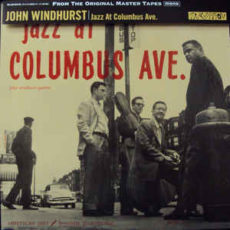
During the 1950s Windhurst worked with Ruby Braff in one of the groups known as Jazz at Storyville, performed at Condon’s club and performed with George Wettling, Jack Teagarden, Barbara Lea and took a stage role with actor Conrad Janis in an off-broadway musical titled, Joy Ride. He only made one recording with his swing quartet, the John Windhurst Quartet that included Buell Neidlinger as a sideman, titled Jazz at Columbus Avenue.
Throughout the 1960s and 70’s he opted to perform primarily in obscure venues in out-of-the-way corners of the USA. Despite his range of talent and success, Windhurst was seemingly content to hide from the big-time spotlight. He eventually moved upstate to Poughkeepsie with his mother, where he finished his career in a dixieland band at Frivolous Sal’s Last Chance Saloon. Several years later, after receiving an invitation to play the Manassas jazz festival in 1981, Windhurst passed away of a heart attack on October 2, 1981 in Dutchess County, New York.
Sponsored By

www.whatissuitetabu.com
More Posts: trumpet
Daily Dose Of Jazz…
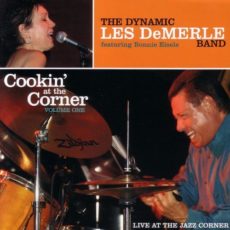
Lester William DeMerle was born on November 4, 1946 in Brooklyn , New York and studied drums and percussion from 1960 to 1965 with Bob Livngstone in New York, then music theory and harmony with Alf Clausen . At 16 he was jamming with Lionel Hampton and in 1966 he played with the Lee Castle led Dorsey band.
1967 found Les with Randy Brecker and Arnie Lawrence in the first band formation called Sound 67. By the late 1960s he joined with Joe Farrell and Lee Konitz in New York. By 1971 Les was moving to Los Angeles,California where he founded the band Transfusion, that became the house band at the Cellar Theatre. He also played with Michael Brecker, Eric Marienthal, David Benoit and Raul De Souza. In 1974 he joined Harry James at the Newport Jazz Festival and stayed for 12 years.
He recorded with the Heath Brothers on the album Smilin’ Billy Suite / A Day in the Life in 1976 on the Strata-East label, worked with Bunk Gardner and in the 1980s he worked on albums with his wife Bonnie Eisele. DeMerle has led big bands and made a series of albums on the Origin label including a tribute album to the classic Blue Note Records, Hittin’ the Blue Notes.
Les DeMerle is one of the few drummers who sings. He has accompanied Frank Sinatra, Sammy Davis Jr., Tony Bennett, Sarah Vaughan, Mel Tormé and Eddie Jefferson. He continues to perform, record and tour.
Dose A Day-Blues Away