

Daily Dose Of Jazz…
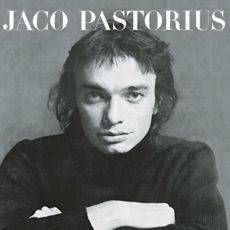
Jaco Pastorius was born John Francis Anthony Pastorius III on December 1, 1951 in Norristown, Pennsylvania to Jack Pastorius, a big band singer and drummer. Shortly after his birth the family moved to Oakland Park, Florida, where he went to elementary and middle school at St. Clement’s Catholic School in Wilton Manors. Picking up music at an early age he formed his first band named the Sonics along with John Caputo and Dean Noel while in high school at Northeast High. He was also a talented athlete playing football, basketball, and baseball. His nickname came from a play on the spelling of umpire Jocko Conlan when French pianist Alex Darqui assumed Jaco was the correct spelling.
Following in the footsteps of his father Jack, playing the drums until he injured his wrist playing football at age 13. Pastorius then bought an electric bass from a local pawn shop for $15, began to learn to play with drummer Rich Franks, and switched from drummer to becoming the bassist for the Las Olas Brass.band. By the age of 17 he had begun to appreciate jazz and had saved enough money to buy an upright bass. Though its deep, mellow tone appealed to him, it strained his finances and had difficulty maintaining the instrument, and one day found it had cracked. At that point he traded it in for a 1962 Fender Jazz Bass.
His first real break came when he became bass player for Wayne Cochran and the C.C. Riders. He also played on various local R&B and jazz records with Little Beaver and Ira Sullivan. At 22, Jaco began teaching bass at the University of Miami, where he met student Pat Metheny in 1972, but he was too advanced a player to remain a student and likewise became part of the UM music faculty at the age of 18. By 1974 they began playing and recording together, first with pianist Paul Bley as leader and Bruce Ditmas on drums, on an album later titled Jaco, on the Paul Bley/Carol Goss Improvising Artists label. They followed this with drummer Bob Moses on a trio album on the ECM label, titled Bright Size Life in 1976).
1975 saw Pastorius introduced to Blood, Sweat & Tears drummer Bobby Colomby, who had been asked by Columbia Records to find new talent for their jazz division. This meeting produced his debut album as a leader titled Jaco Pastorius in 1976, that became a breakthrough album for the electric bass, and is considered by many as the finest bass album ever recorded. The album also boasted a lineup of heavyweights Herbie Hancock, Wayne Shorter, David Sanborn, Lenny White, Hubert Laws, Don Alias, and Michael Brecker, as well as, soul singers Sam & Dave, who reunited to appear on the track Come On, Come Over.
He joined Weather Report after a somewhat rocky introduction after a Miami concert to Joe Zawinul, claiming he expected more from the band. Put off by his comments, Pastorius persisted and an admiration soon formed for the brash young bassist who claimed to be the best in the world. A demo tape and correspondence followed and in 1976 he joined Weather Report during the recording sessions for Black Market, and for the next five years became a vital part of the band by virtue of the unique playing qualities, his skills as a composer and arranger, and his exuberant showmanship on stage.
Pastorius guested on many albums by Ian Hunter of Mott the Hoople, David Sanborn, Aynsley Dunbar, Joni Mitchell, Al Di Meola, Flora Purim, Airto Moreira, Mike Stern, guitarist Bireli Lagrene and drummer Brian Melvin. In 1985, he recorded an instructional video, Modern Electric Bass, hosted by bassist Jerry Jemmott.
Following Weather Report he put together the big band project Word Of Mouth with Herbie Hancock, Wayne Shorter, Peter Erskine, Toots Thielemans, and Hubert Laws in tow. Though well produced on both coasts and in Belgium, the album didn’t do well as audiences were moving away from improvisation and chamber like jazz rock for a more commercially viable sound in the late Seventies. Warner Bros. released him from his contract and he had difficulty getting signed afterwards.
Now in his thirties Pastorius began touring in 1982 and his visit to Japan, though a highlight, surfaced the beginnings of deteriorating behavior. He shaved his head, painted his face black and threw his bass into Hiroshima Bay at one point. In his early career Pastorius had avoided alcohol and drugs. With Weather Report he increasingly used alcohol and other drugs, the abuse of which exacerbated his mental issues and led to increasingly erratic and sometimes anti-social behavior. He was diagnosed with bipolar disorder in late 1982 following his Word of Mouth tour of Japan.
By 1986, Pastorius’s health had further deteriorated, he began living on the streets after being evicted from his New York apartment, was admitted to Bellevue Hospital in New York, where he was prescribed carbamazepine in preference to lithium. He moved back to Fort Lauderdale and again lived on the streets for weeks at a time. After sneaking onstage at a Carlos Santana concert in 1987 and being ejected, he kicked in the glass door of the Midnight Bottle Club in Wilton Manors, engaged in a violent confrontation with the club bouncer Luc Havan, that left him hospitalized with multiple facial fractures, injuries to his right eye and left arm.
He fell into a coma and a massive brain hemorrhage a few days later led to brain death for bassist Jaco Pastorius, passing away on September 21, 1987 at Broward General Medical Center in Fort Lauderdale, Florida. He was 35. In 1988, following his death, he was elected by readers’ poll for inclusion in the Down Beat Hall of Fame, the second bassist honored in this way. To date, only seven bassists have been inducted, the others being Jimmy Blanton, Ray Brown, Ron Carter, Charles Mingus, Charlie Haden and Milt Hinton.
Sponsored By


More Posts: bass guitar
Daily Dose Of Jazz…
William Frank Reichenbach Jr. was born November 30, 1949 in Takoma Park, Maryland, the son of Bill Reichenbach, who was Charlie Byrd’s drummer from 1962 to 1973.
He began playing in high school in bands around the Washington, D. C. area. He also sat in with his father’s group, playing with Milt Jackson, Zoot Sims, and others. Reichenbach went on to study at the Eastman School of Music and after graduating joined the Buddy Rich Band. He also worked in the Toshiko Akiyoshi – Lew Tabackin Big Band in Los Angeles, California in the mid/late 1970s.
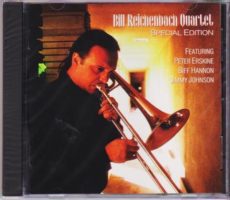
Bill Jr. is best known as a session musician for television, films, cartoons, and commercials and compose for the Cartoon All-Stars to the Rescue. He recorded a solo album, Special Edition, where he is featured on tenor as well as bass trombone. He played trombone on The Wiz and with the Seawind Horns including Jerry Hey on the Michael Jackson albums Off the Wall, Thriller and HIStory.
Trombonist and composer Bill Reichenbach continues to compose, perform and record.

Take A Dose On The Road
More Posts: trombone
Daily Dose Of Jazz..
Randal Edward Brecker was born November 27, 1945 in the Philadelphia, Pennsylvania suburb of Cheltenham to a musical family. Choosing the trumpet over the clarinet at school when he was eight, it was an easy selection after hearing Dizzy Gillespie, Miles Davis, Clifford Brown and Chet Baker at home. He attended Cheltenham High School and then Indiana University from 1963 to 1966 studying with Bill Adam, David Baker and Jerry Coker. He later moved to New York and performed with Clark Terry’s Big Bad Band, the Duke Pearson and the The Thad Jones/Mel Lewis Orchestras.
By 1967 Randy ventured into jazz-rock with the band Blood, Sweat & Tears, on their first album Child Is Father To The Man, but left to join the Horace Silver Quintet. He recorded his first solo album Score in 1968 and featured his brother Michael. Leaving Silver, he then joined Art Blakey’s Jazz Messengers before teaming up with brother Michael, Barry Rogers, Billy Cobham and John Abercrombie to form the fusion group Dreams. They recorded two albums for Columbia Records before disbanding in 1971. In the early Seventies Randy performed live with The Eleventh House, Stevie Wonder and Billy Cobham and recorded several albums with his brother under pianist and composer Hal Galper.
By 1975, Randy and Michael formed the Brecker Brothers band, releasing six albums for Arista and garnered seven Grammy nominations between 1975 and 1981. After the Brecker Brothers disbanded in 1982, he recorded and toured as a member of Jaco Pastorius’ Word of Mouth big band. It was soon thereafter that he met and later married Brazilian jazz pianist Eliane Elias, formed their own band, toured the world several times and recorded one album named after their daughter together, Amanda on Passport Records.
The 1990s would see Randy and Michael reunited for a world tour and a triple-Grammy nomination for the GRP recording The Return of the Brecker Brothers. Their 1994 follow-up album Out of the Loop won two Grammy Awards and he went on to record an album with Polish composer Włodek Pawlik. His first Grammy as a solo artists came from his project Into the Sun and this was followed by a series of recordings over the next decade and winning his third Grammy for Best Contemporary Jazz Album with 34th N Lex. He toured Europe, performed and recorded live and won a fourth Grammy with the WDR Big Band, and released a two CD set of live recordings with the Randy Brecker Band featuring Dave Kikoski, Victor Bailey, Steve Smith, Rodney Holmes and Hiram Bullock. He would go on to win a fifth Grammy with his album Randy in Brazil, and a sixth with Night in Calisia, a collaboration between Brecker, the Wlodek Pawlik Trio, the Kalisz Philharmonic Orchestra and Adam Klocek
Throughout the years he has performed and recorded with David Sanborn, Mike Stern, Bill Lee, Dave Weckl, Ada Rovatti, Stanley Turrentine, Billy Cobham, Larry Coryell, Bruce Springsteen, Lou Reed, Sandip Burman, Charles Mingus, Blood, Sweat & Tears, Horace Silver, Frank Zappa, Parliament-Funkadelic, Chris Parker, Dire Straits, Todd Rundgren, Blue Öyster Cult, Richard Barone, Spyro Gyra, Barbara Dennerlein Aerosmith Arkadia Jazz All Stars, Patti Austin, Gato Barbieri, George Benson, Carla Bley, Ron Carter, Robin Eubanks, Johnny Hodges, Jaroslav Jakubovič, Hubert Laws, Yusef Lateef, Arif Mardin, Brother Jack McDuff, Alphonse Mouzon, Idris Muhammad, Duke Pearson, Don Sebesky, Stanley Turrentine, Miroslav Vitous, Roseanna Vitro, Kenny Werner, Jack Wilkins, Charles Williams among others.
Trumpeter and flugelhornist Randy Brecker continues to compose, record, perform and tour.
Put A Dose In Your Pocket
More Posts: flugelhorn,trumpet
Daily Dose Of Jazz…
Jack T. Perciful was born on November 26, 1925 in Moscow, Idaho and began playing the piano at the age of seven. During his high school years he was already part of the University of Idaho Jazz Band. From 1943 he served in the military in California, and from 1945 to 1946 in the Army orchestras in Japan.
Returning to the U.S. after his discharge he continued his studies at the University of Idaho, earning a Master in Music Education. After a few years, of giving music lessons, he moved into the music business, initially in Spokane, Washington. 1952 saw Jack in Los Angeles, California playing piano initially working as a studio musician, but also played with Dicky Wells, Ernie Andrews and Charlie Barnet.
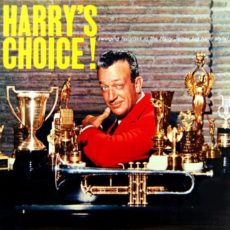
Harry James brought Perciful into his big band in Las Vegas, Nevada as a pianist and arranger, contributing to a total of 25 albums. He toured with the band throughout Europe, Latin America and Japan. As a sideman he appeared in 1970 on the album Two More Tenors: Boots and Corky by Boots Randolph and Corky Corcoran. After 18 years with the James outfit, he moved Olympia, Washington in 1974 and played at one of the local clubs, Tumwater Conservatory, accompanying soloists like Ernestine Anderson, and played with Bert Wilson and other local musicians. 1989 to 1991 he was a member of the Buddy Catlett Trio.
In subsequent years, he was on several albums on the Pony Boy label recording with Lance Buller and Charlie May. Perciful also appeared on the Ed Sullivan and Johnny Carson shows, performed with James in the Jerry Lewis film The Ladies’ Man in 1961 and in 2008 he was inducted into the Seattle Jazz Hall of Fame. Pianist and arranger Jack Perciful, who never recorded as a leader, passed away on March 13, 2008.
Sponsored By

More Posts: piano
Daily Dose Of Jazz…
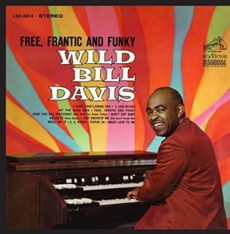
Wild Bill Davis was born November 24, 1918 in Glasgow, Missouri and originally played guitar and wrote arrangements for Milt Larkin’s Texas-based big band during 1939–1942. The band included Arnett Cobb, Illinois Jacquet, and Tom Archia on horns. After leaving the Larkin orchestra, he worked in Chicago, Illinois as a pianist, recording with Buster Bennett in 1945. He played a crucial role as the pianist-arranger in Louis Jordan’s Tympany Five from 1945 to 1947 at the peak of their success.
Leaving Jordan and Harlem, he returned to Chicago for a time, recording again with Bennett, working with Claude McLin and after switching from piano to organ, Davis moved back to the East Coast. In 1950, he began recording for Okeh Records, leading an influential trio of organ, guitar, and drums. Originally slated to record April in Paris with the Count Basie Orchestra in 1955 but could not make the session, Basie used his arrangement for the full band and had a major hit.
During the Sixties, in addition to working with his own groups, Wild Bill recorded several albums with his friend Johnny Hodges, leading to tours during 1969–1971 with Duke Ellington. In the 1970s he recorded for the Black & Blue Records label with a variety of swing all-stars, and he also played with Lionel Hampton, appearing at festivals through the early 1990s.
Pianist, organist and arranger William Strethen Davis, whose stage name was Wild Bill, passed away in Moorestown, New Jersey on August 17, 1995. He recorded some four-dozen albums as a leader and co-leader and another dozen as a sideman with Ray Brown, Sonny Stitt, Gene “Mighty Flea” Conners, Billy Butler, Floyd Smith and Eddie “Lockjaw” Davis among others. Prior to the emergence of Jimmy Smith in 1956, he was the pacesetter among organists and best known for his pioneering jazz electronic organ recordings.
Uplift Someone’s World