

Daily Dose Of Jazz…
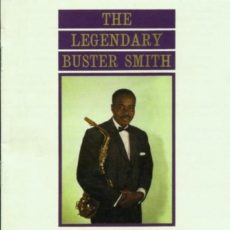
Buster Smith was born Henry Smith on August 24, 1904 Alsdorf, Texas, the third boy of five and earned the name “Buster” from his parents as he was an overweight baby when his mother gave birth. His early musical influences were his mother, and his father, who played guitar. At the age of four years, Buster and his brother Boston, a pianist, were playing organ, he played the keys and his brother stepped on the pedals. Soon thereafter, believing it would lead to a life of sin, his grandfather gave away the organ.
In 1919, Smith picked cotton for a week to earn himself the money to buy a $3.50 clarinet. He went on to learn to play several instruments by the time he was eighteen years old. Moving to Dallas in 1922, he joined the Voodie White Trio, playing alto saxophone and clarinet. The following year he began his professional career as an alto saxophonist with the medicine shows, though he had to play very loudly to draw in more customers. This experience defined his musical style, becoming known for being loud.
This period led to Oran “Hot Lips” Page inviting Smith to join his group, the Oklahoma City Blue Devils, in 1925. Over the next few years Buster wrote much of the group’s music, learning from banjo player Johnny Clark, writing lyrics with co-workers from the bank that he worked in.
As a Blue Devils he worked alongside Walter Page, Oran Page, Lester Young, Count Basie, Jimmy Rushing, and Emir “Bucket” Coleman. They toured the Kansas City area and the Midwest, playing jazz for a year, bringing all of its members into prominence. Basie and Page both left the group; and shortly afterwards so did Smith. He and Basie formed the Buster Smith-Count Basie Band of Rhythm, where the two innovated a louder style of jazz. Buster’s contribution to the unique sound was by using a tenor saxophone reed in his alto saxophone to achieve a louder, “fatter” sound. Young opted for a heavier reed, using a baritone saxophone reed on his tenor saxophone. This sound was later labelled the Texas Sax Sound.
Smith gained influence in the Texan music community and industry. He mentored saxophonist Charlie Parker during the 1930s, developing a father-son relationship. He played with a host of musicians including Duke Ellington, Ella Fitzgerald and Earl Hines but in 1941 he returned to Dallas and ceased touring but remained active in the local music scene. In the years that followed he wrote for jazz and blues bands, played often, and known as Professor Smith, taught many young Texan musicians, including Aaron “T-Bone” Walker and Red Garland among others. He also performed session work with Pete Johnson’s Boogie-Woogie Boys, Eddie Durham, Leo “Snub” Mosley, Bon and His Buddies, and the Don Redman Orchestra.
In the 1960s, Smith was involved in auto accident, his injuries causing him to give up the saxophone. Not to be dissuaded from performing he took up the bass guitar, led a dance band and played into the mid-Eighties with the Legendary Revelations. Alto saxophonist Buster Smith, who recorded only one album as a leader in 1959, passed away on August 10, 1991 of a heart attack in Dallas, Texas.

Jazz Is Global – Share

More Posts: saxophone
Daily Dose Of Jazz…
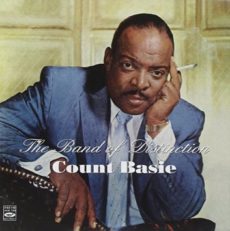
Count Basie was born William James Basie on August 21, 1904 in Red Bank, New Jersey. His father played mellophone, his mother piano and it was she who taught him to play the piano. She paid 25 cents for each piano lesson for him. Not much of a student in school, he finished junior high school before dropping out and spending much of his time at the Palace Theater learning to operate lights for vaudeville and to improvise accompaniment for acts and silent films at the hometown Palace Theater. Though a natural at the piano, he preferred drums but discouraged by the obvious talents of drummer Sonny Greer, who also lived in Red Bank, at age fifteen he switched to piano exclusively. By 16 years old, he increasingly played jazz piano at parties, resorts and other venues.
In 1924, Count went to Harlem, New York City where he met most of the major players including Willie “The Lion” Smith and James P. Johnson. His performing career expanded as he began touring with groups to the major jazz cities of Chicago, St. Louis and Kansas City on the Keith and TOBA vaudeville circuits. He met Fats Waller at Leroy’s cutting contest in Harlem who would teach him to play the organ and Smith gave him tips on piano technique and helped him book rent parties when times were lean. In 1929 he joined Bennie Moten’s band in Kansas City, and played with them until Moten’s death in 1935. Their tune The Moten Swing was an invaluable contribution to the development of swing.
At this point in his career he formed the Count Basie Orchestra and in 1936 they were in Chicago, Illinois for a long engagement and their first recording. Late one night they were improvising and came up with their signature tune One O’Clock Jump that stood for many years until their version of April In Paris.
He would go on to record for producer John Hammond on the Vocalion label with presiding members of the band being Ben Webster, Lester Young and Herschel Evans , Freddie Green, Jo Jones, Walter Page, Earle Warren, Buck Clayton and Harry Edison, Benny Morton and Dickie Wells.
He led the group for nearly 50 years, creating innovations like the use of two “split” tenor saxophones, emphasizing the rhythm section, riffing with a big band, using arrangers to broaden their sound, and others. Many musicians came to prominence under his direction, including Lester Young, Herschel Evans, Buck Clayton, Harry “Sweets” Edison, Paul Campbell, Tommy Turrentine, Johnny Letman, Idrees Sulieman, Joe Newman, Jimmy Wilkins, Benny Powell, Paul Quinichette and Floyd “Candy” Johnson, Marshal Royal, Ernie Wilkins and Charlie Fowlkes, as well as singers Jimmy Rushing, Joe Williams as well as recording with Ella Fitzgerald, Billy Eckstine, Frank Sinatra, Tony Bennett, Sammy Davis, Jr., Bing Crosby, and Sarah Vaughan.
He has won eight Grammy awards, had four recordings inducted into the Grammy Hall Of Fame, and has been inducted into the Long Island Hall of Fame, the Nesuhi Ertegun Jazz Hall of Fame, Down BEat Jazz Hall Of Fame, has been awarded NEA Jazz Master and has a star on the Hollywood Walk of Fame, among other awards. Pianist, organist, bandleader and composer Count Basie passed away pancreatic cancer in Hollywood, Florida on April 26, 1984.
Inspire A Young Mind

More Posts: piano
Daily Dose Of Jazz…
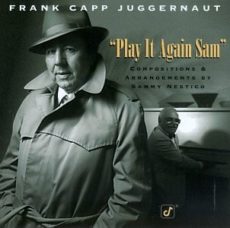
Frank Capp was born Francis Cappuccio on August 20, 1931 in Worcester, Massachusetts. He began playing with Stan Kenton in 1951, remaining for some time. Later he joined Neal Hefti’s group and often accompanied Peggy Lee on some of her road dates.
Capp subsequently came to Los Angeles, California where he joined Billy May. He performed and recorded with Chet Baker, Herbie Harper Quintet, Joe Pass, André Previn, J. J. Johnson, Ben Webster, Michael Nesmith, Anita O’Day, Frank Sinatra and Bud Shank among others.
Not limited to jazz he also played on numerous rock and roll sessions and is considered to be a member of The Wrecking Crew. This quintessential first-call group of musicians became Phil Spector’s de facto house band. Known as the Wall Of Sound Orchestra. They also played behind such 60s & 70s groups as Jan and Dean, Sonny & Cher, The Mamas & The Papas, Nancy Sinatra, The Byrds, The Monkees, Bob Dylan and The Beach Boys.
In 1975 together with Nat Pierce he founded the Capp/Pierce Juggernaut Band. Among the personnel have been Bill Berry, Bobby Shew, Marshal Royal, Blue Mitchell, Herb Ellis, Chuck Berghofer and Richie Kamuca, while the singers have been Ernie Andrews, Joe Williams, Ernestine Anderson and Nancy Wilson. Still led by drummer Frank Capp at age 84, the Juggernaut has proved sufficiently well founded to survive Pierce’s death in 1992.
Sponsored By

www.whatissuitetabu.com
More Posts: drums
Daily Dose Of Jazz…
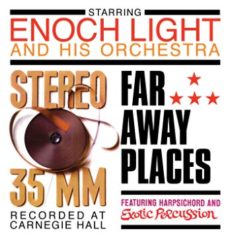
Enoch Henry Light was born August 18, 1905, in Canton, Ohio and became a classically trained violinist. The leader of various dance bands that recorded as early as 1927 and continued to 1940. For a time in 1928 he also led a band in Paris and in the 1930s studied conducting in Paris with French conductor Maurice Frigara.
Throughout the 1930s, Light was steadily employed in the generally more upscale hotel restaurants and ballrooms in New York mixing current popular songs with jazz. At some point his band was tagged “The Light Brigade”, often broadcasting over radio live from the Hotel Taft in New York where they had a long residency.
The 1940s saw Enoch recording for Brunswick, ARC, Vocalion and Bluebird, going on to become A&R (Artists and Repertoire) chief and vice-president of Grand Award Records, and then founded his own label Command Records in 1959. His name was prominent on many albums both as musician and producer. He revolutionized the creation of high-quality recordings in the late 1950s and early 1960s, particularly stereo effects that bounced the sounds between the right and left channels, often described as ping-pong recording. This technique had huge influence on the whole concept of multi-track recording that would become commonplace in the ensuing years.
The first of the albums produced on his record label was Persuasive Percussion, that became one of the first big-hit LP discs based solely on retail sales with little or no radio airplay because AM radio was monaural and had very poor fidelity. He did however,record several successful big band albums with an ace-group of New York studio musicians of the Swing Era.
His album covers were generally designed with abstract, minimalist artwork that stood out boldly from other album covers. Light developed the “gatefold” sleeve to fit his lengthy descriptions of the sleeve, enabling it to fold like a book, thus popularizing the gatefold packaging format. The gatefold sleeve became extremely popular in later decades, and was used on albums produced by CTI.
He would go on to work with The Free Design, The Critters, Rain, Doc Severinsen, Tony Mottola, Dick Hyman, organist Virgil Fox and arranger, Lew Davies, was one of the label’s most important contributors.
Violinist, bandleader and recording engineer Enoch Light retired from music entirely in 1974 and passed away four years later on July 31, 1978 in Redding, Connecticut.
Take A Dose On The Road
More Posts: violin
Daily Dose Of Jazz…
Anna Mae Winburn was born Anna Mae Darden on August 13, 1913 to a musical family in Port Royal, Tennessee and along with her three sisters migrated to Kokomo, Indiana, at a young age. Her first known publicized performance was singing with the studio band of Radio WOWO, Fort Wayne, Indiana. She worked at various clubs in Indiana, at times appearing under the pseudonym Anita Door.
From there she moved to North Omaha, Nebraska where she sang and played guitar for a variety of territory bands, or groups whose touring activities and popularity were geographically limited to several adjoining states, that were led by Red Perkins. During that time Winburn was a collaborator of Lloyd Hunter, frequently singing with Lloyd Hunter’s “Serenaders”. She also led the Cotton Club Boys out of Omaha, a group that at one point included the amazing guitarist Charlie Christian.
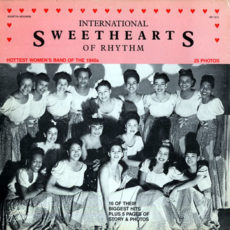
When many of the musicians were lost to the World War II draft she left for Oklahoma City and led bands for a short while. It was there that she led Eddie Durham’s “All-Girl Orchestra”, which eventually earned her an invite to join the International Sweethearts of Rhythm. Durham had been the composer for the International Sweethearts of Rhythm for two years before leaving to join Count Basie’s band.] After being recommended by Jimmie Jewel, who owned North Omaha’s Dreamland Ballroom, Anna Mae became the leader of the band in 1941. She was reportedly hired for her attractive figure, with the intention of doing little actual composing or singing but was the leader of the band until it folded in late 1949.
Vocalist and bandleader Anna Mae Winburn, who flourished beginning in the mid-1930s and led the all-female big band International Sweethearts of Rhythm, that was perhaps one of the few and one of the most racially integrated dance-bands of the swing era, passed away in Hempstead, New York on September 30, 1999.
Uplift Someone’s World
More Posts: vocal