

Daily Dose Of Jazz…
Roy Crimmins was born on August 2, 1929 in London, England of Irish and English descent. Originally self-taught, he was later mentored by the American bass trombonist Ray Premru of the Philharmonic Orchestra, and Ted Heath’s principal trombonist Don Lusher.
Crimmins turned professional in 1952 when he joined the Mick Mulligan band and over a career spanning 50 years he has played and collaborated with Duke Ellington, Louis Armstrong, Archie Semple, Freddy Randall, Harry Gold and Lennie Hastings to name a few notables.
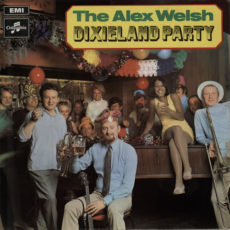
Collaborating with Alex Welsh in 1954, they started their own band and recorded with clarinettist Pee Wee Russell and Wild Bill Davison. The band was active for the following decade until Roy moved to Germany in 1965 where he kept a consistent lineup and a regular group. From 1970 until 1977 he lived in Switzerland again putting together a group using the pseudonym of Roy King and recorded three albums.
During this period he toured Europe extensively, had his own television show in Vienna for five years, and In the late 1970s, Crimmins went back to England and worked once again with Welsh until his death in 1982.
By the mid 1980s, Crimmins was approached by Bob Wilber to join his Benny Goodman and Duke Ellington orchestras, interpreting the original Lawrence Brown, Tricky Sam Nanton and Juan Tizol trombone solos, performing at the Nice and North Sea Jazz Festivals.
He was integral in establishing what is now known as the Red Sea Jazz Festival in Israel, moved to Tel Aviv, started the Israel Jazz Ensemble, and composed a commissioned concerto for Musica Nova that premiered at the Tel Aviv Museum of Art to great acclaim. His music is still broadcasted regularly.
Trombonist, composer and arranger Roy Crimmins, who composed some two dozen original compositions, passed away at the age of 85 on August 27, 2014 in London, England.

More Posts: trombone
Daily Dose Of Jazz…
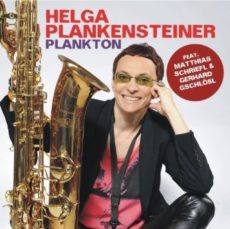
Helga Plankensteiner was born on August 1, 1968 in San Candido, Italy and studied classical saxophone at the Conservatory in Innsbruck under Florian Brambock, then jazz at the Conservatory of Trento. She would go on to study in various jazz workshops with Dick Oatts, Steve Slagle, Bobby Watson, Bob Bonisolo, Heinrich von Kalnein and Sandro Gibellini.
Helga expanded her talents to include vocals in her theater experience of the Threepenny Opera in addition to performing as a saxophonist for several other plays. She has been chosen by Musica Jazz in 2009 as one of the top ten rising talents, won the AMJ Big Band competition, and performed with the Orchestra Laboratorio of Trento with Matthias Ruegg, Bruno Tommaso, Maria Schneider, John Surman and Carla Bley.
She plays with the all-female saxophone quintet Girltalk, the Helga Plankensteiner Walter Civettini Quintet and the Unit Eleven Jazz Orchestra and. She is a permanent member of the Carla Bley Big Band, The Torino Jazz Orchestra and solos with Tom Harrell, Dusko Goykovich, Valery Ponomarev, Francesco Cafiso, Uri Caine, the Dani Felber Big Band and the Italian Sax Ensemble.
In addition, she conducts the ensemble Sweet Alps featuring soloists Gianluigi Trovesi, Florian Brambock, Michel Godard, Gianluca Petrella and Matthias Schriefl. Alto saxophonist Helga Plankensteiner continues to compose, record and perform at festivals worldwide.

Uplift Someone’s World

More Posts: saxophone
Daily Dose Of Jazz…
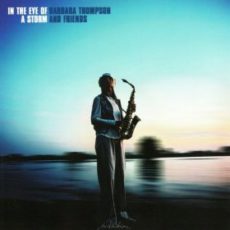
Barbara Gracey Thompson was born on July 27, 1944 in Oxford, United Kingdom. She studied clarinet, flute, piano and classical composition at the Royal College of Music, but it was the music of Duke Ellington and John Coltrane that caused her to shift her interests to jazz and saxophone.
Around 1970, Thompson she joined Neil Ardley’s New Jazz Orchestra and appeared on albums by Colosseum. Starting in 1975, she was a founding member of three bands, the first being the United Jazz and Rock Ensemble, with bandleaders Wolfgang Dauner, Volker Kriegel, Albert Mangelsdorff, Eberhard Weber, Ian Carr, Charlie Mariano, Ack van Rooyen and Jon Hiseman. The second was Barbara Thompson’s Jubiaba, a 9 piece Latin/rock band with Peter Lemer, Roy Babbington, Henry Lowther, Ian Hamer, Derek Wadsworth, Trevor Tomkins, Bill Le Sage and Glyn Thomas. The third, Barbara Thompson’s Paraphernalia, is her current working band with pianist Peter Lemer, vocalist Billy Thompson, bassist Dave Ball and Jon Hiseman on drums.
She was awarded the MBE in 1996 for services to music but due to her being diagnosed with Parkinson’s disease in 1997, she retired as an active saxophonist in 2001 with a farewell tour. Barbara went on to work exclusively as a composer exclusively, but returned to the stage in 2003 replacing the unwell Dick Heckstall-Smith during Colosseum’s “Tomorrow’s Blues” tour becoming a permanent member, and in 2005 she performed live with Paraphernalia in their “Never Say Goodbye” tour.
Thompson has worked with Andrew Lloyd Webber on musicals such as Cats, Starlight Express and Requiem. She has written several classical compositions, music for film and television, a musical of her own and has composed songs for her big band Moving Parts.
Sponsored By

www.whatissuitetabu.com
Daily Dose Of Jazz…
Jack Six was born on July 26, 1930 in Danville, Illinois. He studied trumpet between 1945-1947 and worked in Chicago, Los Angeles and New York City where he spent a year studying composition at the Juilliard School in 1955.
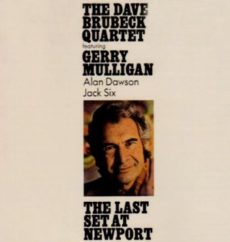
As a bassist he played in the Tommy Dorsey Ghost Band led by Warren Covington, then in the big bands of Claude Thornhill and Woody Herman while he continued his studies. He spent several years in groups led by Herbie Mann and also Don Elliott . From 1968 to 1974 he was a part of the Dave Brubeck Trio with drummer Alan Dawson and this tenure Jack followed with Jim Hall.
After a few years in television shows and the musical director of a hotel band from 1989-1998, Six returned to work with Brubeck on tour. Over the course of a forty year career he recorded some 77 jazz sessions with Maxwell Davis,Tal Farlow, Jack Reilly, Dave Pike, Marlene Verplanck, Gerry Mulligan, Susannah McCorkle, Dick Meldonian, Johnny Rae’s Afro-Jazz Septet, Marco Di Marco and Marty Grosz among numerous others.
Bassist Jack Six, a consummate sideman who never led his own recording session, passed away on February 24, 2015.
Dose A Day-Blues Away
#preserving genius
More Posts: bass
Daily Dose Of Jazz…
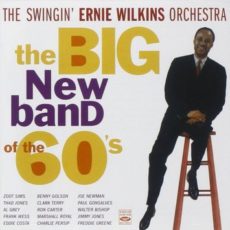
Ernest Brooks Wilkins Jr. was born on July 20, 1922 in St. Louis, Missouri. In his early career he played in a military band, before joining Earl Hines’s last big band. By 1951 he began working with Count Basie but after four years, in 1955 he began freelancing as a jazz arranger and writer of songs and was much in demand at that time.
By the Sixties Ernie’s success declined but revived after working with Clark Terry. This led to his touring Europe and his eventual settling in Copenhagen, Denmark, where he would live for the rest of his life. There he formed the Almost Big Band so he could write for a band of his own. The idea was partly inspired by his wife Jenny as the city had a thriving jazz scene with several promising jazz musicians as well as an established community of expatriate American jazz musicians that formed in the 1950s and included Kenny Drew and Ed Thigpen who joined the band along with Danish saxophonist Jesper Thilo.
The band released four albums, but after 1991 he became too ill to do much with it. He was responsible for orchestral arrangements on 1972’s self-titled album by Alice Clark, on Mainstream Records, that is a highly sought-after collectible today. He has a street named after him in southern Copenhagen, Ernie Wilkins Vej.
Tenor saxophonist, arranger and songwriter Ernie Wilkins, who wrote for Tommy Dorsey, Harry James, and Dizzy Gillespie, in addition to being the musical director for albums by Cannonball Adderley, Dinah Washington, Oscar Peterson, and Buddy Rich, passed away on June 5, 1999 of a stroke in Copenhagen.
Uplift Someone’s World
More Posts: arranger,saxophone,songwriter