

Daily Dose Of Jazz…
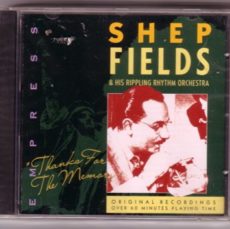
Shep Fields was born Saul Feldman in Brooklyn, New York on September 12, 1910, He played the clarinet and tenor saxophone in bands during college. In 1931 he played at the Roseland Ballroom and by 1933 he led a band that played at Grossinger’s Catskill Resort Hotel. In 1934 he replaced the Jack Denny Orchestra at the Hotel Pierre in New York City. He left the Hotel Pierre to join a roadshow with the dancers,Veloz and Yolanda. In 1936 his performance at Chicago’s Palmer House was broadcast on the radio.
The sound of his wife was blowing bubbles into her soda became his trademark that opened each of his shows. Holding a contest in Chicago for fans to suggest a new name for the band and with “rippling” suggested in more than one entry, Fields came up with “Rippling Rhythm.”
By 1936 he received a recording contract with Bluebird Records and had hits Cathedral in the Pines, Did I Remember? and Thanks for the Memory. In 1937 Fields replaced Paul Whiteman in his time slot with a radio show called The Rippling Rhythm Revue with Bob Hope as the announcer. In 1938, Fields and Hope were featured in his first feature-length motion picture, The Big Broadcast of 1938.
In 1941 Fields revamped the band into an all-reeds group, with no brass section. “Shep Fields and His New Music,” featuring band vocalist Ken Curtis. He reverted to Rippling Rhythm in 1947.
He disbanded the group in 1963, moved to Houston, Texas and became a disc jockey, later worked at Creative Management Associates with his brother Freddie. Shep Fields, who made a mark during the Big Band era, passed away on February 23, 1981 at Cedars-Sinai Medical Center in Los Angeles, California from a heart attack.

Dose A Day-Blues Away

Daily Dose Of Jazz…
Joe Deniz was born José William Deniz on September 10, 1913 in Butetown, Cardiff, Wales to a Black American mother and a Cape Verdean father. He learned the ukulele first, before upgrading to the fuller fretboard and along with his two brothers they all made their mark on the UK jazz dance scene. He started playing on the docks in Butetown, now known as Tiger Bay, where he played impromptu calypsos for the sailors for small change. As his skill increased so he would join other vagrant musicians traveling through the ethnic centers of Cardiff, playing engagements at houses in exchange for drinks. Eventually a nucleus of black musicians came together with Victor Parker, George Glossop and Don Johnson, finding work in Soho clubs.
After a brief sojourn to his home town, Deniz returned as drummer at the Nest, an after hours London club visited by Afro-Caribbean musicians and where he met Fats Waller and his idol, Django Reinhardt. He went on to join Ken ‘Snakehips’ Johnson’s Black Orchestra as his guitarist, remaining until 1941 when Johnson was killed in a Café De Paris bombing. He was injured at the time and had lifelong discomfort in his leg from shrapnel. He found session work with many top-flight band leaders, as well as violinist Stéphane Grappelli. His personal fame also rose via solos with Harry Parry’s Radio Rhythm Club Sextet.
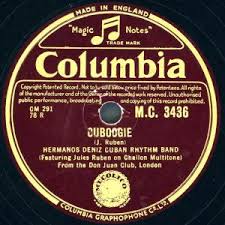
Turning away from jazz, he joined his brothers in the Latin-styled Hermanos Deniz, before joining the West End run of Ipi Tombi, a South African musical which featured his duets with his brother Frank. He retired from music in 1980, contenting himself with his memories, passion for DIY and running a successful business. Guitarist and drummer Joe Deniz, never recorded as a leader but as a member of the Hermanos Deniz group, passed away April 24, 1994.
Sponsored By

Daily Dose Of Jazz…
Norris Turney was born on September 8, 1921 in Wilmington, Ohio. He began his career in the Midwest, playing in territory bands such as the Jeter-Pillars Orchestra. He played with Tiny Bradshaw in Chicago, Illinois before moving to New York City, where he played with the Billy Eckstine Orchestra from 1945 to 1946.
Turney had little luck in New York and returned to Ohio to play in local ensembles through the 1950s. He toured with Ray Charles in 1967, then was hired by Duke Ellington, staying from 1969 to 1973. He was hired to play alto saxophone as an “insurance policy” due to the failing health of Johnny Hodges. He also played tenor saxophone and was the first flute soloist to ever play in Ellington’s orchestra.
Following his tenure with Ellington, he joined the Savoy Sultans, the Newport All-Stars and played in several pit orchestras. By the 1980s, he toured and recorded as a member of the Oliver Jackson Quintet, with Ali Jackson, Irvin Stokes, and Claude Black.
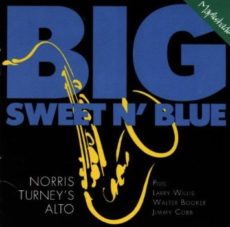
He recorded as a leader between 1975 and 1978, with I Let A Song with Booty Wood, Aaron Bell, Sam Woodyard and Raymond Fol. He released Big, Sweet ‘n Blue in 1993 with Larry Willis, Walter Booker and Jimmy Cobb. As a sideman he recorded with Randy Weston, Oliver Jackson and Red Richards. Flautist and saxophonist Norris Turney passed away of kidney failure on January 17, 2001, Kettering, Ohio.
Put A Dose In Your Pocket
Daily Dose Of Jazz…
Emil Richards was born Emilio Joseph Radocchia on September 2, 1932 in Hartford, Connecticut. He began playing the xylophone at age six and went on to graduate from the Julius Hartt School of Music. He took private lessons from Asher George Zlotnik and performed with the Hartford Symphony Orchestra and with various jazz musicians in New England.
After serving as Assistant Band Leader of the First Cavalry Army Band for two years, his career took off. He became first call percussionists for jazz, rock and other popular music as well as performing on countless movie and television soundtracks.
In 1954 Emil moved to New York City and played jazz gigs with Charles Mingus, Ed Shaughnessy and Ed Thigpen, while doing studio recordings for artists such as Perry Como, the Ray Charles Singers and Mitch Aires. In 1955 Emil joined the George Shearing Quintet and stayed with the group for over four years, playing 51 weeks a year.
1959 saw Richards settling in Los Angeles,California and working with the Paul Horn Quintet, Jimmy Witherspoon, the Shorty Rogers Big Band, Don Ellis, Lalo Schifrin, Dizzy Gillespie, Stan Kenton, Shelly Manne, Alphonse Mouzon, Dakota Staton, Gábor Szabó, Lenny Bruce and Lord Buckley. He also recorded with Frank Sinatra, Nelson Riddle, Judy Garland, Sarah Vaughan and Doris Day. In 1962, in response to a request from President John F. Kennedy, he and a small jazz combo joined Sinatra on a tour around the world for the benefit of underprivileged children.
He would go on to work with Harry Partch, go on a world tour, then return to Los Angeles to perform and record with among others the Beach Boys, Jan and Dean, Bing Crosby and Nat Cole, Frank Zappa’s Abnuceals Emuukha Electric Symphony Orchestra. He also worked on film scores for Jerry Goldsmith, John Williams, Henry Mancini, Elmer Bernstein, Johnny Mandel, Quincy Jones, Oliver Nelson, Neal Hefti, Lalo Schifrin, Dave Grusin, Michel Legrand, Alex North and Bill Conti, to name a few.
Emil began collecting ethnic percussion instruments that became so diverse and expansive that is became known as the Emil Richards Collection. Having served several terms on the Board of Directors for the Percussive Arts Society, and donating the largest single-donor collection of instruments to the society museum, he directed the sale of part of the collection to be sold to the L.A. Percussion Rentals so that the instruments continue to be heard.
Percussionist Emil Richards remains active in Musicians’ Union Local 47 as part of their campaign to get musicians credited in the film industry.
Inspire A Young Mind
More Posts: percussion

Daily Dose Of Jazz…
Anthony Branker was born August 28, 1958 in Elizabeth, New Jersey and raised in Piscataway and Plainfield, New Jersey. He attended the music program and graduated from Piscataway High School, then went on to Princeton University for his B.A. in Music, the University of Miami for a Master of Music in Jazz Pedagogy and finally to Columbia University, Teachers College receiving degrees of Master of Education and Doctor of Education; with specialties in Music and Music Education.
Hailing from Trinidad and Barbados heritage his family boasts a musical director and pianist with the Platters, a composer and pianist who worked with the Copasetics and Billy Strayhorn, and a music producer and bassist who has worked with Roberta Flack, Cyndi Lauper, Simply Red and others.
His lists of fellowships, commissions, compositions and collaborations while at Princeton University are extensive. He has been a Fulbright Scholar, received a grant from the National Endowment for the Humanities, and has conducted symphonies, orchestras and ensembles all over the world. Branker has performed and recorded with the Spirit of Life Ensemble and has shared the stage in a variety of musical settings with such artists as Ted Curson, Talib Kibwe, Guilherme Franco & Nova Bossa Nova, Steve Nelson, Marcus Belgrave, Billy Higgins, John Hicks, Michael Cochrane, Calvin Hill, Bobby Watson, Jacky Terrasson, Steve Nelson, Bob Mintzer, Don Braden, Ralph Peterson Jr.,Orrin Evans, Antonio Hart, Clark Terry, Phil Woods, Slide Hampton, Jimmy Heath, Jon Faddis, Ted Curson, Oliver Lake, Frank Foster, Benny Carter, Conrad Herwig, Eddie Henderson, James Weidman, Stanley Jordan, Benny Carter, Ralph Peterson, Terence Blanchard, Big John Patton, Roscoe Mitchell, Gary Burton,among numerous others, and has performed in the critically acclaimed Off-Broadway production of Dinah Was: The Dinah Washington Musical.
As an educator Anthony recently retired from Princeton University after 27 years on the faculty and the endowed chair in jazz studies, serving as founding director of the Program in Jazz Studies, director of university jazz ensembles program, and associate director of the Program in Musical Performance.
In 1999 with medical problems stemming from two brain aneurysms and the discovery of an arteriovenous malformation caused trumpeter, composer, educator, scholar, and conductor Anthony Branker to give up trumpet playing and to take a leave of absence from teaching.
Give The Gift Of Knowledge
More Posts: trumpet