

Daily Dose Of Jazz…
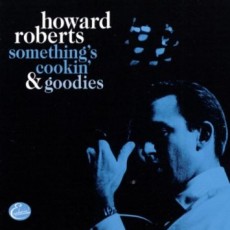
Howard Roberts was born on October 2, 1929 in Phoenix, Arizona and began playing guitar at the age of 8. By the time he was 15 he was playing professionally locally. He moved to Los Angeles in 1950 and with the help of Jack Marshall he began working with musicians, arrangers and songwriters including Neal Hefti, Henry Mancini, Bobby Troup, Chico Hamilton, George Van Eps and Barney Kessell.
Around 1956 Troup signed Howard to Verve Records as a solo artist and he he decided to concentrate on recording. He recorded both as a solo artist and “Wrecking Crew” session musician, a direction he would continue until the early 1970s. He would go on to play guitar on television themes such as The Twilight Zone, The Munsters, Bonanza, The Brady Bunch, Green Acres, Get Smart, Batman, Beverly Hillbillies, Andy Griffith, Peter Gunn, Mannix, Dick Van Dyke, I Dream of Jeannie, The Odd Couple and Mission Impossible among others. He also performed the theme for the classic Steve McQueen film Bullitt.
In 1961, Roberts designed a signature guitar, which was originally produced by Epiphone, a division of Gibson. The Howard Roberts signature was borne by two other models made by Gibson: the Howard Roberts Custom and the Howard Roberts Fusion III.
By 1963, Roberts recorded Color Him Funky and H.R. Is A Dirty Guitar Player, his first two albums after signing with Capitol Records. They both featured the same quartet with Roberts (guitar), bassist Chuck Berghofer, Earl Palmer on drums and Paul Bryant alternating with Burkley Kendrix on organ. He would go on to record nine albums with Capitol before signing with ABC Records/Impulse Records.
Over the course of his career he recorded with David Axelrod, June Christy, Buddy Collette, Milt Jackson, Hank Jones, John Klemmer, Charles Kynard, Herbie Mann, Thelonious Monk, Lalo Schifrin, Bud Shank, Bob Cooper, Gabor Szabo and Larry Williams, to name a few. As a member of the Wrecking Crew, he was a part of Phil Spector’s ‘Wall of Sound’ and played guitar on some of the most famous songs in pop music history.
From the late 1960s, Roberts began to focus on teaching rather than recording. He traveled around the country giving guitar seminars, and wrote several instructional books. For some years he also wrote an acclaimed column called “Jazz Improvisation” for Guitar Player magazine. he developed accelerated learning concepts and techniques, which led to the founding of Playback Music Publishing and the Guitar Institute of Technology. As a co-founder of GIT, now known as the Musicians Institute, his philosophy remains an integral part of the curriculum.
Guitarist Howard Roberts, who played rhythm and lead guitar, bass and mandolin, passed away of prostate cancer in Seattle, Washington on June 28, 1992. His life in music inspired the opening of Roberts Music Institute in Seattle, Washington, which is currently owned by his son, Jay Roberts.

Jazz Is Global – Share
Daily Dose Of Jazz…
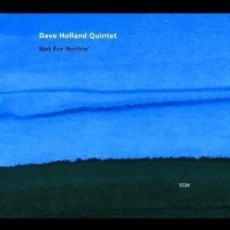
Dave Holland was born on October 1, 1946 in Wolverhampton, England and taught himself to play stringed instruments, beginning at four on the ukelele, then graduating to guitar and later bass guitar. He quit school at the age of 15 to pursue his profession in a top 40 band, but soon gravitated to jazz. After seeing an issue of Down Beat magazine where Ray Brow had won the critics’ poll for best bass player, he went to a record store, and bought a couple of LPs featuring Brown backing pianist Oscar Peterson and also two Leroy Vinnegar albums. He was also drawn to Charles Mingus and Jimmy Garrison.
A move to London in 1964 saw Dave played acoustic bass in small venues and studying with James Edward Merrett, principal bassist of the Philharmonia Orchestra, who taught him to sight read and then recommended he apply to the Guildhall School of Music and Drama. HoBy age 20, he was keeping a busy schedule in school, studios and Ronnie Scott’s Jazz Club. There he played in bands that supported such touring American jazz saxophonists as Coleman Hawkins, Ben Webster and Joe Henderson as well as John McLaughlin, Evan Parker, John Surman, Chris McGregor, John Stevens and Kenny Wheeler.
In 1968, Miles Davis and Philly Joe Jones heard him at Ronnie Scott’s Jazz Club, playing in a combo that opened for the Bill Evans Trio. Jones told Holland that Davis wanted him to join his band, replacing Ron Carter. Two weeks later he was given three days’ notice to fly to New York for an engagement at Count Basie’s nightclub and his two years with Davis began. His first recordings with Davis were in September 1968, and he appears on half of the album Filles de Kilimanjaro with Chick Corea, Wayne Shorter and Tony Williams. He also appeared on the albums In A Silent Way and Bitches Brew that led to his playing more electric bass with a wah-wah pedal as Davis’ music evolved into more electronic and amp-based.
Post Davis, Holland briefly joined the avant-garde jazz group Circle with Chick Corea, Barry Altshul and Anthony Braxton and recorded a few albums. He would go on to work as a leader and as a sideman with many other jazz artists in the 1970s recording and performing with Sam Rivers, Airto Moreira, Steve Grossman, Keith Jarrett Jack DeJohnette, Gary Bartz, Stan Getz, John Abercrombie and Bonnie Raitt. During the 80’s he worked with his first quintet featuring of Steve Coleman, Kenny Wheeler, Julian Priester or Robin Eubanks; formed a trio with DeJohnette and Coleman, and a quartet with Coleman, Kevin Eubanks and Marvin “Smitty” Smith.
From the 1990s onward Holland renewed an affiliation with Joe Henderson to record So Near, So Far, Porgy & Bess and Joe Henderson Big Band. He reunited with Betty Carter for the Feed The Fire recording, Herbie Hancock’s recordings of The New Standard and the Grammy Album of the Year session, River: The Joni Letters.
Dave continued to create new groups, new music and new recordings winning Best Large Ensemble Album Grammys for his work; he has won Down Beat’s Critics Poll for Musician of the Year, Big Band of the Year, and Acoustic Bassist of the Year, the Jazz Journalists’ Association also honored him as Musician and Acoustic Bassist of the Year; and has received the Miles Davis Award at the Montreal Jazz Festival, among numerous other honors and doctorates from Berklee College of Music, New England Conservatory and the Birmingham Conservatory in England..
As an educator, he has served as the artistic director of the Banff Summer Jazz Workshop, has tught workshops and master classes worldwide at universities and music schools, and is President of the UK-based National Youth Jazz Collective. Double bassist, composer and bandleader Dave Holland continues to perform, record and tour.
Give A Gift Of Jazz – Share
More Posts: bass
Daily Dose Of jazz…
Hank Levy was born Henry Jacob Levy September 27, 1927 in Baltimore, Maryland. He studied composition with George Thaddeus Jones at Catholic University in Washington, DC. He became interested in odd meters used by Maurice Ravel, Paul Hindemith and Igor Stravinsky, pre-dating Dave Brubeck’s 1959 Time Out album.
A prolific arranger of jazz standards, though few of them were published during his lifetime, Hank was especially fond of the music of the Broadway stage as it came through bebop by composers Cole Porter, George Gershwin and Jerome Kern. However, in his last years, he more frequently turned to bebop originals by Charlie Parker, Dizzy Gillespie and Tadd Dameron, sans odd meters but displaying distinctive creativity.
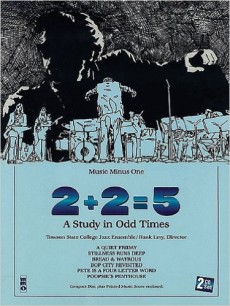
Levy began his full-time college teaching career at Towson State University in late 1967 creating The Towson State Jazz Ensemble. By 1970, his hard work and passion for teaching brought the band to national prominence when his Towson State Jazz Ensemble competed and won the outstanding band honors at the Notre Dame Jazz Festival. They recorded “2 + 2 = 5”, an album of six of his compositions and would go on to recorded several others over the years. Upon retirement in 1992 he founded the Hank Levy Legacy Band and recorded two albums for Sonority Records, Hank At Home and An Odd Time Was Had By All.
The 2014 jazz film Whiplash takes its title from Levy’s composition which originally appeared on the 1973 album Soaring by Don Ellis and portions of which are played several times during the course of the picture by the classroom Big Band ensemble. Composer, arranger and saxophonist Hank Levy, best known for his work with Stan Kenton and Don Ellis Orchestras, passed away in Parkville, Maryland on September 18, 2001.
Give The Gift Of Knowledge
More Posts: saxophone
Daily Dose Of Jazz…
Ray Wetzel was born on September 22, 1924 and played lead trumpet for Woody Herman from 1943 to 1945 and then with Stan Kenton from 1945 to 1948. In 1947 he recorded with the Metronome All-Stars, Vido Musso and Neal Hefti. The same year he married bass player Bonnie Addleman in 1949.
While with the Charlie Barnet Orchestra he played trumpet alongside Maynard Ferguson, Doc Severinsen and Rolf Ericson. He played with his wife in Tommy Dorsey’s ensemble in 1950 and with Kenton again in 1951. While touring with Dorsey on August 17,1951, he was killed in a car crash at the age of 27.
Ray Wetzel, the greatly admired by his fellow trumpeters, never got the opportunity to record as a leader. He is credited with composing the Stan Kenton tune ‘Intermission Riff’.
Dose A Day – Blues Away
More Posts: trumpet
Daily Dose Of Jazz…
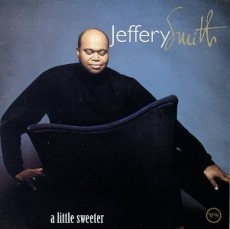
Jeffery Smith was born on September 14, 1955 in Queens, New York. He began honing his voice at a very early age, under the influence of his mother, Ramona, who was a classical singer. At the age of 18, he moved to Los Angeles, California for a decade and found work as a singer, actor and artist, landing several bit parts in television and film while performing in the local clubs.
In 1980 he starred in the bi-coastal production of Hollywood & Highland, produced by Lee Strasberg and Robert Greenhut. For his work on the show he was awarded the 1981 Drama Critic’s Award, from Drama Logue Magazine. Smith returned to New York in 1985, co-starred on stage in productions of Jesus Christ Superstar, Hair and Capitol Cakewalk in between performing in the city’s major clubs through 1991.
In the fall of 1991, what originally began as a Paris vacation for Jeffery, ended up being a 7-year stay and within 7 months, he met and was signed by Claude Bolling as the voice of his big band. Over the six years he recorded four albums, performed two world tours with Bolling’s Big Band throughout Europe and Asia and was the voice of numerous jingles for French commercials.
In the summer of 1995, Smith signed a 3-album contract with Universal/Verve and all three albums garnered international critical acclaim. His debut album he dedicated and titled Ramona, which was produced and accompanied by the legendary pianist Shirley Horn for the Gitanes/Verve label. His debut was followed by his sophomore project A Little Sweeter was praised in TIME Magazine as being “the most vital album of the year, and culminating with his 1999 Down Here Below.
He starred in and narrated the recording of Duke Ellington’s A Drum is a Woman in Paris, co-starred with Dee Dee Bridgewater in Cabaret and in her Peace & Love music video, as well as 3 sold out concerts at the Paris Olympia, establishing him as one of the most revered male jazz vocalists in the industry.
Jeffery has performed with Wynton Marsalis and Jazz At Lincoln Center, Regina Carter, Kenny Barron, Ray Drummond, Ben Riley, Dianne Reeves, Joe Lovano, TK Blue, Ernie Watts, Pete Levin, Winard Harper, and Chanda Rule among others.
While still performing internationally Jeffery headed his Non-Profit Production Company Tri-Loxodonta, Inc., the Portuguese translated means 3 Modern African Elephants. Ernie Watts, Pete Levin, Winard Harper, and Chanda Rule. Baritone vocalist Jeffery Smith whose distinctive style set him apart from the cadre of male singers, passed away on July 5, 2012
Take A Dose On The Road
More Posts: vocal