

Daily Dose Of Jazz…
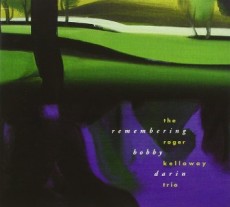
Roger Kellaway was born November 1, 1939 in Waban, Massachusetts. He matriculated through the New England Conservatory and one of his earliest mentors was piano teacher and director of the summer music camp Encore in Marblehead, Massachusetts.
In 1964 Kellaway was a piano sideman for bandleader-producer Boris Midney’s group The Russian Jazz Quartet’s album Happiness on the ABC/Impulse jazz records label. He has written and played the closing theme, Remembering You for the TV sitcom All In The Family and its spinoff Archie Bunker’s Place.
Roger has composed commissioned works for orchestra and jazz big band as well as for film, television, ballet and stage productions. He has served as band leader and pianist for Van Morrison’s Astral Weeks Live at the Hollywood Bowl concerts, been nominated for an Oscar for Best Adaptation Score for the 1976 film A Star Is Born, and a Grammy Award for Best Instrumental Arrangement for Eddie Daniels’ album Memos From Paradise.
He has played with Grady Tate, Jay Berliner, Igor Berukshtis, George Ricci, Ruby Braff, Chuck Domanico, Emil Richards, Edgar Lustgarten, Joe Pass, Red Mitchell, Gene Bertoncini, Jan Allan and Michael Moore among others. He has more than a dozen albums as a leader, and has arranged for Carmen McRae, Diane Schuur, Liza Minelli, Robben Ford, Gary Lemel, Kenny Burrell, J. J. Johnson, Kai Winding, Herbie Mann, Mark Murphy, Oliver Nelson, Clark Terry, Lalo Schifrin, Sonny Rollins, Sonny Stitt, Ben Webster and Jimmy Witherspoon. Pianist Roger Kellaway continues to perform, compose, arrange and record.

Jazz Is Global – Share
More Posts: piano
Daily Dose Of Jazz…
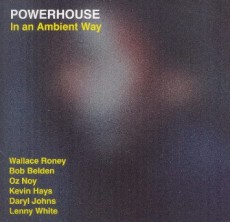
Bob Belden was born James Robert Belden on October 31, 1956 in Evanston, Illinois but was raised in South Carolina. He studied saxophone and later attended the University of North Texas.
In 2008, he arranged and produced Miles from India, a world fusion music record based on the compositions of Miles Davis. In the record, he assembled alumni of Davis and musicians of India. As producer he is mostly associated with the seminal reissue of the recordings by Miles Davis for Columbia Records.
In addition to his work as arranger, composer, conductor and A & R director, Belden contributed numerous liner notes for noted recordings, such as Lou’s Blues by Lou Marini and the Magic City Jazz Orchestra, with some of his liner notes receiving Grammy Awards.
Shortly before his death, Bob became the first American musician in 35 years to bring a band from the States to Iran to perform. He may be best-known for his Grammy Award winning jazz orchestral recording, Black Dahlia. He recorded nine albums as a leader and performed and recorded as a sideman or collaborated with Paquito D’Ribera, Tim Hagans, Nicolas Payton, Sam Yahel, John Hart and Billy Drummond to name a few.
Tenor and soprano saxophonist, arranger, composer, bandleader and producer Bob Belden died of a heart attack on May 20, 2015, at Lenox Hill Hospital in Manhattan at the age of 58.
Give A Gift Of Jazz – Share
More Posts: saxophone
Daily Dose Of Jazz…
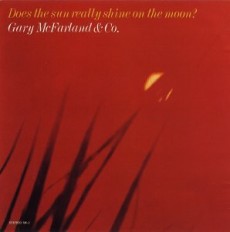
Gary McFarland was born in Los Angeles, California on October 23, 1933. An influential composer, arranger, vibraphonist and vocalist, he made a name for himself on Verve and Impulse Records during the Sixties, making one of the more significant contributors to orchestral jazz. He attained a small following after working with Bill Evans, Gerry Mulligan, Johnny Hodges, John Lewis, Stan Getz, Bob Brookmeyer and Anita O’Day.
His debut as a leader came in 1961 with the Jazz Version of How To Succeed In Business Without Really Trying. Gary recorded for Skye, Buddah and Cobblestone Records through the 1960s into the early Seventies. As well as eighteen of his own albums as a leader and arrangements for other musicians such as Lena Horne, Steve Kuhn, Gabor Szabo, John Lewis, Shirley Scott, Zoot Sims and Gary Burton, he composed the scores to the films Eye of the Devil in 1968 and Who Killed Mary What’s ‘Er Name in 1971.
By the end of the 1960s McFarland was moving away from jazz towards an often wistful or melancholy style of instrumental pop, as well as producing the recordings of other artists on his Skye Records label, run in partnership with Szabo and Cal Tjader until its bankruptcy in 1970.
Gary McFarland and Louis Savary wrote the classic song Sack Full Of Dreams that was first released by Grady Tate in 1968. He was considering a move into writing and arranging for film and stage when on November 3, 1971 he was poisoned with methadone in a New York City bar at the tender age of 38. In tribute Bill Evans performed Gary’s Waltz in 1979, shortly before his own death.
Jazz Is Global – Share
More Posts: arranger,composer,vibraphone,vocal
Daily Dose Of Jazz…
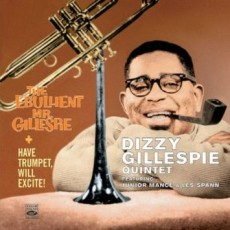
Dizzy Gillespie was born John Birks Gillespie on October 21, 1917 in Cheraw, South Carolina, the youngest of nine children of James and Lottie Gillespie. His father, a local bandleader, made instruments available to the children. He started playing the piano at the age of four and taught himself how to play the trombone as well as the trumpet by the age of twelve. From the night he heard his idol, Roy Eldridge, play on the radio, he dreamed of becoming a jazz musician. Receiving a music scholarship to the Laurinburg Institute in North Carolina, he attended for two years before accompanying his family when they moved to Philadelphia.
Gillespie’s first professional job was with the Frank Fairfax Orchestra in 1935, after which he joined the respective orchestras of Edgar Hayes and Teddy Hill, essentially replacing Roy Eldridge as first trumpet in 1937 and making his first recording as part of the band on King Porter Stomp. He would move on to play with Cab Calloway, alongside Cozy Cole, Milt Hinton and Jonah Jones until an altercation with Calloway got him fired. During his period he started writing big band music for bandleaders like Woody Herman and Jimmy Dorsey while freelancing with a few bands – most notably Ella Fitzgerald’s orchestra, comprised of members of the late Chick Webb’s band, in 1942. Avoiding service in World War II, he joined the Earl Hines band followed by a stint with Billy Eckstine’s big band, got reunited with Charlie Parker and finally left to play with a small combo of quintet size.
A forerunner of the evolution of bebop along with Parker, Monk, Bud Powell, Kenny Clarke, and Oscar Pettiford, Dizzy helped shape a new vocabulary of musical phrases. They jammed at Minton’s Playhouse and Monroe’s Uptown House with compositions like Groovin’ High, Woody ‘n’ You, Salt Peanuts and A Night In Tunisia that also introduced Afro-Cuban rhythms.
As an educator Gillespie taught or influenced many of the young musicians on 52nd Street including Miles Davis, Max Roach, Fats Navarro, Clifford Brown, Lee Morgan, Chuck Mangione and even balladeer Johnny Hartman about the new style of jazz, but after ambivalent or hostile reception in Billy Berg’s Los Angeles club, he decided to lead his own big band, though unsuccessful at his first attempt in 1945. He went on to work with Milt Jackson, John Coltrane, Lalo Schifrin, Ray Brown, Kenny Clarke, James Moody, J.J. Johnson and Yusef Lateef, whole appearing as a soloist for Norman Granz’s Jazz at the Philharmonic.
In 1948 Dizzy lost his ability to hit the B-flat above high C due to an automobile hitting the bicycle he was riding. He won the case, but the jury awarded him only $1000, in view of his high earnings up to that point. Not to be sidelined, he went on tour for the State Department earning himself the title Ambassador of Jazz. His new big band would tour the U.S. and record a live album at the 1957 Newport Jazz Festival and featured pianist Mary Lou Williams.
Dizzy immersed himself in the Afro-Cuban movement and hired Chano Pozo and Mario Bauza to play in his bands on 52nd Street, the Palladium and the Apollo Theater. He co-wrote with Pozo the songs Manteca and Tin Tin Deo, commissioned George Russell’s Cubano Be, Cubano Bop, and discovered Arturo Sandoval while on a music researching trip to Cuba.
As his tone gradually faded in the last years in life his performances often focused more on his protégés, such as, Arturo Sandoval and Jon Faddis, all the while keeping his good-humored comedic routines a part of his live act. Dizzy would go on to give 300 performances in 27 countries, appeared in 100 U.S. cities in 31 states and the District of Columbia, headline three television specials, performed with two symphonies, and recorded four albums.
Gillespie put himself on the ballot as a write-in candidate of the 1964 Presidential election, published his autobiography, To Be or Not To Bop, was a vocal fixture in many of the John & Faith Hubley’s animated films, such as The Hole, The Hat and Voyage to Next. He led the United Nation Orchestra, toured with Flora Purim and David Sanchez in his band, received Grammy nominations, guested on The Muppet Show, Sesame Street and The Cosby Show and had a cameo on Stevie Wonder’s hit Do I Do and Quincy Jones’ Back On The Block.
Inducted into the Down Beat Magazine’s Jazz Hall of Fame, Dizzy was also honored by being crowned a traditional chief in Nigeria, received the Ordre des Arts et des Lettres from France, and was named Regent Professor by the university of California, received fourteen honorary doctorates, received a Grammy Lifetime Achievement Award, the Polar Music Prize, a Hollywood Walk of Fame Star, the Kennedy Center Honors Award, and the Ameican Society of Composers, Authors and Publishers Duke Ellington Award for 50 years of achievement. Composer, performer, bandleader and trumpeter Dizzy Gillespie passed away of pancreatic cancer on January 6, 1993 in Englewood, New Jersey at the age of 75. In 2014, Gillespie was inducted into the New Jersey Hall of Fame.
Inspire A Young Mind
More Posts: trumpet
Daily Dose Of Jazz…
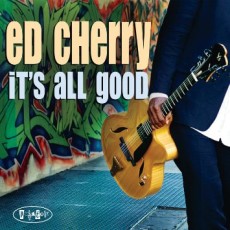
Ed Cherry was born in New Haven, Connecticut on October 12, 1954. Moving to New York City, the guitarist began a long association with Dizzy Gillespie playing in his quartet, big band and the United Nation Orchestra from 1978 until shortly before the trumpeter’s death in 1993. During this tenure he was a part of the Grammy winning recording Live At Royal Festival Hall.
Ed recorded his debut album as a leader in 1993 titled First Take and was a part of the recording session for Paquito D’Rivera’s Havana Café. His sophomore project A Second Look was released in 1995.
As an educator Cherry has taught guitar at Essex Community College in Newark, New Jersey, at the Henry Street Settlement in New York City, has been a faculty member at Montclair State University, School of Fine and Performing Arts for J.O.Y. (Jazz Opportunity for Youth) and is currently a staff member at Jazzmobile in New York City.
When not leading his own groups he is in the studio holding down sideman duties working with Paquito D’ Rivera, Jon Faddis, John Patton, Hamiet Bluiett, Henry Threadgill, Mark Weinstein, C.I. Williams and Paula West to name a few. He has recorded several albums as a leader, more than a dozen as a sideman and continues to perform with his current trio.
Take A Dose On The Road
More Posts: guitar