

Daily Dose Of Jazz…
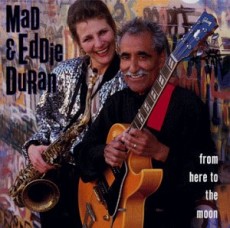
Eddie Duran was born Edward Lozano Duran on September 6, 1925 in San Francisco, California. He started learning to play piano at age seven, and switched to guitar by the time he was 12. After about seven months of lessons he began teaching to himself. Within his household was plenty of jazz growing up as his older brothers Carlo was a jazz pianist and Manuel was a jazz bassist.
Duran recorded as leader in 1956 with Fantasy Records, and around 1957, he was the guitarist in the CBS Radio Orchestra under the direction of Ray Hackett for the Bill Weaver Show. While playing with the CBS Orchestra, he met Ree Brunell and performed on her debut album, Intro To Jazz of the Italian-American. The album was the first LP recorded by the short-lived San Francisco Jazz Records label under the umbrella of the radio station.
Throughout the fifties he performed or recorded with his childhood friend Vince Guaraldi, as well as with Cal Tjader in his Mambo Quintet, and Stan Getz. In addition, Eddie was a featured performer and recording artist with several notable jazz combos that included his brothers. By 1960 he was leading his own trio for the next seven years but joined his brother Carlos on Benny Velarde’s 1962 album, Ay Que Rico. From 1976 to 1981 he was a member of Benny Goodman’s orchestras and octet.
Between 1980 and 1982, Duran recorded with Tania Maria, moved to New York City performing in a quartet that he organized and crossed paths with Getz again in 1983 while recording the Dee Bell studio album, Let There Be Love. The list of jazz artist he has performed with extends to Charlie Parker, George Shearing, Red Norvo and Earl Hines among others.
Eddie and his wife Mad (Madeleine) was initially a classically trained flutist, saxophonist and a music educator, continue to co-lead, perform and collaborate on five albums as well as individual endeavors.

Give The Gift Of Knowledge
More Posts: guitar
Daily Dose Of Jazz…
Gerald Stanley Wilson was born on September 4, 1918 in Shelby, Mississippi. At age 16 he moved to Detroit, Michigan where he attended with Wardell Gray and graduated from Cass Technical High School. He joined the Jimmie Lunceford Orchestra in 1939, replacing its star trumpeter and arranger Sy Oliver. While with the band, Wilson contributed numbers to the band’s book, including “Hi Spook” and “Yard-dog Mazurka”, the first being influenced by Ellington’s Caravan and the latter being a big influence on Stan Kenton’s Intermission Riff.
During World War II he performed for a brief time with the U.S. Navy with musicians including Clark Terry, Willie Smith and Jimmy Nottingham, among others. Gerald formed his own band, with some success in the mid-1940s, but by 1960, he formed a Los Angeles-based band that began a series of critically acclaimed recordings for the Pacific Jazz label. His band at various times included Snooky Young, Carmell Jones, Bud Shank, Joe maini, Harold Land, Teddy Edwards, Don Raffell, Joe Pass, Richard Holmes, Riy Ayers, Bobby Hutcherson, Mel Lewis and Mel Lee.
Wilson continued leading bands and recording in later decades for the Discovery and MAMA labels, many of his compositions reflected Spanish/Mexican themes and many were named after his family members. His later bands included Luis Bonilla, Rick Baptist, Randall Willis, son-in-law Shuggie Otis, son Anthony Wilson, grandson Eric Otis, Jimmy Owens, Oscar Brashear, Ron Barrows and Jon Faddis..
In 1998, Wilson received a commission from the Monterey Jazz Festival for an original composition, resulting in “Theme for Monterey”, performed at that year’s festival. He went on to form orchestras on the West and East coasts, each with local outstanding musicians. He also made special appearances as guest conductor with the Carnegie Hall Jazz Band, the Lincoln Center Jazz Orchestra, the Chicago Jazz Ensemble, BBC Big Band and other European radio jazz orchestras.
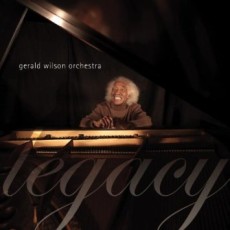
Gerald hosted an innovative show in the 1970’s, on KBCA in Los Angeles, California with co-host Dennis Smith, taught at California State University – Northridge and Los Angeles, Cal Arts, and University of California both in Los Angeles, and his 1998 album Theme For Monterey and his final 2011 recording Legacy were both nominated for a Grammy.
Throughout his career he wrote arrangements for the likes of Duke Ellington, Sarah Vaughan, Ray Charles, Julie London, Dizzy Gillespie, Ella Fitzgerald, Benny Carter, Lionel Hampton, Billie Holiday, Dinah Washington and Nancy Wilson just to name a few. Trumpeter, bandleader, composer, arranger and educator Gerald Wilson passed away on September 8, 2014 in his home in Los Angeles, California after a brief illness that followed a bout of pneumonia. He was 96 years old.
Jazz Is Global – Share
More Posts: trumpet
Daily Dose Of Jazz…
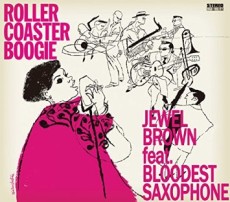
Jewel Brown was born on August 30, 1937 in Houston, Texas. Her first professional performance was at the age of 12 in the Manhattan Club in Galveston, Texas. Before graduating from Jack Yates High School, Lionel Hampton offered her the opportunity to tour professionally in Europe.
In 1957 while on vacation in Los Angeles, California she sat in with organist Earl Grant at the Club Pigalle. Grant hired her that night and her performing relationship lasted for a year. Jewel went on to work for Dallas, Texas nightclub owner Jack Ruby. In the next decade she was approached with offers of vocal positions with Duke Ellington and Louis Armstrong. She chose Armstrong and appeared with him in the films Louis Armstrong and All Stars and Solo.
Brown retired from singing and performing in 1971 to care for ailing family members and later established a hair salon in Houston. In recent years she has revived her singing career and in 2012 she released her first album as a co-leader title Milton Jackson & Jewel Brown. The following year she was nominated for a Blues Music Award in the Koko Taylor Award: Traditional Blues Female category. She is currently a member of the Heritage Hall Jazz Band.
Give The Gift Of Knowledge
More Posts: vocal
Daily Dose Of Jazz…
Charles Parker, Jr. was born on August 29, 1920 in Kansas City, Kansas but was raised in Kansas City Missouri, the only child of Adelaide and Charles Parker. He began playing the saxophone at age 11 and by age 14 he joined his school’s band using a rented school instrument. His father, a pianist, dancer and singer on the Theater Owners Booking Association (T.O.B.A.) circuit, was often absent but provided some musical influence. His biggest influence at that time was a young trombone player who taught him the basics of improvisation.
By the late 1930s Parker began to practice diligently. During this period he mastered improvisation and developed some of the ideas that led to bebop. He played with local bands in jazz clubs around his hometown perfecting his technique, with the assistance of Buster Smith, whose dynamic transitions to double and triple time influenced the young man’s developing style.
In 1938, he joined pianist Jay McShann’s territory band touring nightclubs and other venues in the Southwest, Chicago and New York City. During this stint with McShann he made his professional recording debut. As a teenager, Charlie developed a morphine addiction while hospitalized after an automobile accident, and subsequently became addicted to heroin.
In 1939 Parker moved to New York City, to pursue a career in music. He held several other jobs as well. He worked for nine dollars a week as a dishwasher at Jimmie’s Chicken Shack, where pianist Art Tatum performed. In 1942 he left McShann and played with Earl Hines for one year alongside Dizzy Gillespie. A strike by the American Federation of Musicians unfortunately resulted in few recordings documenting this period of his playing. He played in after-hours clubs in Harlem with other young cats at the time, such as, Thelonious Monk, Charlie Christian, Mary Lou Williams and Kenny Clarke, creating a music that white bandleaders couldn’t usurp and profit from like they did with swing.
It was while playing Cherokee in a jam session with William “Biddy” Fleet that he hit upon a method for developing his solos that enabled one of his main musical innovations, the 12 semitones of the Chromatic scale could lead melodically to any key, breaking some of the confines of simpler jazz soloing.
By 1945 after the lifting of the recording ban that Charlie’s collaboration with Dizzy Gillespie, Max Roach, Bud Powell and others would have a substantial effect on the jazz world beginning with their June 22, 1945 Town Hall performance. Bebop soon gained wider appeal among musicians and fans alike.
On November 26th of that same year he led a record date for Savoy Records that is arguably the “greatest jazz session ever” with Miles Davis, Curly Russell, and Max Roach. Shortly afterward, the Parker/Gillespie band traveled to an unsuccessful engagement at Billy Berg’s club in Los Angeles. However staying in California he spiraled down into great hardship due to his heroin addiction, ultimately being committed to Camarillo State Mental Hospital for six months.
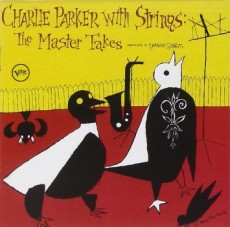
Although he produced many brilliant recordings during this period, Parker’s addiction led to increasingly erratic behavior. Recording sessions were hard, but he recorded the classic Relaxin’ at Camarillo before his return to New York. He would record a series of sessions with Savoy and Dial record labels, innovate by fusing jazz and classical elements into what would become known as Third Stream, releasing Charlie Parker with Strings.
The influential jazz musician who was at the gate of bebop and the man affectionately known as Yardbird or simply Bird, Charlie Parker died on March 12, 1955, in the suite of his friend and patroness Baroness Pannonica de Koenigswarter at the Stanhope Hotel in New York City while watching The Dorsey Brothers Stage Show on television. The official causes of death were lobar pneumonia and a bleeding ulcer but also an advanced case of cirrhosis and he had suffered a heart attack. The coroner who performed his autopsy mistakenly estimated Parker’s 34-year-old body to be between 50 and 60 years of age. His friend Dizzy Gillespie paid for the funeral arrangements and organized a lying-in-state, a Harlem procession officiated by Congressman and Reverend Adam Clayton Powell Jr., as well as a memorial concert.
He left the world classic jazz compositions, arrangements and versions of tunes such as Ornithology, How High The Moon, Yardbird Suite, Billie’s Bounce, Now’s The Time, Au Privave, Barbados, Relaxin’ at Camarillo, Bloomdido, Blues for Alice, Laird Baird, Si Si, Constellation, Donna Lee, Scrapple From The Apple, Cheryl, Ah-Leu-Cha, Anthropology and Cool Blues among others.
He was posthumously awarded a Grammy for Best Performance by a Soloist in 1974, a Grammy Lifetime Achievement Award in 1984, had two albums Jazz At Massey hall and Charlie Parker with Strings and two singles Ornithology and Billie’s Bounce inducted into the Grammy Hall of Fame. He has been inducted into the Big Band and Jazz Hall of Fame and the Jazz at Lincoln Center: Nesuhi Ertegun Jazz Hall of Fame and had a 32 cent stamp commissioned and issued by the United State Post Office.
Put A Dose In Your Pocket
More Posts: saxophone
Daily Doe Of Jazz…
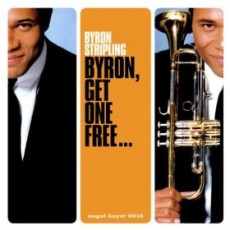
Byron Stripling was born as Lloyd Byron Stripling on August 20, 1961, in Atlanta, Georgia. He attended Eastman School of Music in Rochester, New York, and the Interlochen Arts Academy in Michigan.
Following his studies, Stripling was featured as lead trumpeter and soloist with the Count Basie Orchestra when Thad Jones and Frank Foster were directing. His touring and recording reads like a who’s who list with Dizzy Gillespie, Woody Herman, Lionel Hampton, Clark Terry, Louis Bellson, Buck Clayton,, Gerry Mulligan,, J.J. Johnson, Jim Hall, Sonny Rollins, Paquito D’Rivera, Freddie Cole, Jack McDuff, the Lincoln Center Jazz Orchestra, the Carnegie Hall Jazz Band, the Joe Henderson Big Band and the GRP All-Star Big Band.
Byron debuted at Carnegie Hall with Skitch Henderson and the New York Pops. He took on Broadway as the lead in the musicals Satchmo and From Second Avenue to Broadway, and has had a featured cameo in the television movie The Young Indiana Jones Chronicles. He again portrayed Louis Armstrong in Dave Brubeck’s revival of his The Real Ambassadors.
He has been a featured soloist at the Newport Jazz Festival, Hollywood Bowl and the Vail Jazz Festival as well as with the Boston Pops, Cincinnati Pops, Baltimore Symphony, St. Louis Symphony and Vancouver Symphony Orchestras, and the Seattle, Utah and Minnesota Symphonies, and The American Jazz Philharmonic.
In 2002 Stripling was selected to succeed Jazz Arts Group founder, Ray Eubanks, as the Artistic Director of the Columbus Jazz Orchestra. He continues to serve in that role, while also performing throughout the world with symphony orchestras and his own small group.
Give A Gift Of Jazz – Share
More Posts: trumpet