

Daily Dose Of Jazz…
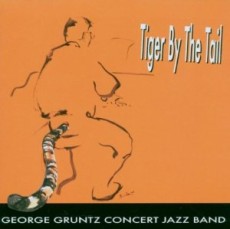
George Gruntz was born in Basel, Switzerland on June 24, 1932. The young pianist won prizes at Zurich Jazz Festivals and in 1958 was pianist with the International Youth Band at the Newport Jazz Festival. While there he accompanied, among others Louis Armstrong and in an instant became famous.
George went on to work with jazz musicians Phil Woods, Roland Kirk, Don Cherry, Chet Baker, Art Farmer, Dexter Gordon, Johnny Griffin and Mel Lewis to name a few. From 1972 to 1994 he served as artistic director for the JazzFest Berlin, composed his first opera, founded the Piano Conclave and the George Gruntz Concert Jazz Band and moderated the TV music series “All You Need Is Love”.
An accomplished arranger and composer, having been commissioned by many orchestra and symphonies, he is also an organist, harpsichordist and keyboardist with more that three dozen albums to his credit. He continued to compose, arrange, record and perform until his death on January 10, 2013.

Put A Dose In Your Pocket
More Posts: harpsichord,keyboard,organ,piano
Daily Dose Of Jazz…
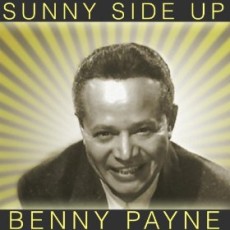
Benny Payne was born on June 18, 1907 in Philadelphia, Pennsylvania and began playing piano when he was 12, working as an organist at a Philadelphia church as a teenager. His professional career started in 1926, working locally and with Wilbur Sweatman’s band for six months in 1928.
Fats Waller gave him some unofficial lessons; they recorded two piano duets in 1929. Payne worked as accompanist for singer Elizabeth Welch, was a member of the Blackbirds of 1929 show and toured Europe, appeared in Hot Chocolates and accompanied Gladys Bentley.
His foremost claim to fame was as Cab Calloway’s regular pianist during the singer’s prime years from 1931 until he had to join the Army in late 1943, then again after the war until ’46. Although he did not solo much, he was a major asset to the group and gave the big band stability in addition to contributing to the solid rhythm section.
He worked with Pearl Bailey, led his own trio and then started working in 1950 started a long relationship as pianist and musical director for lounge signer Billy Daniels until the singer’s death. In 1964, Payne appeared on Broadway in a revival of “Golden Boy” with Daniels and Sammy Davis, Jr.
He primarily performed in the cabaret world, led only one recording session as a leader for Kapp Records in 1955. Pianist Benny Payne retired and settled in Los Angeles, passing away on January 2, 1986.
Jazz Is Global – Share
More Posts: piano
Daily Dose Of Jazz…
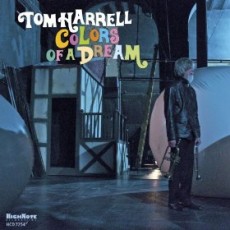
Tom Harrell was born on June 16, 1946 in Urbana, Illinois but by 5 was growing up in San Francisco. He started playing trumpet at eight and within five years, started playing gigs with local bands. Graduating from Stanford University with a music composition degree, he joined Stan Kenton’s orchestra, touring and recording with them throughout 1969.
After leaving Kenton, the post-bop trumpeter played with Woody Herman, Azteca, Horace Silver, the Sam Jones-Tom Harrell Big Band, the Lee Konitz Nonet, George Russell and the Mel Lewis Orchestra. Through the ‘80s he became a pivotal member of the Phil Woods Quintet making seven albums with the group.
Harrell is also plays flugelhorn and is a composer and arranger who has collaborated and recorded albums with Bill Evans, Dizzy Gillespie, Ronnie Cuber, Bob Brookmeyer, Lionel Hampton, Bob Berg, Bobby Shew, Joe Lovano, Charlie Haden’s Liberation Orchestra, Art Farmer, Charles McPherson and Kathleen Battle among others.
Since 1989 Harrell has led his own groups, usually quintets but has expanded ensembles such as chamber orchestra with strings and big bands. He has appeared at virtually every major jazz club and festival venues, and recorded under his own name for such record labels as RCA, Contemporary, Pinnacle, Blackhawk, Criss Cross, Steeplechase, Chesky and HighNote Records.
The Grammy-nominated artist has arranged and composed for Carlos Santana, Arturo O’Farrill, Metropole Orchestra and other big bands as well as his compositions being recorded by Ron Carter, Kenny Barron, Tom Scott, Chris Potter, Steve Kuhn and Hank Jones to name a few. In recent years he has formed and recorded with piano-less sextet “Colors Of A Dream” and piano-less quartet TRIP.
Despite his well-documented schizophrenia, Tom Harrell has successfully coped with the illness through medication and has become an influential figure in the jazz world. Throughout his career he has won numerous awards and grants, including multiple Trumpeter of the Year awards from Down Beat magazine, SESAC Jazz Award, BMI Composers Award, and Prix Oscar du Jazz. He has amassed a recorded discography of over 260 albums and continues to actively compose, record and tour extensively around the world.
Put A Dose In Your Pocket
More Posts: arranger,composer,flugelhorn,trumpet
Daily Dose Of Jazz…
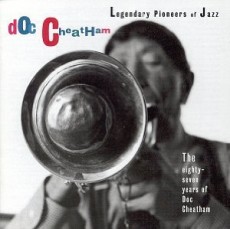
Adolphus Anthony Cheatham, better known as Doc Cheatham was born on June 13, 1905 in Nashville, Tennessee. Growing up without jazz, he was introduced by early recordings and touring bands of the late 1910s. Abandoning family plans to be a pharmacist to play music, he retained the name Doc and started with the soprano and tenor saxophone in addition to trumpet in the African American Vaudeville theatre.
He toured the TOBA circuit (Theatre Owners Booking Association) accompanying blues singers but it wasn’t until his move to Chicago and hearing King Oliver that his focus turned to jazz. A year later Louis Armstrong added his influence on Doc’s playing. Cheatham went on to play with Ma Rainey, worked in the big bands of Bobby Lee, Wilbur de Paris, Chick Webb, Sam Wooding, Cab Calloway, Fletcher Henderson, Benny Carter, Claude Hopkins and Teddy Wilson through the 30s and 40s.
By the late 40s into the 50s Doc play in New York City Latin bands of Ricardo Ray, Marcelino Guerra, Perez Prado and Machito. In the 60s he led his own band for five years then worked with Benny Goodman. In the 70s he began singing after scatting during a Paris recording session, was well received and he continued to sing for the rest of his life.
Cheatham created his best work after the age of 70, winning a Grammy with Nicholas Payton and Butch Thompson for the Verve Record release of “Doc Cheatham and Nicholas Payton”. Trumpeter, singer and bandleader Doc Cheatham continued playing until two days before his passing on June 2, 1997, eleven days shy of his 92nd birthday.
Dose A Day – Blues Away
More Posts: trumpet
Daily Dose Of Jazz…
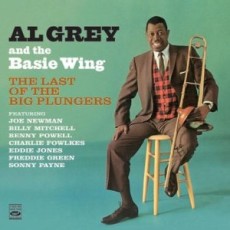
Al Grey was born in Aldie, Virginia on June 6, 1925 but grew up in Pottstown, Pennsylvania. After serving in the Navy during WWII, where he started playing trombone, he joined Benny Carter’s band, later moving to Lionel Hampton’s trombone section. After some solo worked he joined Dizzy Gillespie’s big band in ’56 and a year later was touring Europe with Count Basie.
Trummy Young inspired Al’s early trombone style and he developed a wild, strong and full sound. Solos often consisted of short, pronounced phrases with precisely timed syncopation. He became known for his plunger mute technique, later writing an instructional book title “Plunger Techniques”. When playing with the plunger, however, he would produce the most mellow fill-ins and shape melodic answers to the lead voice.
After 1961 Grey performed only occasionally with the Count and apart from leading his own combos, he collaborated with many jazz greats such as Herbie Hancock, Melba Liston, J. J. Johnson, Quincy Jones, Ray Charles, Jack McDuff, Ella Fitzgerald and Frank Sinatra. His trombone skills were also featured on the award-winning soundtrack for The Color Purple.
Al Grey, who passed away on March 24, 2000, greatly contributed to the post-swing era jazz-trombone vocabulary and will be remembered for his charming personality as well as his ability to bond with audiences around the world.
Take A Dose On The Road
More Posts: trombone