

Daily Dose Of Jazz…
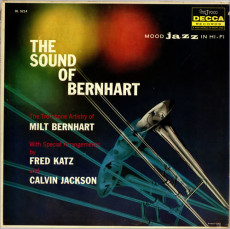
Milt Bernhart was born on May 25, 1926 in Valparaiso, Indiana and began his musical career with the tuba. By high school he switched to trombone and by 16 he was working in Boyd Raeburn’s band and later gigged with Teddy Powell.
After a tour in the Army he worked, off and on, with Stan Kenton for the next ten years. He is perhaps most associated with Kenton, but in 1955 he had his first album as a leader. In 1986 he was elected President of the Big Band Academy of America.
Widely known as a mild-mannered and humorous musician his brief period with Benny Goodman was one area that brought out his ire. Except for the Army’s basic training, Milt indicates working with Goodman was “the bottom” of his first 23 years of life, referring to him as a bore and could not abide Goodman’s public humiliation of tenor saxophonist Wardell Gray or his segregated treatment at a Las Vegas club.
West coast jazz trombonist Milt Bernhart, who supplied the exciting solo heard in the middle of Sinatra’s popular 1956 recording of “I’ve Got You Under My Skin” conducted by Nelson Riddle, passed away on January 22, 2004 in Glendale, California.26-2004

Jazz Is Global – Share
More Posts: trombone
Daily Dose Of Jazz…
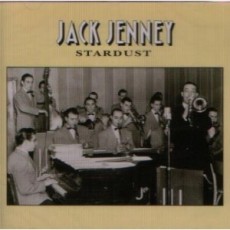
Jack Jenney was born Truman Eliot Jenney May 12, 1910 in Mason City, Iowa and started playing in his father’s band from the age of 11. The trombonist’s first professional work began with Austin Wylie in 1928 but he would go on to work with Isham James, Red Norvo, Artie Shaw, Mal Hallett and Waring’s Pennsylvanians.
Jack led his own band for a year in 1939-40, which included Peanuts Hucko, Paul Fredricks and Hugo Winterhalter. Although this band received good reviews it was a financial failure. Best known for instrumental versions of the song Stardust, he won the Down Beat Reader’s Poll for trombone in 1940 and would appear in the 1942 film “Syncopation”.
After his return from being drafted into the United States Navy, trombonist Jack Jenney died of complications related to appendicitis in Los Angeles, California on December 16, 1945.
Give A Gift Of Jazz – Share
More Posts: trombone
Daily Dose Of Jazz…
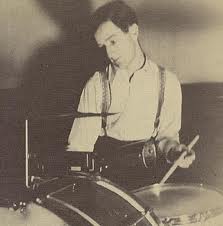
George Thomas Simon was born on May 9, 1912 in New York City into a wealthy and talented family, with his brother co-founding the publishing house Simon & Schuster and also his niece, singer Carly Simon. He began as a drummer and was an early drummer in Glenn Miller’s orchestra.
After graduating from Harvard University in 1934 he began working for the Metronome magazine the following year, then became editor-in-chief from 1939 to 1955and shifted it, from writing technical articles, to being a chronicler of the swing era. Simon was probably the most influential jazz commentator during the swing era and with his inside connections in the jazz world, he was able to report information about bands and their personnel with great accuracy.
Leaving Metronome he went to the Jazztone Society, consulted for the Timex Jazz Shows, wrote about jazz for the New York Herald Tribune and the New York Post newspapers. He also did liner notes for a variety of jazz musicians including Thelonious Monk who was stylistically quite different from the swing-era musicians Simon championed.
In 1978, he won a Grammy Award for Best Album Notes, was inducted into the Big Band and Jazz Hall of Fame and on February 13, 2001 after years of suffering from Parkinson’s disease, he died of pneumonia in New York City.
Give The Gift Of Knowledge
More Posts: commentator,editor,writer
Daily Dose Of Jazz…
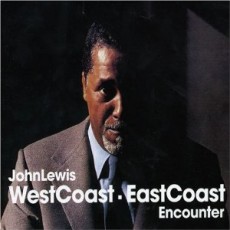
John Aaron Lewis was born in LaGrange, Illinois on May 3, 1920 but was raised in Albuquerque, New Mexico. He learned classical music and piano from his mother starting at the age of seven, then continued his musical training at the University of New Mexico and also studied anthropology. He served in the Army stationed in France during World War II and during his three-year tour of duty he met and performed with Kenny Clarke. Together they formed a band and in the bop style, John composed and arranged.
After the war he went to New York where he found work in the 52nd Street clubs with Allen Eager, Hot Lips Page and others. This led to him joining dizzy Gillespie’s bop-style big band and further developing his skill as a composer and arranger while matriculating through the Manhattan School of Music. He soon returned to Europe on tour, remained a continued to write and study piano. By ’48 he was back in the States playing with Charlie Parker, Illinois Jacquet, Lester Young, Miles Davis and Ella Fitzgerald.
Lewis, vibraphonist Milt Jackson, drummer Kenny Clarke, and bassist Ray Brown had been the small group within the Gillespie big band that played their own short sets when the brass and reeds needed a break. This led to the foursome forming a full-time working group in 1950, known at first as the Milt Jackson Quartet. After replacing Brown with Percy Heath the name was changed to the Modern Jazz Quartet and assuming the role of musical director from 1954 to 1974, John oriented it toward a quiet, chamber style of music that found a balance between his gentle, almost mannered compositions and Jackson’s more elemental writing and playing.
Over a long and illustrious career, John directed the School of Jazz at the Music Inn, was musical director for the Monterey Jazz Festival from 1958 to 1982, taught at City College of New York and Harvard University, rejoined the re-formed MJQ, led his own sextet, founded the American Jazz Orchestra, participated in Re-Birth of the Cool, was involved in various Third Stream Projects all while continuing to teach, compose and perform.
John Lewis, conservative bop pianist, composer, arranger and musical director for the Modern Jazz Quartet passed away in New York City on March 29, 2001.
Give A Gift Of Jazz – Share
More Posts: piano
Daily Dose Of Jazz…
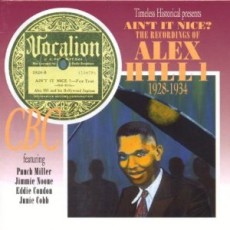
Alex Hill was born on April 19, 1906 in Little Rock, Arkansas to a minister father and pianist mother who taught her child prodigy to play. Defying his father’s wishes the young pianist delved into secular music and while studying at Shorter College met Alphonse Trent and began arranging for him. After graduating in 1922 he worked with several territory bands including Fats Waller and Terence Holder.
From 1924 to 1926 Alex led his own ensemble, then played with Speed Webb, and in 1927 he spent time with Mutt Carey’s Jeffersonians and Paul Howard’s Quality Serenaders. Later that same year Hill relocated to Chicago and held a job as an arranger for the Melrose Music Publishing Company, while simultaneously arranging for the Carroll Dickerson Orchestra. He began recording as a leader and a sideman in 1928 and continued through 1934.
By 1930, prior to a move to New York City, Alex had played with Jimmy Wade, Jimmie Noone and Sammy Stewart. During his time in New York he arranged for Paul Whiteman, Benny Carter, Claude Hopkins, Andy Kirk, Eddie Condon and Duke Ellington among others. Additionally, he became staff arranger for the Mills Music Company. Reuniting with Fats Waller the two did a show together in New York called “Hello 1931”, and accompanied Adelaide Hall.
Hill again put together his own group in 1935, but after playing the Savoy Ballroom he disbanded the ensemble due to his battle with tuberculosis. Moving back to Little Rock, pianist and arranger Alex Hill passed away in February 1937 at the age of 30.
Give A Gift Of Jazz – Share