

Daily Dose Of Jazz…
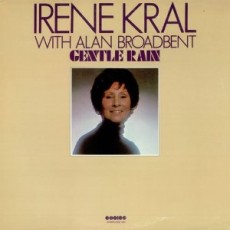
Vocalist Irene Kral was born in Chicago, Illinois on January 18, 1932. The younger sister of Roy Kral, an already a successful musician, she started singing professionally as a teenager making her debut with the Jay Burkhardt Big Band. She went on to work with Woody Herman and Chubby Jackson.
Freelancing around Chicago, Irene gigged with a vocal group called Tattle-Tales, spent nine months singing with Maynard Ferguson’s big band and also performed with groups led by Stan Kenton and Shelly Manne, After an association with the Herb Pomeroy Orchestra, she got married, moved to Los Angeles and stopped performing.
Fortunately for the jazz world by the late 50’s Irene embarked upon a solo career recording two sessions for United Artists, a ’65 date for Mainstream and from 1974 to 1977 recorded three great albums, “Kral Space” and two projects with pianist Alan Broadbent “Where Is Love” and “Gentle Rain”. Her rendition of Spring Can Really Hang You Up The Most is not only considered classic but also definitive.
Irene Kral died at the age of 46 of breast cancer in Encino, California on August 15, 1978. She attributed Carmen McRae as one of her inspirations and was brought back to the attention of the world posthumously by director Clint Eastwood when he used her recording in the Bridges of Madison County.

More Posts: vocal
Daily Dose Of Jazz…
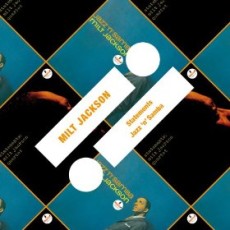
Milt Jackson was born Milton Jackson on January 1, 1923 in Detroit, Michigan. Discovered by Dizzy Gillespie and hired in 1946 for his sextet and also for his larger ensembles. He quickly acquired experience working with the most important figures in jazz of the era, including Woody Herman, Howard McGhee, Thelonious Monk and Charlie Parker.
In the Gillespie big band, Jackson fell into a pattern that led to the founding of the Modern Jazz Quartet. He was part of Gillespie’s small group swing tradition within a big band, consisting of pianist John Lewis, bassist Ray Brown and drummer Kenny Clarke. They would become a working group in their own right around 1950 and became the Milt Jackson Quartet but by the time Percy Heath replaced Ray Brown, in 1952 they became the Modern Jazz Quartet.
After some twenty years the MJQ disbanded in 1974 and Jackson pursued more money and his longed for improvisational freedom. The group reformed in 1981, however, and continued until 1993, after which Jackson toured alone, performing in various small combos, although agreeing to periodic MJQ reunions.
He recorded prolifically, his tunes, “Bluesology”, “Bags & Trane”, “The Late, Late Blues” and “Bag’s Groove” are jazz standards. He has recorded with J.J. Johnson, Roy McCurdy, B.B. King, John Coltrane, Wes Montgomery, Hank Mobley, Oscar Peterson, Stanley Turrentine, Don Sebesky, Cannonball Adderley and Ray Charles on the very short list.
A very expressive player, Bags, as he was affectionately known and referring to the bags under his eyes from staying up all night, differentiated himself from other vibraphonists in his attention to variations on harmonics and rhythm. He became one of the most significant vibist and was at the top of his game for 50 years playing bop, blues, and ballads with equal skill and sensitivity. Vibraphonist Milt Jackson, thought of as a bebop player but equally remembered for his cool swinging solos, left the jazz world on October 9, 1999 in Manhattan, New York.

More Posts: vibraphone
Daily Dose Of Jazz…
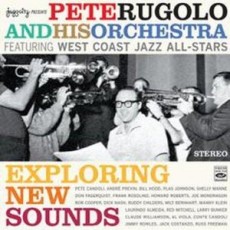
Pete Rugolo was born Pietro Rugolo in San Piero Patti, Sicily, Italy on December 25, 1915. His family emigrated to the U.S. in 1920 and settled in Santa Rosa, California. He began his career in music playing the baritone saxophone, like his father, but he quickly branched out into other instruments, notably the French horn and the piano. He received a bachelor’s degree from San Francisco State College and then went on to study composition at Mills College in Oakland, earning his master’s degree.
After graduation, he was hired as an arranger and composer by guitarist and bandleader Johnny Richards and spent World War II playing with altoist Paul Desmond in an army band. After WWII, Rugolo worked for Stan Kenton, providing arrangements and original compositions that drew on his knowledge of 20th century music, sometimes blurring the boundaries between jazz and classical music.
While Rugolo continued to work occasionally with Kenton in the 1950s, he spent more time creating arrangements for pop and jazz vocalists, most extensively with former Kenton singer June Christy and others like Ernestine Anderson, Harry Belafonte, Nat King Cole, Billy Eckstine, Peggy Lee, The Four Freshman, Mel Torme to name a few.
He would work on MGM film musicals, serve as A&R director for Mercury Records and produce a handful of self-titled albums. Pete’s scores for television and film on The Fugitive, Leave It To Beaver, Run For Your Life and Where The Boys Are often demanded that he suppress his highly original style. However, there are some striking examples of his work in both TV and film such as the soundtrack for his last movie, This World, Then the Fireworks demonstrates his gift for writing music that is both sophisticated and expressive. Pete Rugolo, jazz composer and arranger, died, aged 95, on October 16, 2011 in Sherman Oaks, California.

Daily Dose Of Jazz…
Johnny Mandel was born John Alfred Mandel on November 23, 1925 in New York, New York. His mother, an opera singer, discovered he had perfect pitch at age five. Piano lessons ensued but Johnny switched to the trumpet and later the trombone.
Johnny studied at the Manhattan School of Music and the Julliard School. By 1943 he was playing trumpet with Joe Venuti, in 1944 with Billy Rogers and then trombone in the bands of Boyd Raeburn, Jimmy Dorsey, Buddy Rich, George Auld and Chubby Jackson. In 1949 he accompanied singer June Christy in the Bob Cooper Orchestra, then with Elliot Lawrence’s outfit, followed by a stint with Count Basie and a move to Los Angeles, California to play with Zoot Sims.
In the late Forties and into the Fifties he wrote jazz compositions like “Not Really the Blues” for Woody Herman, “Hershey Bar” and “Pot Luck” for Stan Getz, “Straight Life” and “Low Life” for Count Basie as well as “Tommyhawk” for Chet Baker. Mandel composed, conducted and arranged the music for numerous movie sound tracks with his earliest credited contribution to “I Want To Live” in 1958 being nominated for a Grammy. Mandel’s most famous compositions include “Suicide Is Painless” from M*A*S*H, “Close Enough for Love”, “Emily”, “A Time for Love”, and “The Shadow Of Your Smile” which won an Oscar for Best Song and a Grammy for Song Of The Year in 1966.
Mandel is a recipient of the 2011 NEA Jazz Masters Award, has won several Grammy Awards for Best Instrumental Arrangements Accompanying Vocals for Quincy Jones’ Velas, Natalie & Nat King Cole’s Unforgettable and Shirley Horn’s Here’s To Life. He has composed music with lyricists Alan & Marilyn Bergman, Paul Williams and Johnny Mercer; and arranged for Frank Sinatra, Tony Bennett, Barbra Streisand, Diana Krall, The Diva Jazz Orchestra and Ann Hampton Calloway among numerous others.
Daily Dose Of Jazz…
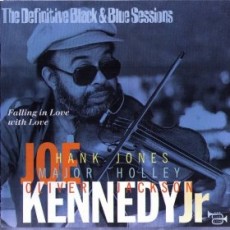
Joe Kennedy, Jr. on November 17, 1923 in Pittsburgh, Pennsylvania and was introduced to the violin by his grandfather. During his induction in the Army he performed with the Camp Lee Symphony Orchestra in Petersburg, Virginia. Returning home he cut his jazz teeth as a member of the Four Strings along with Ahmad Jamal, with Mary Lou Williams supervising their debut recording session.
Kennedy would go on to study and earn degrees at Carnegie Mellon, Virginia State College, Duquesne University. As an educator with the Richmond Public Schools he was the Instrumental Music Supervisor, Supervisor of Music and Supervisor of Secondary Arts and Humanities, Director of Jazz Studies at Virginia Tech and Virginia Commonwealth University developing “An Introduction to African American Music” at the latter.
Joe would be one of the first Blacks to become the Resident Violinist with the Richmond Symphony from 1963 – 1981, traveled abroad with the Benny Carter All-Stars and performed at numerous concerts and festivals throughout the United States, and Europe.
Kennedy performed and recorded several albums as a leader as well as with pianist Ahmad Jamal. He performed with Benny Carter, Toots Thielemans, Billy Taylor and the Modern Jazz Quartet among others. Violinist, composer, arranger and educator Joe Kennedy, Jr., recipient of the 2001 Legacy Award, passed away on April 17, 2004.

More Posts: violin