Daily Dose Of Jazz…
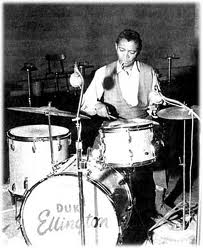
Sam Woodyard was born January 7, 1925 in Elizabeth, New Jersey. He learned to play the drums by teaching himself, with no instruction. He began playing locally around Newark, New Jersey area in the 1940s. Sam gigged with Paul Gayten in an R&B group, moving on in the early 50s to play with Joe Holiday, Roy Eldridge, and Milt Buckner. It was in 1955 that Woodyard would join Duke Ellington’s orchestra, remaining the ensemble’s drummer until 1966.
After his time with Ellington, Sam played behind Ella Fitzgerald prior to moving to Los Angeles, California. In the 1970s he played less due to health problems, but recorded with Buddy Rich and toured with Claude Bolling. In 1983 he played in a band with Teddy Wilson, Buddy Tate and Slam Stewart. His last recording was on Steve Lacy’s 1988 album “The Door”.
A little more than a month after this recording was completed, drummer Sam Woodyard passed away on September 20, 1988 in Paris, France.
More Posts: drums
Daily Dose Of Jazz…
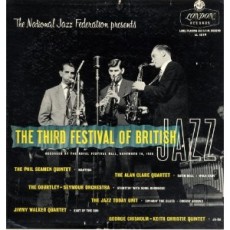
Keith Ronald Christie was born January 6, 1931 in Blackpool, England and began playing trombone at 14 while attending the Guildhall School of Music and Drama. He formed a band with his brother Ian in the late 1940s, and soon after the pair joined the band of Humphrey Lyttleton, recording copiously.
Keith served in the military early in the 1950s, reconvening to lead an ensemble with his brother in 1951 that lasted until 1953. He went on to work with other jazz musicians like John Dankworth, Cleo Laine, George Chisholm, Vic Ash and others in the mid 50s. He worked with Ted Heath as well as Allan Ganley in the Jazzmakers from the late 50s to early 60s, with brief stints in other bands through the end of the decade.
During this period he joined Benny Goodman on a European tour, also playing with Tubby Hayes, Paul Gonsalves, Kenny Wheeler, Ronnie Ross, and Bobby Lamb among others. In the mid-1970s Keith Christie suffered and recovered from a fall but his continuing battles with alcoholism eventually resulted in the trombonist’s early death on December 16, 1980 in London, England.
More Posts: bandleader,trombone
Daily Dose Of Jazz…
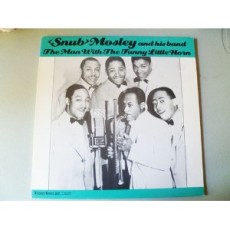
Snub Mosley was born Lawrence Leo Mosley on December 29, 1905 in Little Rock, Arkansas. Playing trombone in high school after graduation he joined Alphonse Trent’s territory band from 1926 to 1933. Following this he played with the Jeter-Pillars Orchestra in 1934, Claude Hopkins from 1934-35, was band mates with Fats Waller and Louis Armstrong with the Luis Russell Orchestra 1936-37. In addition, he led his own groups before settling in New York City.
Though Mosley spent most of his career on trombone, he also invented an instrument called the slide saxophone, which had both the slide portion of a trombone and a saxophone mouthpiece. The instrument is prominently featured in his 1940 recording The Man With The Funny Little Horn. From 1940 to 1978 he recorded for Decca, Sonora, Penguin, Columbia and Pizza record labels.
Trombonist Snub Mosley passed away quietly on July 21, 1981 at his home at 555 Edgecombe Avenue in Harlem, New York City.
More Posts: slide saxophone,trombone
Daily Dose Of Jazz…
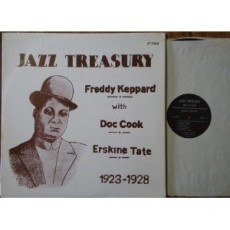
Erskine Tate born on December 19, 1895 in Memphis, Tennessee played violin and studied music at Lane College in Jackson, Tennessee. He moved to Chicago in 1912, studied at the American Conservatory and took his first professional gig at 17. By 1918 he was an early figure in the jazz scene and leading his band the Vendome Orchestra providing music during intermission and for the silent films that were shown in the Vendome Theatre at 31st and State streets.
The band was originally a nine-piece outfit but by the mid 20s had grown to 15. Among the members were Louis Armstrong, Freddie Keppard, Stomp Evans, Buster Bailey, Fats Waller and Teddy Wilson. They recorded during the period for Okeh and Vocalion Record labels.
By 1928 Erskine left the orchestra and led a band at the Metropolitan Theatre and then the Michigan Theatre. He had a long residency at the Cotton Club and continued to lead orchestras and play for dance marathons throughout the 1930s. In 1945 he retired from active performance, opened his own studio, began teaching music and became one of the city’s top instructors throughout the 50s and 60s.
Violinist, composer, conductor and bandleader Erskine Tate passed away on December 17, 1975 in Chicago, Illinois.
More Posts: bandleader,composer,conductor,violin
Daily Dose Of Jazz…
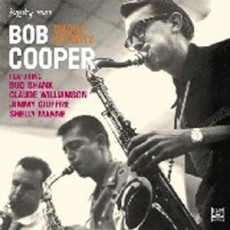
Bob Cooper was born on December 6, 1925 in Pittsburgh, Pennsylvania. He began to study the clarinet in high school and the following year he began working on the tenor saxophone. By 1945 he was joining Stan Kenton’s outfit when he was just 20, and as the new tenor saxophone player played alongside vocalist June Christy on “Tampico” that was to be a Kenton million-selling record. He would marry Christy two years later in Washington, DC.
Coop, as he was affectionately known, stayed with Kenton until he broke up the band in 1951. A naturally swinging jazz musician, Cooper and some other ex- Kenton men were hired to play at the Lighthouse Cafe in Los Angeles by the bassist Howard Rumsey. The Lighthouse became one of the most famous jazz clubs in the world, and the band, Howard Rumsey’s Lighthouse All Stars made history.
With a steady job he could work from home and he expanded his study of the oboe and English horn. While at the Lighthouse he made many momentous recordings, unique amongst them oboe and flute with Bud Shank, and composing a 12-tone octet for woodwind. Bob would go on to lead record sessions as part of a series of long-playing albums under “Kenton Presents” for Capitol Records.
His writing and playing on the album and its successor, “Shifting Winds” in 1955, were seminal in the creation of what was to become known as West Coast jazz. Imaginative writing and a well lubricated polish characterized the session and Cooper’s singing and stomping tenor style on his arrangement of “Strike Up The Band” boosted the record sales considerably.
Cooper would go on to tour Europe, South Africa and Japan with Christy, work as a studio musician in Hollywood, further develop his writing and compose film scores, join Kenton’s huge Neophonic Orchestra and have his composition ‘Solo For Orchestra’ premiered at one of its concerts. Much in demand for his beloved big-band work, he played regularly in other Los Angeles orchestras led by Shorty Rogers, Terry Gibbs, Bill Holman, Bill Berry, Bob Florence and Frankie Capp / Nat Pierce.
Bob Cooper, the West Coast jazz musician known primarily for playing tenor saxophone was also one of the first to play solos on oboe, passed away on August 5, 1993 in Los Angeles, California. Though maturing into one of the finest but least praised tenor saxophonists, he easily ranked with Stan Getz, Zoot Sims and Al Cohn in his talents. His last studio recording, released the year of his death, was on Karrin Allyson’s album Sweet Home Cookin on which he played tenor saxophone.
More Posts: arranger,composer,english horn,oboe,saxophone,vocal