
Daily Dose Of Jazz…
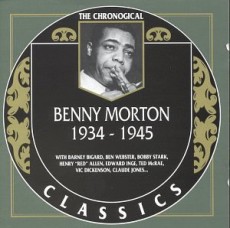
Benny Morton was born on January 31, 1907. Growing up in New York City, Benny was a graduate of the Jenkins Orphanage Band and was greatly influenced by church music as well as Dope Andrews, trombonist for Mamie Smith. By 1923, just 16 years old, he was gaining experience with the Clarence Holiday Orchestra and just three years later joined Fletcher Henderson. Swing was in and Benny moved on to spend six years with Don Redman and then three with Count Basie.
By 1938 he was recording with Clarence Holiday’s daughter Billie on My First Impression Of You and on The Sound Of Jazz. Morton went on to play with Teddy Wilson and Ed Hall in the 40’s and led his own band before playing in the Broadway pit for shows like Guys and Dolls and for Radio City Music Hall.
During the sixties and over the next two decades, the gentle and self-effacing trombonist was back in high jazz society with cornetist Wild Bill Davison and Bobby Hackett, The Saints and Sinners and the World’s Greatest Jazz Band.
One of the most sophisticated trombonists of the swing era, Benny Morton passed away on December 28, 1985.

More Posts: trombone
Daily Dose Of Jazz…
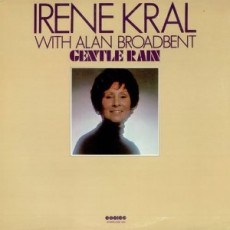
Vocalist Irene Kral was born in Chicago, Illinois on January 18, 1932. The younger sister of Roy Kral, an already a successful musician, she started singing professionally as a teenager making her debut with the Jay Burkhardt Big Band. She went on to work with Woody Herman and Chubby Jackson.
Freelancing around Chicago, Irene gigged with a vocal group called Tattle-Tales, spent nine months singing with Maynard Ferguson’s big band and also performed with groups led by Stan Kenton and Shelly Manne, After an association with the Herb Pomeroy Orchestra, she got married, moved to Los Angeles and stopped performing.
Fortunately for the jazz world by the late 50’s Irene embarked upon a solo career recording two sessions for United Artists, a ’65 date for Mainstream and from 1974 to 1977 recorded three great albums, “Kral Space” and two projects with pianist Alan Broadbent “Where Is Love” and “Gentle Rain”. Her rendition of Spring Can Really Hang You Up The Most is not only considered classic but also definitive.
Irene Kral died at the age of 46 of breast cancer in Encino, California on August 15, 1978. She attributed Carmen McRae as one of her inspirations and was brought back to the attention of the world posthumously by director Clint Eastwood when he used her recording in the Bridges of Madison County.

More Posts: vocal
Daily Dose Of Jazz…
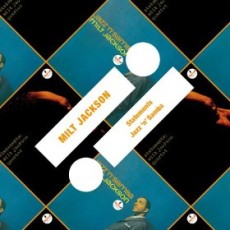
Milt Jackson was born Milton Jackson on January 1, 1923 in Detroit, Michigan. Discovered by Dizzy Gillespie and hired in 1946 for his sextet and also for his larger ensembles. He quickly acquired experience working with the most important figures in jazz of the era, including Woody Herman, Howard McGhee, Thelonious Monk and Charlie Parker.
In the Gillespie big band, Jackson fell into a pattern that led to the founding of the Modern Jazz Quartet. He was part of Gillespie’s small group swing tradition within a big band, consisting of pianist John Lewis, bassist Ray Brown and drummer Kenny Clarke. They would become a working group in their own right around 1950 and became the Milt Jackson Quartet but by the time Percy Heath replaced Ray Brown, in 1952 they became the Modern Jazz Quartet.
After some twenty years the MJQ disbanded in 1974 and Jackson pursued more money and his longed for improvisational freedom. The group reformed in 1981, however, and continued until 1993, after which Jackson toured alone, performing in various small combos, although agreeing to periodic MJQ reunions.
He recorded prolifically, his tunes, “Bluesology”, “Bags & Trane”, “The Late, Late Blues” and “Bag’s Groove” are jazz standards. He has recorded with J.J. Johnson, Roy McCurdy, B.B. King, John Coltrane, Wes Montgomery, Hank Mobley, Oscar Peterson, Stanley Turrentine, Don Sebesky, Cannonball Adderley and Ray Charles on the very short list.
A very expressive player, Bags, as he was affectionately known and referring to the bags under his eyes from staying up all night, differentiated himself from other vibraphonists in his attention to variations on harmonics and rhythm. He became one of the most significant vibist and was at the top of his game for 50 years playing bop, blues, and ballads with equal skill and sensitivity. Vibraphonist Milt Jackson, thought of as a bebop player but equally remembered for his cool swinging solos, left the jazz world on October 9, 1999 in Manhattan, New York.

More Posts: vibraphone
Daily Dose Of Jazz…
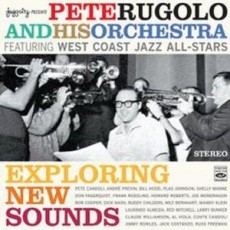
Pete Rugolo was born Pietro Rugolo in San Piero Patti, Sicily, Italy on December 25, 1915. His family emigrated to the U.S. in 1920 and settled in Santa Rosa, California. He began his career in music playing the baritone saxophone, like his father, but he quickly branched out into other instruments, notably the French horn and the piano. He received a bachelor’s degree from San Francisco State College and then went on to study composition at Mills College in Oakland, earning his master’s degree.
After graduation, he was hired as an arranger and composer by guitarist and bandleader Johnny Richards and spent World War II playing with altoist Paul Desmond in an army band. After WWII, Rugolo worked for Stan Kenton, providing arrangements and original compositions that drew on his knowledge of 20th century music, sometimes blurring the boundaries between jazz and classical music.
While Rugolo continued to work occasionally with Kenton in the 1950s, he spent more time creating arrangements for pop and jazz vocalists, most extensively with former Kenton singer June Christy and others like Ernestine Anderson, Harry Belafonte, Nat King Cole, Billy Eckstine, Peggy Lee, The Four Freshman, Mel Torme to name a few.
He would work on MGM film musicals, serve as A&R director for Mercury Records and produce a handful of self-titled albums. Pete’s scores for television and film on The Fugitive, Leave It To Beaver, Run For Your Life and Where The Boys Are often demanded that he suppress his highly original style. However, there are some striking examples of his work in both TV and film such as the soundtrack for his last movie, This World, Then the Fireworks demonstrates his gift for writing music that is both sophisticated and expressive. Pete Rugolo, jazz composer and arranger, died, aged 95, on October 16, 2011 in Sherman Oaks, California.

Daily Dose Of Jazz…
Martin France was born on February 29, 1964 in Rainham, Kent, England and began performing at the age of twelve backing singers in working men’s clubs with organ trios in and around Manchester. He studied under Geoff Riley, Kenny Clare, Joel Rothman, and principal percussionist Richard Smith of The Hallé, the Manchester orchestra.
In 1983 Martin began his recording career performing as a sideman on several records for ECM Records, toured with several of the labels roster during the 80s and 90s and subsequently led several sessions as a leader.
The turning point in his early career was as a member of the 1980s big band Loose Tubes, where he began working on projects that included film soundtracks, jazz theatre and cross cultural collaborations with other big bands and orchestras.
France formed his own band Spin Marvel, that showcased more electronic and sequence drumming, and would be an integral rhythm backbone on more than 60 albums working with some of the world’s finest musicians including Kenny Wheeler, Elvis Costello, Bob Mintzer, Steve Swallow, Joe Lovano, Lee Konitz, Marc Johnson and Dave Holland to name a few and is currently a regular performer with the NDR Radio Orchestra in Hamburg.

More Posts: drums