

Daily Dose Of Jazz…
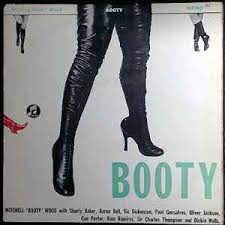
Booty Wood was born Mitchell W. Wood on December 27, 1919 in Dayton, Ohio. He began playing professionally on trombone in the late 1930s. The following decade he worked with Tiny Bradshaw and Lionel Hampton before joining the Navy during World War II. While there he played in a band with Clark Terry, Willie Smith, and Gerald Wilson.
After his service ended he returned to play with Hampton, then worked with Arnett Cobb, Erskine Hawkins and Count Basie. After spending a few years outside music, Booty returned to play with Duke Ellington in 1959-60 and again in 1963. He returned once more early in the 1970s.
Wood once again played with the Count Basie Orchestra from 1979 into the middle of the following decade. Trombonist Booty Wood transitioned on June 10, 1987 in Dayton.

More Posts: history,instrumental,jazz,music,trombone
Daily Dose Of Jazz…
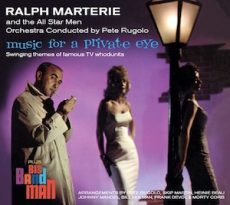
Ralph Marterie was born in Acerra near Naples, Italy on December 24 1914 and first played professionally at age 14 in Chicago, Illinois. In the 1940s, he played trumpet for various bands. During World War II he got his first job as a bandleader courtesy of the US Navy. He was then hired by the ABC Radio network and the reputation built from these broadcasts led to a recording contract in 1949 with Mercury Records.
In 1953 Ralph recorded a version of Bill Haley’s Crazy, Man, Crazy, which reached No. 13 on the Billboard jockey chart and No. 11 on Cashbox that year. His recordings of Pretend and Caravan made the Top 10 and the latter sold over one million copies and was awarded a gold disc. His highest success in the U.S. charts was a cover of Skokiaan in 1954. He had other hits with Tricky, Shish-Kebab, Dancing Trumpet, Dry Marterie, and Carla.
Trumpeter and big band leader Ralph Marterie transitioned on October 10, 1978 in Dayton, Ohio.
More Posts: bandleader,history,instrumental,jazz,music,trumpet
Daily Dose Of Jazz…
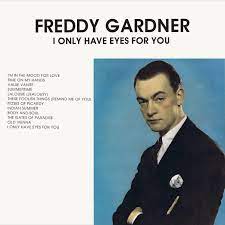
Frederick James Gardner was born on December 23, 1910 in London, England and took up the saxophone at 15 to help alleviate asthma. After minimal coaching he formed the semi-professional New Colorado Band in 1928, and a year later, while working as an office clerk, entered the band in a contest at Chelsea Town Hall and won. He was spotted by the founding editor of Melody Maker magazine who was distributing the prizes, and a year later secured his first professional position.
In 1933, Gardner was taken under the wing of Ray Noble and recorded with the New Mayfair Orchestra. He played in London clubs when working with Sidney Lipton’s Orchestra and at the Mayfair Hotel with Bert Firman’s band and with Billy Bissett. He became a prolific session musician, doubling on all the reeds, although his main instrument was alto saxophone.
He recorded with Benny Carter, Ray Noble, Valaida Snow, Jay Wilbur Buck Washington, and John W. Bubbles. From 1936 to 1937 Freddy arranged and performed on the radio, led small groups and his Swing Orchestra, which included Ted Heath.
During World War II, he was part of the official dance band for the RNPS called the Blue Mariners led by George Crow. He was regularly given special leave to continue his recording and broadcasting. Some recordings were made under the band name Freddie Gardner and his Mess Mates. Folowing the war he continued with extensive freelance work, including as a soloist with the Peter Yorke Concert Orchestra.
Saxophonist Freddy Gardner was taken ill while mending one of his son’s bicycles in the garden of his Brooke Street home in London. An hour later at St. Mary’s Hospital in London he transitioned from a stroke on July 26, 1950 at the age of 39.
More Posts: arranger,bandleader,history,instrumental,jazz,music,saxophone

Daily Dose Of Jazz…
Eric Marienthal was born on December 19, 1957 in Sacramento, California but moved with his family to San Mateo, California when he was two years old. He was taught music while in school and picked up the saxophone in the fourth grade. His father bought him a $400 Selmer saxophone and enrolled him in Corona Del Mar High School. Throughout his education, he learned to play guitar, flute, clarinet and piano.
After graduating from high school he studied saxophone at the Berklee College of Music. By the time he left Berklee, Eric had achieved the highest proficiency rating given by the school. He began his professional career in 1980 with New Orleans trumpeter Al Hirt. Heading west he settled in Los Angeles, California and became a member of the Chick Corea Elektric Band. He recorded six albums with that band and two of them won Grammy Awards.
Marienthal has also written instructional books, including Comprehensive Jazz Studies & Exercises, The Ultimate Jazz Play Along, and The Music of Eric Marienthal. He has made instructional videos, Play Sax From Day One, Modern Sax and Tricks of the Trade. He occupies the lead alto chair of Gordon Goodwin’s Big Phat Band, playing alto saxophone, soprano saxophone, flute, and piccolo.
Grammy Award-nominated alto saxophonist Eric Marienthal continues to perform and record.
More Posts: bandleader,flute,history,instrumental,jazz,music,piccolo,saxophone
Daily Dose Of Jazz…
William Frank Reichenbach Sr. was born on December 18, 1923 in Washington, D.C. and started his musical career even before he graduated from the McKinley Tech High School. During World War II, he played in a band of the Navy before he toured with the big bands of Tommy Dorsey, Jimmy Dorsey, and Art Mooney. Later he worked in the jazz clubs of his hometown, where he accompanied Frank Sinatra, Patti Page, Teddy Wilson, and Zoot Sims.
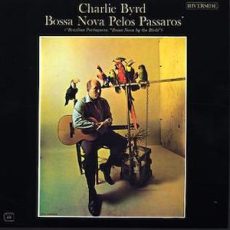
Charlie Byrd hired Reichenbach as an additional drummer for the Stan Getz album Jazz Samba, recorded in 1962. This recording provoked a wave of enthusiasm for bossa nova in the United States. That same year he replaced Buddy Deppenschmidt in the Byrd trio, and stayed as a member for twelve years. Departing from Byrd, he returned to work in Washington D.C., as the house drummer at the Blues Alley.
Drummer and percussionist Bill Reichenbach, who co-developed the jazz-samba drumming style, transitioned following a series of strokes in Los Angeles, California, at the age of 84 on May 16, 2008.
More Posts: bandleader,drums,history,instrumental,jazz,music,percussion