

Daily Dose Of Jazz…
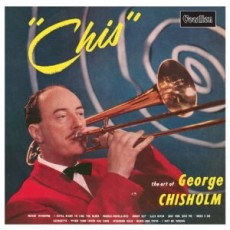
George Chisholm was born on March 29, 1915 in Glasgow, Scotland and began playing trombone in his youth. His musical career started in the Glasgow Playhouse orchestra and by the late 1930s he moved to London, where he played in dance bands led by Bert Ambrose and Teddy Joyce. He later recorded with jazz musicians such as Coleman Hawkins, Fats Waller and Benny Carter when they visited the U.K.
In 1940, during World War II George signed on with the Royal Air Force becoming a member of the RAF Dance Orchestra, known popularly as The Squadronaires. He followed this with freelance work and a five-year stint with the BBC Show Band and as a core member of Wally Stott’s orchestra on BBC Radio’s The Goon Show, for which he made several acting appearances.
In the 1960s, Chisholm was part of The Black and White Minstrel Show, went on to join the house band for two children’s programs Play School and Play Away, and had roles in the films The Mouse on the Moon, The Knack and Superman III.
Despite undergoing heart surgery, during the 1980s George continued to play with his band The Gentlemen of Jazz, with Keith Smith’s Hefty Jazz among others, and playing live with touring artists. He was awarded an OBE (Order of the British Empire) in 1984 but in the mid-1990s, trombonist George Chisholm retired from public life due to ill health and passed away on December 6, 1997, aged 82.
More Posts: trombone
Daily Dose Of Jazz…
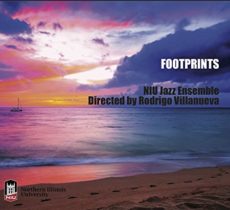
Rodrigo Villanueva was born in Mexico City, Mexico on March 26, 1967 and began playing drums at age of 15, studying privately and taking classical percussion and jazz studies at Escuela Superior de Musica, Ollin Yolitztly and Escuela Nacional de Musica. In 1987, he joined the jazz group Atri 5 recording Ice Cream Concerto and Flavors of the Stars, touring Mexico and playing in several international new music festivals.
Over the course of his career Rodrigo has performed in several theater bands, television shows and studio sessions; and in the jazz/classical genre with Carlos Prieto, Roberto Limón, Marisa Canales, Ana Maria Tradatti and Takagoshi Yoshioka to name a few. He has been a member of the Contemporary Jazz Trio, Brass Explosion, Fénix and Jazztlán; and has co-led the group Espiral.
Villanueva has toured the U.S., Mexico, South America, Europe and Asia with several jazz and pop projects, has won the National Final Nescafe-Yamaha Pop Music Award Band Explosion with the group Corazón Latino, and has composed and arranged in the jazz and pop idioms including big band. He has played with his alma mater’s lab bands at the University of North Texas, performed with Charles McPherson, Eddie Gomez, Clark Terry, Wycliffe Gordon, Stefan Karlsson, Jimmy Owens and Fareed Haque amongst his list of many.
As an educator drummer and percussionist Villanueva has taught drum-set and percussion courses and master classes at different institutions in Mexico, the U.S., Perú, Korea, & Japan. He is currently an Associate Professor of Jazz Studies at Northern Illinois University, coaches the NIU Jazz Lab Band and continues to play with several groups.
More Posts: drums,percussion
Daily Dose Of Jazz…
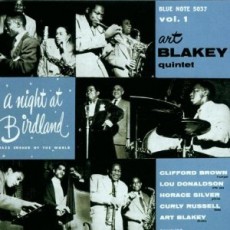
Curley Russell was born Dillon Russell on March 19, 1917 in Trinidad. Learning to play bass in his youth, the double-bassist by 1941 had joined the Don Redman big band and two years later was playing with Benny Carter. During the early bop period of jazz he became extremely busy performing and recording with Dizzy Gillespie and Charlie Parker.
From 1947 – 1949 he was a member of the Tadd Dameron Sextet and became more in demand for his ability to play at rapid tempos typical of the period. During his short career as a sideman he performed and recorded with an impressive list of musicians: Buddy De Franco, Bud Powell, Horace Silver, Thelonious Monk, the Art Blakey Quintet, Clifford Brown, Fats Navarro, Miles Davis, J. J. Johnson, Johnny Griffin, Stan Getz, George Wallington, Milt Jackson, Al Cohn and Zoot Sims.
Seemingly uninterested in the melodic mobility that was expected of bassists, he was never featured as a soloist and by the late Fifties dropped out of the jazz scene and left the music business altogether. Bassist Curley Russell passed away on July 3, 1986.
More Posts: bass

Daily Dose Of Jazz…
Terence Oliver Blanchard was born March 13, 1962 in New Orleans, Louisiana and began playing piano at the age of five and then the trumpet at age eight. He played trumpet recreationally alongside childhood friend Wynton Marsalis in summer music camps but showed no real proficiency on the instrument. While in high school, he began studying at the New Orleans Center for Creative Arts and then studied at Rutgers, toured with Lionel Hampton, joined Art Blakey and became the Messenger’s music director.
While playing with Blakey, Blanchard rose to prominence as a key figure in the 1980s Jazz Resurgence as a co-leader of a quintet with saxophonist Donald Harrison and pianist Mulgrew Miller, The Harrison/Blanchard group recorded five albums from 1984-1988 until Blanchard left to pursue a solo career in 1990 and recorded his self-titled debut for Columbia Records.
He scored and performed on every Spike Lee movie soundtracks, including his 4-hour HBO Hurricane Katrina documentary “When The Levees Broke: A Requiem In Four Acts” and the soundtrack for “Red Tails”. Composing for other directors, with over forty scores to his credit Blanchard is the most prolific jazz musician to ever compose for movies.
Terence has recorded eighteen albums, been nominated for twelve times and won five Grammy Awards, has won Soul Train Music Award, an Emmy and Golden Globe among others. On the short list his collaborations include Herbie Hancock, Diana Krall, Gary Bartz, Jane Monheit, Dianne Reeves, Christian McBride, Lewis Nash and McCoy Tyner.
Composer, educator and trumpeter Terence Blanchard is the artistic director of the Thelonious Monk Institute of Jazz at the University of Southern California. All the while, he has remained true to his jazz roots as a trumpeter and bandleader on the performance circuit.
More Posts: trumpet
Daily Dose Of Jazz…
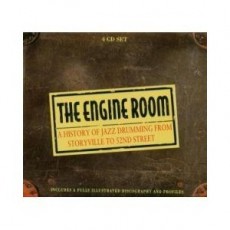
Chauncey Morehouse was born on March 11, 1902 in Niagara Falls, New York and was raised in Chambersburg, Pennsylvania where he learned and played drums from an early age. He also played piano and banjo and while in high school led a group called the Versatile Five. He landed a job with Paul Specht’s orchestra in 1922, touring with him through Europe in 1923.
Through the Roaring Twenties Chauncey played with The Georgians, Jean Goldkette, Adrian Rollini and Don Voorhees. He recorded with Frankie Trumbauer, Bix Beiderbecke, Red Nichols, The Dorsey Brothers, Joe Venuti and many others.
By 1929 Morehouse was active for the next decade chiefly as a studio musician, working in radio and television in and around New York City. In 1938, he put together his own percussion ensemble which played percussion tuned chromatically.
Morehouse invented a set of drums called the N’Goma drums, which were made by the Leedy Drum Company who endorsed Morehouse during his career. His career in the studios continued into the 1970s when he retired from studio work and began playing jazz again, mostly at festivals.
In his later years Morehouse made appearances at Carnegie Hall for the Tribute to Bix concert for the Newport Jazz Festival, and at one of the early Bix Beiderbecke Memorial Jazz Festivals in Davenport, Iowa. Chauncey Morehouse passed away on October 31, 1980 in Medford, New Jersey, aged 78.
More Posts: drums