

Daily Dose Of Jazz…
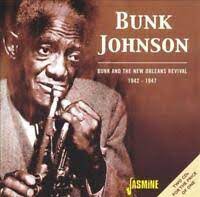
Lawrence Henry Marrero was born on October 24, 1900 in New Orleans, Louisiana, on October 24, 1900. He grew up in a musical family with three brothers who became musicians, bassist Eddie, banjoist John and Simon who played tuba and bass, and their bassist father Billy. He was taught music by his father, and by 1918 he became a professional player.
In 1919 he got his first regular job on banjo with Wooden Joe Nicholas’s Camelia Brass Band and from 1920 he joined on bass drum the Young Tuxedo Brass Band. Marrero was one of the musicians who took part in the first recordings made by Bunk Johnson In 1942, and continued playing and recording in the New Orleans jazz revival. He was featured on many recordings and was a regular member of the George Lewis band from the late 1930s until ill health caused him to quit full-time performance in 1954. He occasionally played with his own band after that.
Marrero was considered to be a steady player with a good tone, however, he never recorded as a leader and rarely did he take solos. Banjoist Lawrence Marrero, who altered the spelling of his name to Laurence, transitioned on June 6, 1959.

More Posts: banjo,history,instrumental,jazz,music
Daily Dose Of Jazz…
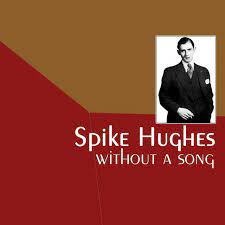
Patrick Cairns “Spike” Hughes was born October 19, 1908 in London, England and spent his childhood mostly with his mother, a psychiatrist who was involved in extensive travel in France and Italy, as well as a more settled period of education at Perse School in Cambridge. By 1923 when he was 15 he spent an extended period in Vienna, Austria studying composition with Egon Wellesz.
He began writing his first music criticism for The Times of London and heard his first jazz at the Weinberg Bar, Weihburggasse, a band led by trumpeter Arthur Briggs. Returning to the UK in 1926, Hughes had a solo cello sonata performed in London and wrote the incidental music for two theatre productions in Cambridge.
His interest in jazz was stimulated by the London revue Blackbirds, starring Florence Mills and Edith Wilson in 1926. It was an enthusiasm he shared with his friends, the composers Constant Lambert and William Walton and the conductor Hyam Greenbaum. He taught himself double bass using a German string bass made of tin, the spike of which led to his nickname. He formed his own jazz group in 1930 and was one of the earliest artists signed to Decca Records in England and recorded over 30 sessions between 1930 and 1933.
Originally billed as Spike Hughes and his Decca-Dents, but it was changed either to his Dance Orchestra or Three Blind Mice for smaller sessions. From 1931, he played regularly with the Jack Hylton Band and his career in jazz culminated in 1933 with a visit to New York, where he arranged three recording sessions involving members of Benny Carter’s and Luis Russell’s orchestras with Coleman Hawkins and Henry “Red” Allen from Fletcher Henderson’s band.
After the New York recordings, Spike ceased performing jazz and orchestrated and conducted shows for C B Cochran and using the pseudonym Mike wrote jazz reviews for Melody Maker, Daily Herald and The Times from 19531 to 1967. He established performance and recording opportunities for American bands in England.
He wrote radio plays accompanied by his own musical scores for the BBC, writing and broadcasting, conducting the BBC Theatre Orchestra, and for BBC Television. As a writer, regular BBC broadcaster and critic his subjects also included food and travel. He wrote sixteen composition, five film scores, fifteen books and recorded four albums,
Composer, arranger and double bassist Spike Hughes, who became better known as a broadcaster and humorous author, transitioned on February 2, 1987.
More Posts: bandleader,bass,history,instrumental,jazz,music
Daily Dose Of Jazz…
George Washington was born October 18, 1907 in Brunswick, Georgia and raised in Jacksonville, Florida. He began playing trombone at age ten and attended Edward Waters College in the early-1920s.
Washington relocated to Philadelphia in 1925 and played with J.W. Pepper before moving to New York City shortly thereafter. In New York, he studied under Walter Damrosch at the New York Conservatory, playing with various ensembles in the late 1920s.
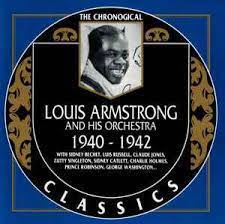
In 1931, he began playing with Don Redman, and gigged with Benny Carter in 1932 and Spike Hughes in 1933. In the mid-1930s, he played and arranged for the Mills Blue Rhythm Band and worked with Red Allen and Fletcher Henderson. From 1937 to 1943, he played in Louis Armstrong’s orchestra. After his tenure with Armstrong he moved to the West Coast, and played with Horace Henderson, Carter again, and Count Basie.
From 1947 he led his own ensemble, playing in California and the Las Vegas Strip in Nevada. He and drummer Johnny Otis collaborated often, and in 1960 Washington worked with Joe Darensbourg. He did freelance work as a player and arranger later in his life. To date there is no record of his death
More Posts: bandleader,history,instrumental,jazz,music,trombone
Daily Dose Of Jazz…
Leeds “Lee” Collins was born on October 17, 1901 in New Orleans, Louisiana. As a teenager he played in brass bands, including the Young Eagles, the Columbia Band, and the Tuxedo Brass Band. The 1910s saw him playing in New Orleans alongside Louis Armstrong, Papa Celestin, and Zutty Singleton.
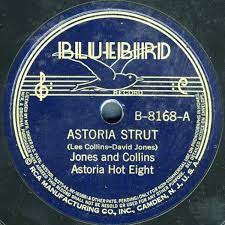
Moving to Chicago, Illinois in 1924 he replaced Louis Armstrong in King Oliver’s band. He also played with Jelly Roll Morton but the two had disagreements and fell out when Collins claimed that Morton stole the song Fish Tail Blues from him. He returned to New Orleans, where he played on the recordings of the Jones & Collins Astoria Hot Eight in 1929. He traveled to New York City in 1930 and played with Luis Russell.
Arriving back in Chicago he played through the Thirties with Dave Peyton, the Chicago Ramblers, Johnny Dodds and Baby Dodds, Zutty Singleton, Mezz Mezzrow, Lovie Austin, and with Jimmy Bertrand in 1945. Lee played around the city during this period in his career as an accompanist to many blues singers and in nightclubs. After 1945, he led his own band at the Victory Club, on Clark Street and gigged with Bertha Hill, Kid Ory, and Art Hodes in the early Fifties.
While in Europe he performed with Mezz Mezzrow in 1951 and 1954 and in California with Joe Sullivan in 1953. In the mid-1950s he retired because of poor health
Trumpeter Lee Collins, wrote an autobiography, Oh, Didn’t He Ramble, and with the aid of his wife, Mary, who published it posthumously in 1974, transitioned in Chicago on July 3, 1960, at the age of 58.
More Posts: history,instrumental,jazz,music,trumpet
Daily Dose Of Jazz…
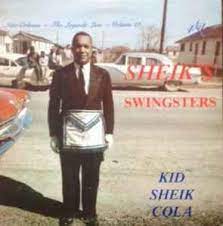
George Colar, better known as Kid Sheik or Kid Sheik Cola, was born on September 15, 1908 in New Orleans, Louisiana. In his youth he started playing blues piano around 1920, but took up trumpet after being inspired by and taking lessons from Wooden Joe Nicholas and Chris Kelly for whom he sat in from time to time. During this period he briefly had a band of his own.
In the Thirties he played second trumpet with Buddy Petit, marched with Kid René’s band and from 1952 was a member of the Eureka Brass Band. He worked with George Lewis in the mid-1940s. His Gin Mill Blues is considered a nice fish fries boogie.
Over the years, Kid Sheik performed with many jazz notables, including Harold Dejan’s Olympia Brass Band and Louis Armstrong. By the 1960s he had his own band. He was still blowing strong in New Orleans in 1970.
Kid Sheik was the subject of the official New Orleans Jazz & Heritage Festival poster in 1990. He is featured in a 35mm twelve-minute black and white film directed by Frank Decola titled The Cradle Is Rocking, a copy of which is in the Folkstreams Collection in the Southern Folklife Collection of the Wilson Library at the University of North Carolina in Chapel Hill.
He is most associated with Dixieland jazz and was a long-term performer with the Preservation Hall Jazz Band. In his later years, he married pianist Sadie Goodson. Trumpeter Kid Sheik Cola, who got his nickname from his chic style of dress, transitioned on November 7, 1996.

More Posts: bandleader,composer,history,instrumental,jazz,music,trumpet