

Daily Dose Of Jazz…
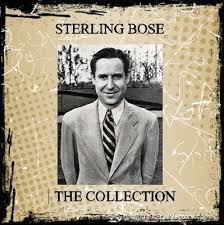
Sterling Belmont “Bozo” Bose was born on September 23, 1906 in Florence, Alabama and his style was heavily influenced by Bix Beiderbecke and changed little over the course of his life.
His early experience came with Dixieland jazz bands in his native Alabama before moving to St. Louis, Missouri in 1923. He played with the Crescent City Jazzers, the Arcadian Serenaders, and the Jean Goldkette’s Orchestra in 1927-28 after the departure of Beiderbecke. Following this he worked in the house band at radio station WGN in Chicago, Illinois before joining Ben Pollack from 1930 to 1933. He also worked with Eddie Sheasby in Chicago.
Moving to New York City in 1933, Bose had many gigs in the city during the 1930s to the mid 1940s, including time with Joe Haymes, Tommy Dorsey, Ray Noble, Benny Goodman, Lana Webster, Glenn Miller, Bob Crosby, Bobby Hackett, Bob Zurke, Jack Teagarden, Bud Freeman, George Brunies, Bobby Sherwood, Miff Mole, Art Hodes, Horace Heidt, and ending with Tiny Hill in 1946.
Following this period he did some further freelancing for the next two years in Chicago and New York, and finally moved to Florida in 1948, setting up his own bands there. Suffering from an extended period of illness in the 1950s, trumpeter and cornetist Sterling Bose, whose nickname was Bozo, eventually committed suicide in June of 1958. in St. Petersburg, Florida.

More Posts: bandleader,cornet,history,instrumental,jazz,music,trumpet
Daily Dose Of Jazz…
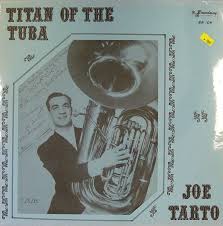
Joe Tarto was born Vincent Joseph Tortoriello on February 22, 1902 in Newark, New Jersey. He played trombone from age 12 before settling on tuba as a teenager. When World War I hit, he enlisted and played in an Army band where he was wounded, and received his release in 1919.
The 1920s saw him working with Cliff Edwards, Paul Specht, Sam Lanin, and Vincent Lopez, in addition to doing arrangement work for Fletcher Henderson and Chick Webb and playing in pit orchestras on Broadway. Throughout the 1920s recording copiously, he accompanied among others, Bing Crosby, The Boswell Sisters, Ethel Waters, Eddie Lang, Joe Venuti, Miff Mole, Red Nichols, The Dorsey Brothers, Bix Beiderbecke, and Phil Napoleon.
During the 1930s he spent two years playing with Roger Wolfe Kahn, then worked extensively as a session musician both on tuba and double bass. He also played with radio ensembles and in theater and symphony orchestras. He remained active as a performer into the 1980s, playing in Dixieland jazz revival groups in his last years. Tubist and bassist Joe Tarto passed away on August 24, 1986 in Morristown, New Jersey.
More Posts: bandleader,bass,history,instrumental,jazz,music
Daily Dose Of Jazz…
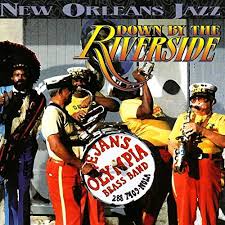
Harold Andrew Dejan was born on February 4, 1909 into a Creole family in New Orleans, Louisiana and took clarinet lessons as a child before switching to the saxophone. He became a professional musician in his teens, joining the Olympia Serenaders and then the Holy Ghost Brass Band.
He played regularly in Storyville, at Mahogany Hall, and on Mississippi riverboats. He also worked in the mail office of the Lykes Brothers Steamship Company for 23 years. In World War II, he played in Navy bands, then returning to his day job and his parallel musical career after the war, he led his own band, Dejan’s Olympia Brass Band, from 1951, was considered one of the top bands in New Orleans.
The band often appeared at Preservation Hall, recorded nine albums, and also toured internationally, making 30 concert tours of Europe and one of Africa. It was featured in the James Bond movie Live and Let Die, and as well as in many TV commercials.
Suffering a stroke in 1991 left him unable to play the saxophone, but he continued as a band leader and singer until shortly before his death. Alto saxophonist and bandleader Harold Dejan, known affectionately as Duke, passed away on July 5, 2002 in New Orleans.
More Posts: bandleader,history,instrumental,jazz,music,saxophone
Daily Dose Of Jazz…
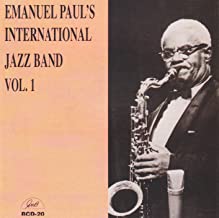
Emanuel Paul was born on February 2, 1904 in New Orleans, Louisiana. He did not begin playing music until late in his youth, picking up the violin at age 18 and then switched to banjo. In the middle of the 1920s he settled on the tenor saxophone, where his instrument often substituted for the baritone horn in a brass band.
Becoming a member of the Eureka Brass Band in 1940 and remained with them into the 1960s; he also played often with Kid Thomas Valentine from 1942 and recorded with Oscar Celestin, Emanuel Sayles, and the Olympia Brass Band. He led three recording sessions for the European Jazz Macon label in 1967. His sidemen on these records include Valentine, George Lewis, and Butch Thompson.
Tenor saxophonist Emanuel Paul, who was one of the first tenor saxophonists to hold regular work in the New Orleans jazz scene, passed away on May 23, 1988 in New Orleans.
More Posts: bandleader,history,instrumental,jazz,music,saxophone
Daily Dose Of Jazz…
Jim Lanigan was born on January 30, 1902 in Chicago, Illinois. Learning piano and violin as a child, he played piano and drums in the Austin High School Blue Friars before specializing on bass and tuba.
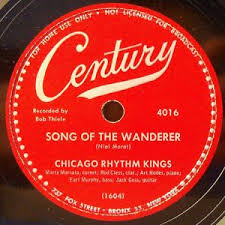
A member of the Austin High Gang, he played with Husk O’Hare in1925), the Mound City Blue Blowers and Art Kassel from 1926 to 1927, the Chicago Rhythm Kings, the Jungle Kings, and the 1927 McKenzie and Condon’s Chicagoans recordings.
From 1927 to 1931 he was with Ted Fio Rito and worked in orchestras for radio, including NBC Chicago. Performing sideman duties in the 1930s and 1940s with Jimmy McPartland, Bud Jacobson’s Jungle Kings, Bud Freeman, and Danny Alvin, he began to concentrate more on music outside of jazz at that time. He played with the Chicago Symphony Orchestra from 1937 to 1948, and did extensive work as a studio musician.
Bassist and tubist Jim Lanigan, who never recorded as a leader, played reunion gigs for the Austin High Gang, passed away on April 9, 1983.
More Posts: history,instrumental,jazz,music,tuba