

Daily Dose Of Jazz…
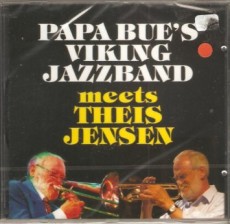
Papa Bue Jensen was born Arne Bue Jensen on May 8, 1930 in Copenhagen, Denmark, At an early age, he became fascinated with jazz, prompted by records from his brother with Harry James, Arte Shaw, Tommy Dorsey, Glenn Miller, Bert Ambrose, Bunk John and George Lewis in the stack.
After World War II, Jensen became a sailor for a few years, visiting ports all around the world, where he had an opportunity to listen to enjoy their music venues. It was around this time that he started to play jazz. He borrowed money to by a slide trombone, was taught the seven basic positions of the slide by a Royal Danish Orchestra musician, and the rest he taught himself. Soon he was playing with other young jazz musicians, performing in clubs and bars around Copenhagen.
He played in the Royal Jazzman band, that later became the Bohana Jazz Band, Henrik Johansen’s Jazz Band and recorded as a sideman with the Saint Peter Street Stompers in the 1950s. Papa Bue also worked with the Bonanza Jazz Band, Chris Barber, Adrian Bentzon and Johansen. During this period of his career he was immersed in the Nyhavn music scene jamming with other young jazz musicians. In 1956 he founded and led the New Orleans Jazz Band, and was given the nickname Papa Bue as he was the on father in the group.
In late 1957, after an article by Shel Silverstein was published in which he referred to them as the Danish Vikings, Jensen renamed the ensemble the Viking Jazz Band. They released their first album in 1958 and their sophomore project Schlafe Mein Prinzchen released in 1960, sold over one million copies, garnering them gold status.
Though bebop was in at the time he remained in the Dixieland style, but was influenced by early swing and is considered one of the most significant proponents of his genre. The group remained active into the 1990s, recording and/or performing with George Lewis, Champion Jack Dupree, Art Hodes, Wild Bill Davison, Wingy Manone, Edmond Hall, Albert Nicholas, Earl Hines, Stuff Smith and Ben Webster.
Papa Bue’s Viking Jazz Band recorded Bent Fabricius-Bjerre’s theme music for the Olsen Gang series, and was awarded the Golden Keys To The City in 1969 after performing at the 1969 New Orleans Jazz Festival. In 1989 he was awarded the Ben Webster Prize of Honor.
Trombonist Papa Bue Jensen, who released a large number of albums on Storyville, timeless and Music Mecca record labels though few are in print, passed away on November 2, 2011, at the age of 81.

Dose A Day-Blues Away

More Posts: trombone
Daily Dose Of Jazz…
Dave Tough, born April 26, 1907 in Oak Park, Illinois was sometimes Davie or Davey Tough. His decision to become a drummer was not supported by his family or community, so he ventured from his upper-middle class world to the evolving jazz scene of Chicago’s Southside, breaking both cultural and musical boundaries.
Dave worked Bud Freeman, Woody Herman, Eddie Condon, Red Nichols, Red Norvo, Tommy Dorsey, Bunny Berigan and Benny Goodman. Appearing as the poet-drummer character Dick Rough in the Autobiographical Novel of Kenneth Rexroth, he played at Chicago’s legendary Green Mask,
In the later 1920s, Tough floated between Nice and Paris doing freelance work, touring and recording throughout Europe mostly on the Tri-Ergon label in the early Thirties. During this overseas period he worked loosely with George Carhart and while in Paris he had extensive sessions with Mezz Mezzrow.
Though without official record,he spent portions of 1942-44 in the Navy playing behind Shaw’s Naval Band. He only led one album, a small-sided release by the Jamboree label. Although he had varied successes, one being with the Artie Shaw band, Dave also had difficulties with alcoholism and illness that caused him to lose a number of prominent jobs.
Although he was not known as a bebop drummer, he was a fan and admired the drumming of Max Roach. He was not a flashy, crowd-pleasing drummer like Gene Krupa or Buddy Rich, he was widely admired by other musicians for his taste and subtle rhythmic drive. Dixieland and swing drummer Dave Tough, described as the most important of the drummers of the Chicago circle in the 1930s and 1940s, passed away from a cerebral trauma after falling down on a Newark, New Jersey street on December 9, 1948 at age 41. He was inducted into the Big Band and Jazz Hall of Fame in 2000.
Put A Dose In Your Pocket
More Posts: drums
Daily Dose Of Jazz…
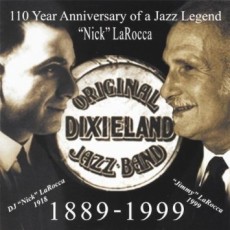
Nick LaRocca was born Dominic James LaRocca on April 11, 1889 in New Orleans, Louisiana to poor Sicilian immigrants. Attracted to the music of the brass bands in New Orleans as a child, he covertly taught himself to play the cornet against the wishes of his father who hoped his son would go into a more prestigious profession. From around 1910 through 1916 he was a regular member of Papa Jack Laine’s bands. A solid lead player with a strong lip allowed him to play long parades without let up or to play several gigs in a row on the same day.
In 1916 he joined Johnny Stein’s band to play a job in Chicago, Illinois, that subsequently became the Original Dixieland Jass Band and made their first commercially issued jazz recordings in New York City in 1917 that were hits, making them into celebrities. LaRocca led tours of England and the United States into the early 1920s, suffered a nervous breakdown. H retired from music until 1936 reuniting the ODJB for a successful tour and more recordings. He proclaimed that he and his band were the inventors of the now nationally popular swing music. Personality conflicts broke up the band again in 1937, and he again retired from music.
In the 1950s he wrote numerous vehement letters to newspapers, radio, and television shows, stating that he was the true and sole inventor of jazz music, damaging his credibility and provoking a backlash against him, his reputation and career. He donated his large collection of papers related to the O.D.J.B. to Tulane University in 1958 and worked with writer H.O. Brunn on the book The Story of the Original Dixieland Jass Band. Written during the Jim Crow era, he is acknowledge as an important figure, much in his own mind because he could not live with the thought that Negroes invented the music, in taking jazz from a regional style to international popularity, the leader of the most influential jazz band of the period from 1917 to 1921, and a good player in a very early jazz style on records.
Nick’s playing and recordings were an important early influence on such later jazz trumpeters as Red Nichols, Bix Beiderbecke and Phil Napoleon. His 1917 composition Tiger Rag is one of the most important and influential jazz standards of the twentieth century having some 136 cover versions by 1942 alone. It was covered by Louis Armstrong in several different versions throughout his career, while Duke Ellington, Art Tatum, Charlie Parker, The Mills Brothers, Frank Sinatra, Benny Goodman, Les Paul and Kid Ory also recorded important and influential cover versions of the jazz standard.
In 2006, his 1917 recording of Darktown Strutters Ball with the Original Dixieland Jass Band was inducted into the Grammy Hall of Fame. Cornetist Nick LaRocca, who was part of what is generally regarded as the first recorded jazz band, releasing the first jazz recording Livery Stable Blues in 1917, passed away on February 22, 1961 in New Orleans.
Give The Gift Of Knowledge
More Posts: cornet
Daily Dose Of Jazz…
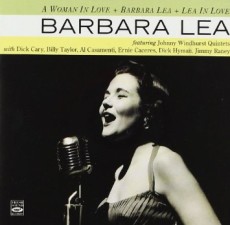
Barbara Lea was born Barbara Ann LeCocq on April 10, 1929 in Detroit, Michigan. A musical family, her musical heritage is traceable to a great uncle, Alexandre Charles LeCocq, an important nineteenth-century composer of French light opera. Her father changed their surname to Leacock and she shortened it to Lea when she began working professionally.
Boston was a hotbed of jazz in the late 1940s and early 1950s, allowing Lea to sing with major instrumentalists including as Marian McPartland, Bobby Hackett, Vic Dickenson, Frankie Newton, Johnny Windhurst and George Wein. She worked with small dance bands there before majoring in music theory at Wellesley College on scholarship. She also sang in the college choir, worked on the campus radio station and newspaper, and arranged for and conducted the Madrigal Group and brass choir concerts.
Barbara’s professional career started upon graduation with her early recordings for Riverside and Prestige. They were met with immediate critical acclaim that led to her winning the DownBeat International Critics’ Poll as the Best New Singer of 1956. She appeared in small clubs in New York and throughout the eastern U.S. and Canada, as well as on radio and TV.
With the near-demise of classic pop in the early 60s, Lea turned to the legitimate theatre, performing an impressive list of leading and feature roles in everything from Shakespeare to Sondheim. Moving to the West Coast received her M.A. in drama at Cal State Northridge and then returned to New York and taught speech at the American Academy of Dramatic Arts and acting at Hofstra University.
By the 1970s, with the resurgence of interest in show tunes and popular standards, Lea performed on NPR’s “American Popular Song with Alec Wilder & Friends”, appeared in two shows featuring the songs of Willard Robison and Lee Wiley, and received lengthy features in the New Yorker magazine. With her singing career was renewed she would consistently play the JVC, Kool and Newport Jazz Festivals as well as cabarets and concerts.
Jazz singer Barbara Lea, who also sang Dixieland, swing and cabaret, passed away on December 26, 2011 in Raleigh, North Carolina from complications of Alzheimer’s disease.
Put A Dose In Your Pocket
More Posts: vocal
Daily Dose Of Jazz..
Marty Marsala was born on April 2, 1909 in Chicago, Illinois. He began his professional career playing drums for bands led by Joe Bananas and Red Feilen in Chicago. During the 1920s he switched to the trumpet and following years as a freelance musician in Chicago, he soon joined his brother Joe’s band in New York playing trumpet from 1936 to 1941. In 1937 and 1938 he also worked with Bob Howard and Tempo King.
After working with the Will Hudson Orchestra, Marty then led a local band for a while before joining Chico Marx’s band from 1942 to 1943. The band was technically led by Ben Pollack but performed under Marx’s name.
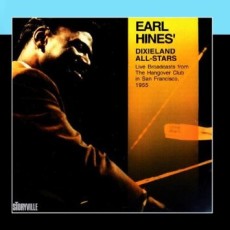
Marsala served briefly in the Army from 1944 to the end of World War II. After his discharge he toured between San Francisco and Chicago playing Dixieland with his brother again as well as Miff Mole, Tony Parenti and Sidney Bechet. He became especially popular in California during these years. In 1955 he moved permanently to San Francisco and began leading his own groups and recording with Kid Ory and Earl Hines.
By the 1960s his health had deteriorated and he retired from performing in 1965, never recording under his own name. Swing trumpeter Marty Marsala, best known for his two decades working with is brother from 1926-46, passed away on April 27, 1975.
Put A Dose In Your Pocket
More Posts: trumpet