

Daily Dose Of Jazz…
Louis Albert Cottrell, Jr. was born in New Orleans, Louisiana on March 7, 1911. Raised in an upper class Creole musical family, his father Louis Cottrell Sr. was an influential drummer and cornetist Manny Perez was his godfather. Growing up around John Robichaux, A.J. Piron and Barney Bigard, the latter giving him lessons as well as studying under Lorenzo Tio, Jr.
He began his career in the 1920s with the Golden Rule Orchestra and by 1925 was playing with “Polo” Barnes. Louis would go on to work with Chris Kelly, Kid Rena, on the riverboat SS Island Queen with Lawrence Marrero’s young Tuxedo Brass Band and with Sidney Desvigne.
During this period he became a prominent union organizer, joining Don Albert’s orchestra soon after, recording an album with the orchestra in 1935 under the Vocalion label. Trying his hand at composing, with Lloyd Glenn and Albert wrote You Don’t Love Me (True) that became one of the hits of the R&B New Orleans era for bandleader Paul Gayten.
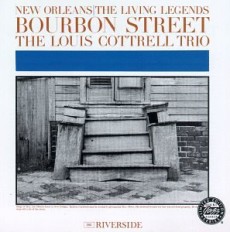
During the 40s he had an enduring collaboration with Paul Barbarin, played with Piron and Desvigne, formed and recorded for the first time as a leader in 1961 with the Louis Cottrell Trio for Riverside Records Living Legends series and with Barbarin revived the Onward Brass Band. His sideman duties led him to perform and record with Peter Bocage, Jim Robinson, Harold Dejan, Thomas Jefferson, Sweet Emma Barrett, Avery Kid Howard, Waldren Joseph, and Polo Barnes.
In 1971 Louis formed the Heritage Hall Jazz Band, leading that ensemble up until his death. Under his leadership the band rivaled Preservation Hall and with Blanche Thomas on vocals played Carnegie Hall in 1974. He went on to make several television appearances on the Perry Como and Mike Douglas shows, had a cameo and recorded Academy Award nominated Big Lip Blues for the soundtrack of 1978 film Pretty Baby.
Clarinetist and saxophonist Louis Cottrell died suddenly at his home after a short illness on March 21, 1978 at the age of 67. Fittingly, he was honored with a jazz funeral, as thousands assembled in a small Gentilly Catholic church to bid him farewell.

Give The Gift Of Knowledge
Daily Dose Of Jazz…
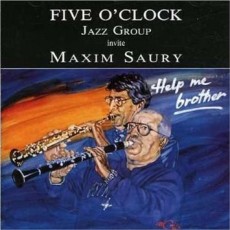
Maxim Saury was born in Enghien-les-Bains, in the Val-d’Oise, France on February 28, 1928. The son of a professional violinist, Andrew “Kiki” Saury, he first took violin lessons between 1940 and 1942, but not suiting him, he turned to the clarinet.
In 1946, he joined the orchestra of Christian Azzi and the following year joined Claude Bolling before leaving in 1949 to mount a trio in 1951. Between 1955 and 1968, Saury played almost exclusively at Caveau de la Huchette in Paris, performed at all the major French jazz festivals including Cannes, Antibes, Nice and Juan-les-Pins.
Maxim represented the middle of French traditional jazz and was invited to perform on television shows and also appear in several films made in the late 1950s and early 1960s, particularly Otto Preminger’s Bonjour Tristesse, The Cheaters by Marcel Carne, My Uncle by Jacque Tati and Jacques Rozier’s Adieu Philippine.
Since the late 1960s, Maxim Saury performed regularly in concert in France and worldwide. In 2007, he was one of few performers selected for the four volume compilation The 100 Greatest Success of Saint-Germain-des-Prés , alongside Yves Montand, Boris Vian, Juliette Greco, Les Freres Jacques, Catherine Sauvage, Sidney Bechet, Marcel Mouloudji and Stephane Grappelli.
Clarinetist, conductor and arranger Maxim Suary, one of the symbols of revival of New Orleans jazz in Saint Germain-des-Pres during the Fifties and Sixties, passed away at the age of eighty-four, on November 15, 2012 at the Ambroise Pare Hospital in Boulogne-Billancourt, following heart problems.
Put A Dose In Your Pocket
More Posts: clarinet
Daily Dose Of Jazz…
Warren Vaché, born February 21, 1951 in Rahway, New Jersey came from a musical family. His father was a bassist, author of several jazz books and a critic, while his mother was a secretary at Decca Records. He began playing piano in the third grade but soon switched to trumpet so he could play in the fourth grade band and his father immediately bought him a cornet.
Over the years Warren has looked to Louis Armstrong, Roy Eldridge, Bobby Hacket, Fats Navarro, Tom Harrell and Ruby Braff as his sources of inspiration. Throughout high school and while attending Montclair State College he played gigs from dance to weddings and all kinds of receptions.
Part of his formal training by studying under Pee Wee Erwin and continued with him playing in polka, Dixieland, big dance and Broadway pit bands, as well as small jazz groups and large free-wheeling combos.
His first professional job was with the Billy Maxted band in Detroit in 1972. From there he ventured on to play th Broadway production of Mr. Jazz, work with George Wein and finally landing in Benny Goodman’s band. There he played with Hank Jones, Urbie Green, Zoot Sims and Slam Stewart.
He became part of the Condon’s house band, had his debut release, First Time Out on the Monmouth label, but Concord Records gave him his biggest exposure working with Scott Hamilton, John Bunch, Jake Hanna and Cal Collins. He has also worked with Bucky Pizzarelli and Howard Alden.
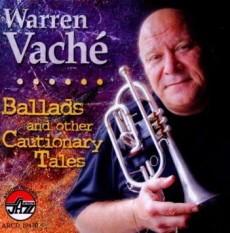
Swing master cornet, flugelhorn and trumpeter Warren Vaché currently maintains a full schedule of recording, worldwide festivals appearances, Broadway and club dates.
Give The Gift Of Knowledge
More Posts: cornet,flugelhorn,trumpet
Daily Dose Of Jazz…
Ron Mathewson was born 19 February 1944 Lerwick, Shetland Isles, Scotland into an unusually musical household. At eight years old he was studying classical piano, continuing his studies and performing classical piano until he reached sixteen. A year earlier he started playing bass guitar and his talent was noted and encouraged by Shetland musician, Peerie Willie Johnson.
In 1962, Mathewson was in Germany playing professionally with a Scottish Dixieland band, then in London he also performed with various jazz and R&B bands through to the middle of the decade. Around this time he was also a member of the Kenny Clarke-Francy Boland Big Band.
By1966 Ron became a member of the Tubby Hayes band, with which he performed until 1973. From 1975 on in to the 1990s, he was frequently a participant in various Ronnie Scott recordings and concerts.
In 1983, he appeared on Dick Morrissey’s solo album After Dark with Jim Mullen, John Critchenson, Martin Drew and Barry Whitworth. In 2007 a benefit concert was held for him after he had an accident that left him recovering from two broken hips, a broken wrist and a burst artery.
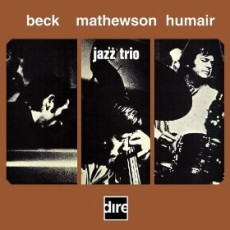
Best known for his years spent with Scott, the double bassist and bass guitarist has recorded with Stan Getz, Joe Henderson, Ben Webster, John Taylor, Gordon Beck, Philly Joe Jones, Roy Eldridge, Tony Oxley, Kenny Wheeler, Oscar Peterson, John Stevens, Terry Smith, Bill Evans, Phil Woods and His European Rhythm Machine, Acoustic Alchemy, Ian Carr, Spontaneous Music Ensemble, Ray Nance and Charles Tolliver, among numerous others.
Jazz Is Global – Share
Daily Dose Of Jazz…
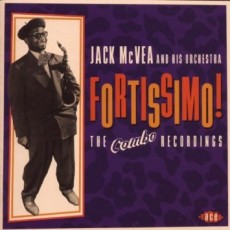
Jack McVea was born in Los Angeles, California on November 5, 1914. His first instrument was a banjo, learning from his father Satchel, who was a noted banjoist. After playing jazz in Los Angeles for several years, he joined Lionel Hampton’s orchestra in 1940. From 1944 on he mostly worked as a leader, but impressively performed as a sideman in those years was at the first Jazz at the Philharmonic concert in 1944.
McVea was leader of the Black & White Records studio band and was responsible for coming up with the musical riff for the words Open the Door, Richard and Ralph Bass got him to record it in 1946. It became immensely popular, entering the national charts the following year, and was recorded by many other artists.
From 1966 till his retirement in 1992 he led a group that played Dixieland jazz in New Orleans Square at Disneyland, called The Royal Street Bachelors. When formed, the trio consisted of McVea on clarinet, Herman Mitchell on banjo, and Ernie McLean on guitar and banjo.
In 1945 he played tenor saxophone in a recording session for Slim Gaillard alongside Charlie Parker and Dizzy Gillespie. He is also known for his playing on T-Bone Walker’s Call It Stormy Monday (But Tuesday Is Just As Bad, and has performed and recorded with B. B. King.
Tenor and baritone saxophonist Jack McVea, who also played clarinet in the swing, blues and rhythm and blues genres, passed away on December 27, 2000. He was 86.
Dose A Day – Blues Away