

Daily Dose Of Jazz…
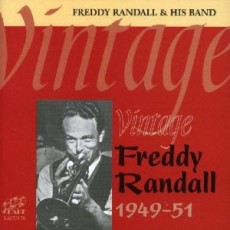
Freddy Randall was born Frederick James Randall on May 6, 1921 in Clapton, East London, England. Becoming interested in music in school the self-taught musician took up the trumpet at 16, never learned to read music but still achieved a high degree of technical proficiency with a flair and exuberance which marked him out. He began playing in local bands including Albert Bale’s Darktown Strutters and Will De Barr’s Band.
Randall’s heroes were the so-called Dixieland players out of Chicago like Wild Bill Davison and Muggsy Spanier and his own playing reflected their influence as he led the St. Louis Four in 1939. After military service he played Freddy Mirfield and John Dankworth before leading his own Dixieland groups in the late forties that featured many well-known English trad jazz stars of the era.
By 1958 Freddy left music due to lung problems, not resurfacing until ’63 playing with Dave Shepherd and recording for Black Lion Records. Over the course of his career Randall played with visiting American jazz musicians Sidney Bechet, Bud Freeman, Wild Bill Davison, Pee Wee Russell, Bill Coleman and Teddy Wilson.
Freddy Randall, trumpeter and bandleader, died on May 18, 1999 in Teignmouth, Devon at age 78.

More Posts: trumpet
Daily Dose Of Jazz…
Hayes Alvis was born on May 1, 1907 in Chicago, Illinois. He started his career playing drums but switched to tuba and bass after playing with Jelly Roll Morton in 1927-28. He played tuba and arranged for Earl Hines from 1928 to 1930.
Moving to New York City in 1931 Hayes played with Jimmie Noone in the Mills Blue Rhythm Band from 1931-34 and 1936. A very early double-bass solo can be heard on his 1932 recording “Rhythm Spasm”. He also occasionally played baritone saxophone in this ensemble as well, and was the group’s tour manager. From 1935 to 1938 Alvis played with Duke Ellington, working with fellow bassist/tubist Billy Taylor.
After his stint with Ellington, Alvis played with Benny Carter, Joe Sullivan and Louis Armstrong, replacing Pops Foster. From 1942 to 1945 he played in the Army band led by Sy Oliver. After the war, he played with Dave Martin until 1947, and then took a longstanding run as a house musician at the Cafe Society in New York City.
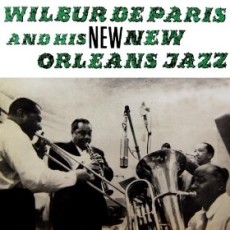
In the 1950s, he played in various swing and Dixieland revival groups, including Wilbur De Paris’s New Orleans Jazz. In the early seventies he played in a trio with Jay McShann and Tiny Grimes.
Never recording as a leader, bassist, tubist and sideman Alvis Hayes died in New York City on December 30, 1972 at the age of 65.

Daily Dose OF Jazz…
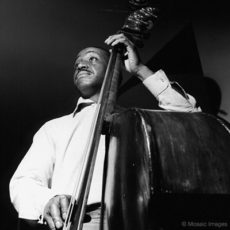
Gene Ramey, born April 4, 1913 in Austin, Texas, began playing trumpet in college but switched to the sousaphone when he played with George Corley’s Royal Aces, The Moonlight Serenaders and Terence Holder. It wasn’t until his move to Kansas City in 1932 that he took up the bass, studying with Walter Page.
Becoming a fixture in the Kansas City jazz scene, the double bassist played with Jay McShann’s orchestra from 1938 to 1943. Never a leader but a most sought after sideman, especially once he moved to New York, Ramey played with the who’s who of jazz including but not limited to Lester Young, Coleman Hawkins, Charlie Parker, Count Basie, Ben Webster, Hot Lips Page, Horace Silver, Thelonious Monk and Miles Davis.
His transition into bebop was easily accomplished due to the countless hours of daily practice with his friend Bird. They developed their style without drums, piano or other horns and Ramey was soon the first bassist to play the whole harmony chord while Bird ran his changes. Ramey is credited with stating that long before the jazz world started calling it bop he and Bird had created this pattern.
Ramey had a prolific career as a bassist for over three decades, never losing touch with Dixieland or swing as witnessed in his solos on recording sessions. Returning to Austin in 1976 his short-lived retirement led to lessons to local bassists, then to live performances and full-time musicianship until a heart attack caused his death on December 8, 1984.
More Posts: bass
Daily Dose Of Jazz….
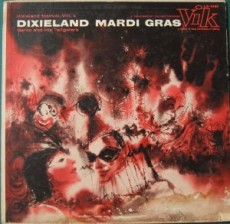
Santo Pecoraro was born on March 31, 1902 in New Orleans, Louisiana but was better known as Santo Pecora. The jazz trombonist distinguished his name due to a cousin, a drummer with the same name, though the two sometimes performed together in ensembles.
Santo began his musical endeavors playing the French horn but settled on the trombone while still a teenager. He played in orchestras accompanying silent films as well as in big bands led by Johnny De Droit and Leon Roppolo. He toured with Bee Palmer, a singer in the early 20’s, and then joined the New Orleans Rhythm Kings by the middle of the decade.
Towards the end of the twenties he moved to Chicago, playing both jazz bands and theatre palaces. He became a big band sideman in the thirties, toured with Sharkey Bonano and played with Wingy Manone in California.
Returning to New Orleans in the 40’s, he gigged on the riverboats and in nightclubs while continuing to work with Bonano. He longtime association with Dixieland and the New Orleans music scene established him as a staple well into the Sixties. Santo Pecora passed away on May 29, 1984 in his beloved Crescent City.

More Posts: trombone
Daily Dose Of Jazz…
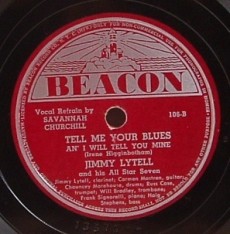
Jimmy Lytell was born on December 1, 1904 in New York, NY. His first professional experience came at age twelve, and by the beginning of the 1920s he was recording with early jazz ensembles. Jimmy played in the Original Indiana Five in 1921 and the Original Memphis Five from 1922 – 1925, and also played in the Original Dixieland Jazz Band for two years beginning in1922.
After the 1920s Lytell rarely performed in jazz settings, spending more time as a studio and orchestra musician. He worked as a staff musician for NBC during this time. From 1949 into the late 1950s he appeared in the New Original Memphis Five revival band, and recorded with Connee Boswell late in the 1950s.
As a leader, he recorded 18 titles during the Roaring Twenties and six more for London Records in 1950. Clarinetist Jimmy Lytell, player of Dixieland and early jazz continued to perform up until a year before his death on November 28, 1972 in Kings Point, New York.

More Posts: clarinet