

Daily Dose Of Jazz…
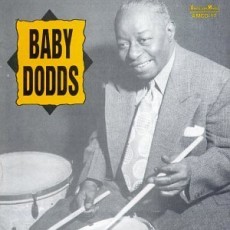
Warren “Baby” Dodds (pronounced “dots”) was born on December 24, 1898 in New Orleans, Louisiana. He was the younger brother of clarinetist Johnny Dodds and is regarded as one of the very best jazz drummers of the pre-big band era, and one of the most important early jazz drummers. Some of his early influences include Louis Cottrell, Harry Zeno, Henry Martin, and Tubby Hall.
Dodds gained reputation as a top young drummer in New Orleans, and worked on Mississippi River steamship bands with young Louis Armstrong. In 1921 moved to California to work with Joe “King” Oliver, and followed Oliver to Chicago, which would be his base of operations.
Dodds recorded with Louis Armstrong, Jelly Roll Morton, Art Hodes, his brother Johnny Dodds and by the late 1940s he worked at Jimmy Ryan’s in New York City. He also worked with Bunk Johnson when he would return to New Orleans. After suffering three strokes in 1949 and 1950, Dodds tutored and played in public irregularly, though he was unable to complete entire performances. In 1954 he played for a Natty Dominique recording session that featured bassist Israel Crosby and pianist Lil Hardin Armstrong.
Dodds was among the first drummers who improvised while performing to be recorded. He varied his drum patterns with accents and flourishes, and he generally kept the beat with the bass drum while playing buzz rolls on the snare. This play would be a long roll that lasted till the following beat, which created a smoother time feel that he later developed into the jazz ride pattern most commonly used ever since. He continues to be admired for the creativity of his playing and he believed in playing something different for every chorus of every tune. Additionally Dodds is perhaps the first jazz drummer to record unaccompanied: in 1945 he recorded two solos for Circle Records, and the next year recorded a series of solos and reminiscences for Folkways Records. Baby Dodds, jazz and Dixieland drummer passed away on February 14, 1959.
More Posts: drums
Daily Dose Of Jazz…
Roswell Rudd, born Roswell Hopkins Rudd, Jr. on November 17, 1935, grew up in Sharon, Connecticut. Graduating from Yale University where he had played and recorded two albums of boisterous trad-jazz with Eli’s Chosen Six, a Dixieland band of Yale students that Rudd joined in the mid-’50s. But his landmark collaborations with Cecil Taylor, Archie Shepp, John Tchicai and Steve Lacy grew out of the lessons learned while playing rags and stomps in college.
In the 1960s, Rudd participated in key free jazz recordings with his ultra avant-garde New York Art Quartet, the soundtrack of the 1964 film New York Eye and Ear Control, Michael Mantler & Carla Bley’s 1968 Jazz Composer’s Orchestra-Communications with Cecil Taylor; and has collaborations with Don Cherry, Pharoah Sanders, Larry Coryell and Gato Barbieri. A major factor in his career has been his lifelong friendships with saxophonists Archie Shepp and Steve Lacy, recording and performing the music of Thelonious Monk numerous times with the later.
Roswell is skilled in a variety of jazz genres but is best known for his avant-garde contributions. Rudd has taught ethnomusicology at Bard College and the University of Maine. Over a period of three decades he has assisted with world music song style – Cantometrics and Global Jukebox projects. He has collaborated and recorded with Malian, Mongolian and with Hispanic New Yorkers.
The Grammy Award-nominated jazz trombonist and composer Roswell Rudd conducts master classes and workshops around the world and since 1962 Rudd has worked extensively with saxophonist Archie Shepp.

Inspire A Young Mind
Daily Dose Of Jazz…
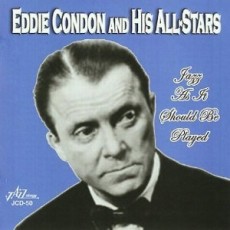
Albert Edwin Condon was born November 16, 1905 in Goodland, Indiana and started playing music on the ukulele before switching to guitar. By the time he was sixteen he was in Chicago playing professionally with Bix Beiderbecke, Jack Teagarden and Frank Teschmacher.
In 1928 Condon moved to New York City frequently arranging jazz sessions for various labels, sometimes playing with the artists he brought like Louis Armstrong and Fats Waller. He organized racially integrated recording sessions – when these were still rare – with Waller, Armstrong and Henry “Red” Allen. He played with the Red Nichols band, later forming a long association with Milt Gabler’s Commodore Records in 1938.
From the late 1930s on Eddie was a regular at Nick’s in Manhattan with Pee Wee Russell, Wild Bill Davison and Bobby Hackett. He went on to appear in a short film with Hackett, produced a series of jazz broadcasts from Town Hall during the last years of WWII that gave him national popularity.
From 1945 through 1967 he ran his own New York jazz club, Eddie Condon’s. In the 50s he recorded a sequence of classic albums for Columbia Records, toured Britain, Australia, Japan, the U. S. and performed at jazz festivals throughout the world until 1971. Two years later, Eddie Condon, jazz banjoist, guitarist, bandleader and arranger passed away on August 4, 1973 in New York City.
More Posts: arranger,bandleader,banjo,guitar
Daily Dose Of Jazz…
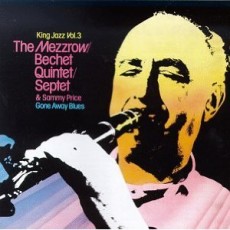
Milton Mesirow, better known as Mezz Mezzrow was born November 9, 1899 in Chicago, Illinois. The clarinetist and saxophonist has never been ranked as one of the best jazz musicians, organizing and taking part in some magnificent recording sessions involving the best black musicians of the 1930s/40s, including Benny Carter, Teddy Wilson, Frankie Newton, Tommy Ladnier and most importantly Sidney Bechet. His 1938 sessions for the French jazz critic Hugues Panassie, which he is well-known for organizing and financing, involved Bechet and Ladnier and helped spark the “New Orleans revival”.
Mezzrow became better known for his drug-dealing of marijuana than his music. His nicknames “Mezz” and “Muggles” that became slang for marijuana were used in song, the former in the Stuff Smith tune “If You’re A Viper” and the later was the title of a 1928 Louis Armstrong recording and for a brief time was his manager.
In the mid-1940s Mezzrow started his own record label, King Jazz Records, featuring himself in groups that usually included Sidney Bechet and, often, trumpeter Oran “Hot Lips” Page. Mezzrow also can be found and heard playing on six recordings by Fats Waller and his appearance at the 1948 Nice Jazz Festival was a surprise hit.
Following that appearance he made his home in Paris, France and organized many bands that included French musicians like Claude Luter, as well as visiting American artists like Peanuts Holland, Jimmy Archey, Kansas Fields, Lionel Hampton and Buck Clayton, with whom in 1953 he made what is probably his best ever recording: a version of the Louis Armstrong classic “West End Blues”.
Mezz Mezzrow, clarinetist, saxophonist, author and colorful character died on August 5, 1972 in Paris, France.
Daily Dose Of Jazz…
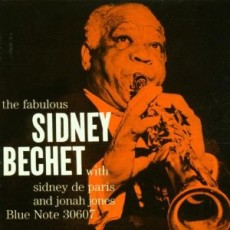
Sidney Bechet was born on May 14, 1897 in New Orleans, Louisiana to a wealthy Creole family. At age six he picked up his brother’s clarinet, learned to play by on his own, eventually playing at a family birthday party exhibited his new talent. Later he would study with renowned Creole clarinetists Lorenzo Tio, Big Eye Louis Nelson and George Baquet. He would be found improvising jazz in many New Orleans ensembles led by John Robichaux, Bunk Johnson and King Oliver.
By the time he was 17 Bechet was touring as far north as Chicago and two years later landed in New York playing with Marion Cook’s Syncopated Orchestra. This led him to Europe and the Royal Philharmonic Hall where he attracted attention with his playing. It was in London that Sidney found the straight soprano and quickly developed a style different from his warm clarinet.
Sidney became one of the first important soloists in jazz, eclipsing Louis Armstrong into the studio by several months, and was possibly the first notable jazz saxophonist. His forceful delivery and well-constructed improvisations characterized his distinctive and wide vibrato playing although his lively and unpredictable temperament did not gain him wide acclaim until well into the late forties.
Returning to New York in 1922 he began recording songs like “Wild Cat Blues” and “Kansas City Man’s Blues” with sessions led by pianist and songwriter Clarence Williams. Over the next three decades Bechet continued to record and tour although his success was intermittent. He relocated to France in 1950, got married and shortly before his death dictated his poetic autobiography “Treat It Gentle”. Sidney Bechet, clarinetist, saxophonist and composer died in Garches, France of lung cancer on May 14, 1959, his 62nd birthday.