

Daily Dose Of Jazz…
Igor Grigoriev was born on January 24, 1955 in Moscow, Russia and taught himself to play the guitar as a young child, and later obtained his master’s degree from a music institution in Russia. As a young boy in the late sixties, he was interested in the latest music of the time, rock and started his career, gaining fame by playing and touring around the world.
Becoming a band leader of the trio, Roof, with trumpeter Andrew Solovyov, and percussionist Michael Zhukov they recorded on Melodia Records and Leo Records. His group, Asphalt also gained tremendous popularity despite its short life span.
As he developed musically, Grigoriev became interested in Charlie Parker’s work, but in later years the influence of classical composers became evident in his music. Permanently migrating to the United States in 1989 he continued his career, as a classical and jazz musician, but later he became more and more interested in Avant-garde music.
Better known for his 1990s work, he rapidly assimilated the American avant-garde and forged his own, instantly identifiable style. His music of the 1970s and 1980s saw transition from rock to classical to jazz and to avant-garde music. Igor developed methods of simultaneously improvising bass lines, harmony and melodic lines. In his later years, his playing became less predictable and formulaic.
He has recorded a number of solo albums, as well as recording or performing with Stan Getz, Red Callender, Larry Gales, Milcho Leviev, Ira Schulman, Rod Oakes, and many others. Igor and Rod founded OGOGO in 1996, which is one of the most important organizations to perform improvised music. His central focus was free improvisation, though he occasionally appeared in more conventional jazz and classical contexts, such as big band, various ensembles, and string orchestra.
He composed and arranged for a wide range of music genres, did orchestra work for a Russian circus, and arranged music for theatrical plays. As an educator he taught guitar, music history, jazz history, ensembles, and improvisation at Los Angeles Harbor College and Cerritos College in Los Angeles, California. Guitarist, composer, arranger, band leader and educator Igor Grigoriev passed away on September 25, 2010.
More Posts: arranger,composer,guitar,history,instrumental,jazz,music
Daily Dose Of Jazz…
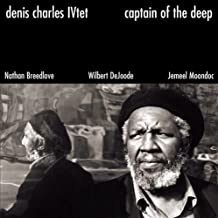
Denis Charles was born in St. Croix, Virgin Islands on December 4, 1933 and first played bongos at age seven with local ensembles in the Virgin Islands. Moving to New York City in 1945, he gigged frequently around town and in 1954 began working with Cecil Taylor, and the pair collaborated for the next four years. Following his work with Taylor, he played with Steve Lacy, Gil Evans, and Jimmy Giuffre. He befriended Ed Blackwell, and the two influenced each other.
Recording with Sonny Rollins on a calypso-tinged set, Denis then returned to play with Lacy until 1964. He worked with Archie Shepp and Don Cherry in ‘67 and then disappeared from the jazz scene until 1971. In the 1970s and 1980s he played regularly on the New York jazz scene with Frank Lowe, David Murray, Charles Tyler, Billy Bang, and others, and also played funk, rock, and traditional Caribbean music.
Between 1989~1992 drummer Denis Charles released three albums as a leader before passing away of pneumonia in his sleep on March 26, 1998 in New York City in 1998, four days after a five-week European tour with the Borgmann/Morris/Charles (BMC) Trio, with Wilber Morris and Thomas Borgmann. In 2002 Veronique N. Doumbe released a film documentary Denis A. Charles: An Interrupted Conversation about his life.
More Posts: bandleader,composer,drums,history,instrumental,jazz,music
Daily Dose Of Jazz…
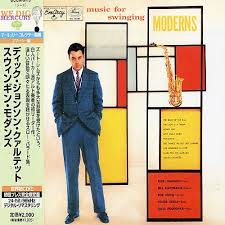
Dick Johnson was born Richard Brown Johnson on December 1, 1925 in Brockton, Massachusetts. His primary instrument was clarinet, however, he also played the alto saxophone and flute.
He began his professional career as a musician while serving in the U.S. Navy in 1944-1946 and played with the navy band on the USS Pasadena during World War II. He often credited his stint in the Navy for kicking off his career in jazz. After the war, Johnson toured with the big bands of Charlie Spivak and Buddy Morrow.
Eventually, after several years on the road, he settled in his hometown of Brockton, Mass. It was there in Brockton where he and his close friend, Lou Colombo formed a jazz sextet. The group lasted 10 years, but the friendship and musical kinship lasted for the rest of his life. In addition, Dick formed his septet, Swing Shift, which was a staple on the Boston music scene for many years.
Like Herb Pomeroy, Johnson managed a double career as a performer and an educator, teaching jazz at nearby Berklee School of Music, where he mentored many younger jazz musicians.
Between 1956 and 2006 he recorded ten albums as a leader. He worked with Frank Sinatra, the Swing Shift Orchestra, Dizzy Gillespie, and Tony Bennett.
Clarinetist, alto saxophonist, and flutist Dick Johnson, who also played in the free jazz genre, passed away on January 10, 2010 in Boston, Massachusetts after a short illness, aged 84.
</ahref=”http:>
More Posts: bandleader,clarinet,educator,flute,history,instrumental,jazz,music,saxophone
Daily Dose Of Jazz…
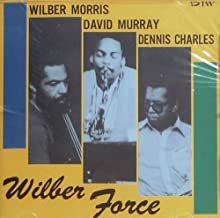
Wilber Morris was born on November 27, 1937 in Los Angeles, California and began playing drums as a child. Joining the Air Force in 1954, during his tour of duty of eight years switched to the bass. He would play around San Francisco, California in his off times with the likes of Pharoah Sanders and Sonny Simmons. After his discharge, he returned to Los Angeles and played with Arthur Blythe and Horace Tapscott.
Moving back to San Francisco in 1969 his jazz career didn’t really take off until he relocated to New York City nearly a decade later. By 1978 Wilber found work with violinist Billy Bang and saxophonist David Murray, the latter would become a long-standing association well into the ’90s. During the early Eighties, he formed his own trio, Wilber Force, with drummer Denis Charles and saxophonist Charles Tyler with whom he recorded.
He held various teaching positions in addition to recording and performing. He began to work outside Murray’s group and also founded the One World Ensemble. He recorded four albums as a leader and as a sideman another two dozen albums. Morris performed with such musicians as Pharoah Sanders, Sonny Simmons, Alan Silva, Joe McPhee, Horace Tapscott, Butch Morris, Arthur Blythe, Charles Gayle, William Parker, and Bob Ackerman, Charles Tyler, Dennis Charles, Roy Campbell, Avram Fefer, Alfred 23 Harth, Borah Bergman, Bobby Few, and Rashied Ali.
Double bassist and bandleader Wilber Morris, who performed mainly in the free jazz genre and was the brother of the cornetist, composer, and conductor Butch Morris, passed away on August 8, 2002 in New York City.
More Posts: bandleader,bass,history,instrumental,jazz,music

Daily Dose Of Jazz…
Alvin Leroy Fielder Jr was born November 23, 1935 in Meridian, Mississippi to a mother who played the violin and piano and a father who played the cornet and was a pharmacist by profession. His brother William became a trumpeter. He initially learned the piano as a young child, but stopped and did not regain an interest in music until he was 12 when he heard a Max Roach record. He took drum lessons from Ed Blackwell while studying pharmacology at Xavier University of Louisiana, and then continued his degree at Texas Southern University. He did all this while maintaining his musical development by taking lessons with local drummers and performing at night. He went on to complete his pharmacology studies with a master’s degree from the University of Illinois at Chicago.
In Chicago, Illinois he played with Sun Ra during 1959 and 1960. Encouraged by fellow musicians Muhal Richard Abrams and Beaver Harris, he became more experimental in his playing and went on to be a charter member of the Association for the Advancement of Creative Musicians (AACM). The AACM’s first released recording featured him on Roscoe Mitchell’s Sound. In the mid-to-late 1960s, while working part-time as a pharmacist, Alvin played in his own trio with Fred Anderson and bassist/cellist Lester Lashley.
1969 saw he returned home to Mississippi where he took responsibility for managing the family business, becoming involved in political activism, and continued to pursue his passion for music. In 1971 he met John Reese and helped develop the Black Arts Music Society (BAMS). Fielder was instrumental in bringing many AACM and other musicians to Mississippi. In 1975, he began working with Kidd Jordan in what became the Improvisational Arts band, which featured various musicians over three decades and appeared at the New Orleans Jazz and Heritage Festival every year from 1975 to 2008. In 1995, he participated as a founding faculty member in the Louis “Satchmo” Armstrong Summer Jazz Camp.
He recorded twenty-seven albums with Ahmed Abdullah, Charles Brackeen, Damon Smith, and Dennis Gonzalez, and continued exploring free jazz in the 1990s with Joel Futterman, Kidd Jordan, and others, and toured with Andrew Lamb. He was awarded the Resounding Vision Award by Nameless Sound in Houston, Texas. Drummer Alvin Fielder passed away of complications from congestive heart failure and pneumonia, in Jackson, Mississippi on January 5, 2019.
More Posts: bandleader,drums,history,instrumental,jazz,music