

Daily Dose Of Jazz…
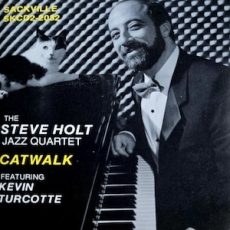
Steve Holt was born on May 9, 1954 in Montreal, Quebec, Canada and exhibited musical ability in early childhood, playing piano at the age of four. By the time he was a teenager he was a regular on the Montreal club scene.
He was self-taught until he entered McGill University where he was taught by pianist Armas Maiste, whose bebop playing influenced him. Becoming a student of Kenny Barron he regularly traveled to New York City for private lessons. Holt graduated from McGill in 1981 with that university’s first Bachelor of Music major in Jazz Performance, and went on to teach jazz improvisation there.
His 1983 debut album, The Lion’s Eyes, was nominated for a Juno Award. He has worked with jazz musicians Larry Coryell, Eddie Henderson, and Archie Shepp. He moved to Toronto, Canada in 1987 and worked as an equity analyst and for a while Steve continued playing clubs at night.
In the Nineties he released three albums then decided to concentrate on music full-time. Three years later, his fifth album, The Dream, was released. Moving into music production he stopped performing jazz live until 2014. Following a move to the countryside, his interest in jazz performance returned.
In 2017, he opened a health food store in Warkworth, Ontario, Canada that operates as a jazz venue once a week. After a twenty year absence from the recording field, pianist Steve Holt released Impact, his new album in 2025 under the new band, The Steve Holt Jazz Impact Quintet.

More Posts: bandleader,history,instrumental,jazz,music,piano
Daily Dose Of Jazz…
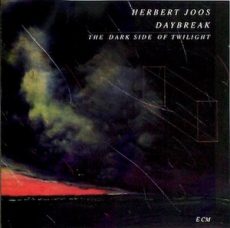
Herbert Joos was born on March 21, 1940 in Karlsruhe, Germany. He learned trumpet first by self-study and then by a private teacher. He studied double bass from 1958, but then turned to flugelhorn, baritone horn, mellophone, and alphorn.
Since the mid-1960s, he has been a member of Modern Jazz Quintet Karlsruhe, from which the group Fourmenonly was created with Wilfried Eichhorn and Rudolf Theilmann. Afterward, he was a member of various modern and free jazz formations with Bernd Konrad, Hans Koller, Adelhard Roidinger and Jürgen Wuchner among others. He played at festivals and in the Free Jazz Meeting Baden-Baden of the SWF at a flugelhorn workshop with Kenny Wheeler, Ian Carr, Harry Beckett and Ack van Rooyen and made a name for himself with his solo recording, The Philosophy of the Flugelhorn in 1973.
He led his own wind trio, quartet and orchestra. He achieved more recognition in the 1980s as a member of the Vienna Art Orchestra, which he influenced. Since the 1990s he has participated in the SüdPool project. He has appeared as a duo with Frank Kuruc as well as in Patrick Bebelaar’s groups, for Michel Godard, Wolfgang Puschnig, Clemens Salesny and Peter Schindler. He also played with the Orchestre National de France.
In 2017, he was awarded the Jazzpreis Baden-Württemberg for his life’s work. Instead of a speech after the laudations, he thanked in a short phrase, and played a concert with a sixteen piece orchestra.
Herbert Joos, who produced drawings, book illustrations and paintings, died on December 7, 2019 after surgery in a Baden-Baden, Germany hospital.

More Posts: flugelhorn,history,instrumental,jazz,music,trumpet
Daily Dose Of Jazz…
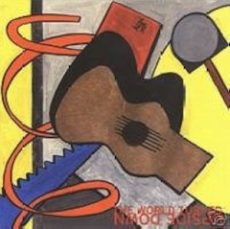
Keith Rowe was born March 16, 1940 in Plymouth, England. He began his career playing jazz in the early 1960s with Mike Westbrook and Lou Gare. His early influences were guitarists Wes Montgomery, Charlie Christian, and Barney Kessel. Growing tired of what he considered the genre’s limitations he began experimenting, stopped tuning his guitar and began playing free jazz and free improvisation.
Rowe developed prepared guitar techniques: placing the guitar flat on a table and manipulating the strings, body, and pick-ups in unorthodox ways. He has used needles, electric motors, violin bows, iron bars, a library card, rubber eraser, springs, hand-held electric fans, alligator clips, and common office supplies in playing the guitar.
Rowe has worked with Oren Ambarchi, Burkhard Beins, Cornelius Cardew, Christian Fennesz, Kurt Liedwart, Jeffrey Morgan, Toshimaru Nakamura, Evan Parker, Michael Pisaro, Peter Rehberg, Sachiko M, Howard Skempton, Taku Sugimoto, David Sylvian, John Tilbury, Christian Wolff, and Otomo Yoshihide.
Guitarist Keith Rowe, who was a founding member of both AMM in the mid-1960s, M.I.M.E.O. and is seen as a godfather of EAI electroacoustic improvisation, continues to compose, record and tour.
More Posts: bandleader,guitar,history,instrumental,jazz,music
Daily Dose Of Jazz…
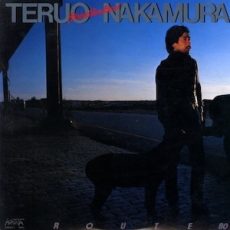
Teruo Nakamura was born on March 3, 1942 in Tokyo, Japan and everyone in his immediate family were artists. He studied at Nihon University before moving to New York City in 1964, where he studied with Reggie Workman.
In 1969 he joined drummer Roy Haynes’s ensemble and that same year he also formed a band with Steve Grossman and Lenny White, who both went on to play on his 1973 debut as a leader, the album Unicorn and Nakamura played both acoustic and electric bass on the album, which was released by Three Blind Mice.
Teruo formed the Rising Sun band in the mid-1970s. In 1977 this contained saxophonist Bob Mintzer, guitarist Shiro Mori, with Mark Gray on synthesizer, Art Gore on drums and Nobu Urushiyama on percussion.
The 1980s and 1990s saw him working principally as a record producer. Bassist and record producer Teruo Nakamura continues to perform and record.
More Posts: bass,history,instrumental,jazz,music,record producer
Daily Dose Of Jazz…
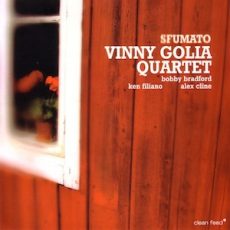
Vinny Golia was born March 1, 1946 in the Bronx, New York City. As a composer he fuses the rich heritage of jazz, contemporary classical music and world music. As a bandleader, he has presented his music in Europe, Canada, Mexico, Japan, Australia, New Zealand and the United States. His ensembles vary in size and instrumentation.
He founded the jazz record label Nine Winds in 1977 and has won numerous awards as a composer. In 1982 he created the ongoing 50-piece Vinny Golia Large Ensemble to perform his compositions for chamber orchestra and jazz ensembles.
A multi-woodwind performer, Vinny’s recordings have been consistently picked by critics and readers of music journals for their yearly “ten best” lists on JazzTimes, Cadence Magazine, DownBeat, LA Weekly, Jazziz and the Jazz Journalists Association honored him with a Lifetime Achievement Award.
Golia has been a featured performer with Anthony Braxton, Henry Grimes, Joëlle Léandre, Wadada Leo Smith, Horace Tapscott, John Zorn, Tim Berne, George E. Lewis, the Rova Saxophone Quartet, Patti Smith, Eugene Chadbourne, John Bergamo, George Gruntz, Lydia Lunch, and the Los Angeles Philharmonic Orchestra among numerous others.
Most recently, Golia has performed and toured with his sextet which features some of the new voices in the Los Angeles free-improv scene. Saxophonist and composer Vinny Golia, who also plays flute, English horn, clarinet, bassoon, tárogató, continues to expand and discover new avenues of exploration in his music.