

Daily Dose Of Jazz…
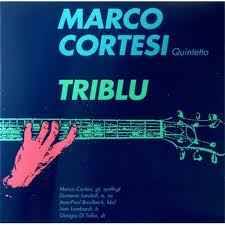
Marco Cortesi was born on May 18, 1962 in Locarno, Switzerland. Though learning the guitar early he began taking music seriously at the age of 20. He attended several Italian summer camps with Joe di Jorio, Jim Hall, Mick Goodrick and others. From 1985 to 1991 he enrolled at the Swiss Jazz School (SJS) in Bern, Switzerland where he studied and played with Frank Sikora, Rachel Gould, Woody Shaw, Sal Nistico and others.
After graduation at SJS in 1991, he started a musical and artistic relationship with American and European musicians and started working regularly with Gene Calderazzo in a trio that features special guests such as Franco Ambrosetti, Walt Szymansky, Jon Davis, Mark Abrams, Dario Deidda, Jeff Gardner, Rick Margitza, Giorgio di Tullio, Alberto Bonacasa and many others. He went on to perform in trio to quintet configurations at festivals and in clubs.
In 1997 he’s in London, England for a tour with the Gene Calderazzo Quartet. That same year the Swiss label Altri Suoni released his first CD Triblu. In 1999 he was in New York City he worked, toured and recorded with pianist Jeff Gardner. He went on to tour with tenor saxophonist Rick Margitza, with whom he also recorded with his sophomore project Why Not in 2000. He has collaborated with Franco Ambrosetti, trumpeter Hilaria Kramer, lute player Luca Pianca, and viola player Walter Fähndrich.
Guitarist Marco Cortesi composed all the music and soundtracks played and recorded by his group. He writes music for jingles, radio tunes, and electronic compositions for professional use in the media business.

More Posts: bandleader,guitar,history,instrumental,jazz,music
Daily Dose Of Jazz…
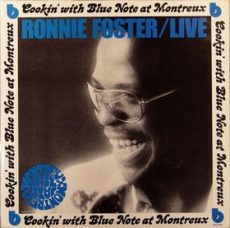
Ronnie Foster was born May 12, 1950 in Buffalo, New York and was attracted to music at the age of four. Attending Public School 8, then Woodlawn Jr. High for a year, he took music more seriously from his early teens while at McKinley Vocational High School for two years, and having his first professional gig aged fifteen, playing in a strip club. He spent his final year at Lafayette High School. The only formal musical instruction he received was a month of accordion lessons.
Foster initially performed with other local musicians before moving to New York City with his own band, and acquired a publishing company. He has performed as a sideman with a wide range of musicians, frequently working with guitarist George Benson and playing on the guitarist’s album Breezin’.
He has played organ with Grant Green, Grover Washington, Jr., Stanley Turrentine, Roberta Flack, Earl Klugh, Harvey Mason, Jimmy Smith, and Stevie Wonder. His music Mystic Brew has been sampled by A Tribe Called Quest and J. Cole.
Organist Ronnie Foster, who is also a record producer, continues to perform, record.
More Posts: bandleader,history,instrumental,jazz,music,organ,piano

Daily Dose Of Jazz…
Duke Jones was born Albert Jones on May 6th in White Plains, New York. The nickname was given to him by his favorite aunt due to his love of music at an early age. He began learning trumpet at the age of nine and played in elementary school through high school. He formed a band with The Lewis Brothers and Sharon Bryant that ultimately became Atlantic Starr.
Jones attended Northwestern University in Evanston, Illinois, studying music and film. He worked the New York club circuit and continued his studies with traditional island rhythms, calypso and soca at the University of Virgin Islands. He was influenced by Kenny Dorham, Woody Shaw, Lee Morgan, Benny Bailey and Miles Davis.
He would go on to tour Japan, Europe and Africa, working with The Temptations, Angela Bofill, Larry Coryell and Marion Meadows. He has collaborated and recorded with August Darnell, and drummer Norman Connors. Duke served as Vice President of Creole Records, a label started with then band mate August Darnell (Kid Creole). In 2005, he formed Café Soul All-Stars, recording their debut album Love Pages which featured George Benson, Roy Ayers and Kenny Garrett among others.
Trumpeter and flugelhornist Duke Jones continues to perform, record and collaborate with his music.
More Posts: bandleader,flugelhorn,history,instrumental,jazz,music,trumpet
Daily Dose Of Jazz…
Jan Hammer was born in Prague, Czechoslovakia on April 17, 1948 to a mother who was a well-known Czech singer, and his doctor father who worked his way through school playing vibraphone and bass guitar. He began playing the piano at the age of four with formal instruction starting two years later. He aspired to follow his father into medicine until a family friend convinced him to develop his musical talents instead.
Forming a jazz trio in high school, he performed and recorded throughout Eastern Europe at the age of fourteen. Upon entrance to the Prague Academy of Musical Arts, he completed many compulsory classes including harmony, counterpoint, music history, and classical composition. He moved to the United States and resolved to become a citizen after receiving a scholarship at Berklee School of Music in Boston, Massachusetts. Upon completion of his studies, Jan spent a year touring with Sarah Vaughan, recorded with Elvin Jones and Jeremy Steig, then moved to New York City in 1971 and joined the original lineup of the Mahavishnu Orchestra.
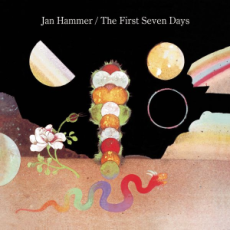
Though he previously recorded as a leader and sideman, his debut solo album, The First Seven Days, dropped in 1975. He formed the Jan Hammer Group in 1976 to support the album tour, which received good reviews from both jazz and rock critics. During the mid 70s to early 80s he recorded and played with Joni Mitchell, Billy Cobham, Santana, Tommy Bolin, Harvey Mason and Stanley Clarke.
Returning to solo work he recorded an album in 1978, formed a new band, known as Hammer, and wrote theme song for a British television series. He formed Schon & Hammer, played benefit concerts, and has received three Grammys and an Emmy nomination. By the Nineties and well into the new millennium, he continued to score and compose for film and television. In 2018 he released his first album of new material in over 10 years: Seasons – Part 1.
Keyboardist, drummer, composer, and record producer Jan Hammer continues to produce and perform.
More Posts: bandleader,composer,drums,history,instrumental,jazz,keyboard,music,producer,synthesizer
Daily Dose Of Jazz…
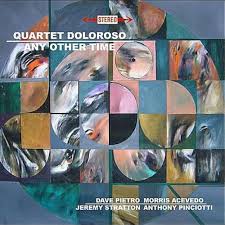
Morris Acevedo was born April 8, 1966 in Texas and started playing guitar in 6th grade. During his high school years he mostly played progressive Rock and Jazz Fusion in high school. After graduating he became a music major at North Texas State University and studied Jazz Performance and Music Education but a move to Boston, Massachusetts set his course to transfer to Berklee College of Music, earning a degree in Jazz Composition and Arranging. After earning his bachelor degree, he played full time in professional bands in Boston, and studied improvisation in New York City with Lee Konitz, Richie Bierach and Jerry Bergonzi before relocating to California in the San Francisco Bay Area.
In addition to his regular jazz and fusion group performances, he became smitten with teaching guitar and improvisation he taught for years in the Bay area. He currently holds the position of music director at Cardinal Newman High School. He has also held positions as the Jazz Guitar and Improvisation at the University of California at Berkeley’s Young Musician’s Program and guitar at his Berklee alma mater during summers.
He has performd with Joshua Redman, Jim Black, Ken Vandermark, the Either Orchestra, the Charlie Kolhase Quintet, organ Trio Be-3, Matt Wilson, Richie Cole’s Alto Madness Orchestra, Dam East, Scott Amendola, among others.
Guitarist and composer of new jazz and electronic ambient music Morris Acevedo, who has twice received a Certificate of Appreciation for Outstanding Service to Jazz, continues to perform, compose and educate.
More Posts: bandleader,composer,educator,guitar,history,instrumental,jazz,music