

Daily Dose Of Jazz…
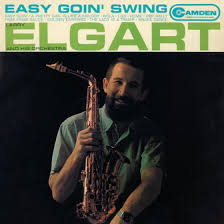
Lawrence Joseph Elgart was born on March 20, 1922 in New London, Connecticut and grew up in Pompton Lakes, New Jersey. His mother was a concert pianist and his father also played piano, though not professionally. With his brother Les they attended Pompton Lakes High School.
Both brothers began playing in jazz ensembles in their teens, and young Larry played with jazz musicians such as Charlie Spivak, Woody Herman, Red Norvo, Freddie Slack and Tommy Dorsey. In the mid-1940s, Les and Larry started up their own ensemble, hiring Nelson Riddle, Bill Finegan and Ralph Flanagan to arrange tunes for them. Their ensemble was not successful, and after a few years, they scuttled the band and sold the arrangements they had commissioned to Tommy Dorsey. Both returned to sideman positions in various orchestras.
In 1953, Larry met Charles Albertine and recorded two of his experimental compositions, Impressions of Outer Space and Music for Barefoot Ballerinas. The recordings were not commercially successful but became collector items for fans of avant-garde jazz. With Albertine they put together an ensemble and using precise microphone placements produced what came to be known as the Elgart Sound. Proved to be very commercially successful, throughout the 1950s they enjoyed a run of successful albums and singles on the Columbia label.
Their initial LP, Sophisticated Swing, released in late 1953, was credited to The Les Elgart Orchestra, because, according to Larry, Les was more interested than his brother in fronting the band. In 1954, the Elgarts left their permanent mark on music history in recording Albertine’s Bandstand Boogie, for the legendary television show American Bandstand. In 1955, the band became The Les and Larry Elgart Orchestra, but the brothers split in 1959, each subsequently releasing his own series of albums.
Larry signed with RCA Victor and his 1959 album New Sounds At the Roosevelt was nominated for a Grammy. From 1960 to 1962, he released music on MGM Records. The brothers reunited in 1963 and recorded several more albums until 1967 they again went their separate ways.
In 1981 he departed from the Elgart Sound for jazz funk and fusion genres, producing Flight of the Condor for the RCA Victor. His biggest exposure came in 1982, with the success of Hooked on Swing. The instrumental was a medley of swing jazz hits In the Mood, Cherokee, Don’t Sit Under the Apple Tree, American Patrol, Sing, Sing, Sing, Don’t Be That Way, Little Brown Jug, Opus #1, “ake the A Train, Zing Went the Strings of My Heart and A String of Pearls.
Alto saxophonist and bandleader Larry Elgart, who was a resident of Longboat Key, Florida died on August 29, 2017 at a hospice center in Sarasota, Florida at the age of 95.

More Posts: bandleader,history,instrumental,jazz,music,saxophone

Daily Dose Of Jazz…
Judy Lewis was born on February 19, 1958 in Milwaukee, Wisconsin and from age seven she studied classical piano, subsequently winning competitions throughout the Midwest. Moving to New York City she continued with her studies at Columbia University, but gradually moved from music to study religion. At 20 she moved to Israel where she continued to perform while searching for spiritual meaning in her life.
Her success as a performer was overshadowed by her desire to concentrate on spiritual matters. In 1991 Lewis began playing the piano again and by 1995 she returned to a music career, in addition to teaching to support her family. Dissatisfied with the classical form, by the mid-90s she turned to jazz. The catalyst came in Los Angeles, California when she attended her first jazz concert and was soon practicing extensively the work of jazz pianists such as Chick Corea, Bill Evans, Tommy Flanagan, Red Garland and Keith Jarrett.
She began composing her own music, formed a group, the Back Alley Jazz Quintet, and made her jazz debut in 1996. By the following year, Judy had brought the group down to a trio. Her acclaim grew in Israel, then expanded to tours of Europe and the USA. In 2002 she released a solo set, Waiting On A New Day, and then in 2003 she formed the fusion band, Phoenix Over Manhattan which would evolve into an acoustic band, No Expectations that was greeted warmly by critics.
Energetic, enthusiastic and determined, her concept of jazz had a vibrancy that was welcomed by many for its contrast to the smooth jazz outpourings of the early century. Pianist Judy Lewis, who operates a recording company, Visionary Insomniac Records, continues to perform, compose and record.

More Posts: history,instrumental,jazz,music,piano
Daily Dose Of Jazz…
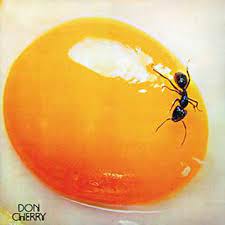
Okay Temiz was born on February 11, 1939 in Istanbul, Turkey and was influenced in his early years by his mother, Naciye, who was classically schooled in music.
Temiz started playing professionally in 1955 while studying at the Ankara Conservatory and at the Tophane Art Institute. After meeting Maffy Falay and Don Cherry, he settled in Sweden. With Cherry and bassist Johnny Dyani he toured US and Europe in 1971.
In 1972, he founded the band Xaba with Dyani and trumpeter Mongezi Feza. His drums are of his own invention, and are constructed using hand-beaten copper, in the style of Turkish debuka’s.
Fusion jazz percussionist and drummer Okay Temiz has recorded seventy-two albums and continues to perform and record.
More Posts: drums,history,instrumental,jazz,music,percussion
Daily Dose Of Jazz…
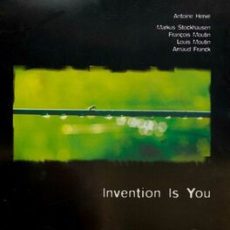
Antoine Hervé was born on January 20, 1959 in Paris, France. He studied composition at the Conservatoire National Supérieur de Musique. Between 1987 and 1989 he was director of the French National Jazz Orchestra.
Next to musicals, soundtracks for movies and dance shows Hervé has composed a concert for trumpet and a piece for drums and orkest. During 1997 he and Markus Stockhausen founded a quintet.
Emerging as a gifted representative of his generation of improvisers, his delve into fusion music, European classical music, contemporary and modern jazz led him and 12 other musicians to form the group Bob 13. He would go on to create a trio with bassist Michel Benita and drummer Peter Gritz.
His influences have been Bill Evans, Wynton Kelly, Oscar Peterson and McCoy Tyner, as well as Chopin, Debussy and Bartok.
Pianist Antoine Hervé continues to explore the realm of jazz through his compositions and performance.

More Posts: bandleader,history,instrumental,jazz,music,piano

Daily Dose Of Jazz…
Jeffrey Arthur Berlin was born on January 17, 1953 in Queens, New York. He studied violin from the age of five until he turned fifteen 15. After seeing the Beatles he was inspired to play bass guitar. He attended Berklee College of Music to study bass.
After a period of session work with Patrick Moraz, David Liebman and Patti Austin, in 1977 he gained widespread international attention when British musician Bill Bruford. He handpicked Jeff for his debut album Feels Good to Me, and played in the namesake band until 1980.
His Bruford bandmate, Allan Holdsworth, employed Berlin for his 1983 Warner Brothers album Road Games. Over the course of his career he recorded with Esther Phillips, Don Pullen, Ray Barretto, David Liebman, Herbie Mann, David Sancious, Clare Fischer and numerous others. As a leader, bass guitarist Jeff Berlin continued to record and tour throughout the 1980s, 1990s and 2000s, and still performs to this day.
More Posts: bandleader,guitar,history,instrumental,jazz,music