

Daily Dose Of Jazz…
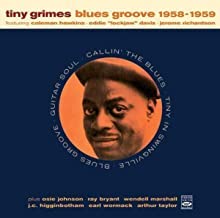
Musa Kaleem was born Orlando Wright on January 3, 1921 in Wheeling, West Virginia. He bought a clarinet in 1937, and by 1939 was touring as a saxophonist with the El Rodgers Mystics of Rhythm, featuring Eddie Jefferson on lead vocals.
In the early 1940s he began using the name Gonga Musa, and then Musa Kaleem, the name by which he is best known. He played often in Pittsburgh, Pennsylvania in the Fortiess, gigging with Erroll Garner, Mary Lou Williams, and Art Blakey.
In the middle of the decade he toured with Fletcher Henderson, then relocated to New York City and played with Duke Ellington, Count Basie, Jimmie Lunceford, and the Savoy Sultans by the end of the 1940s. The 1950s saw Kaleem playing on cruise ships, however, upon his return in the 1960s he played with James Moody, Coleman Hawkins, Tiny Grimes, and rejoined Jefferson.
Saxophonist and flautist Musa Kaleem passed away on March 26, 1988 in Los Angeles, California.
Daily Dose Of Jazz…
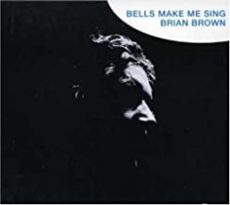
Brian Ernest Austin Brown was born on December 29, 1933 in Melbourne, Australia and was a self-taught player and emerged in the 1950s, a leading figure in Australia. He performed as a soloist and with his own ensembles since the mid-1950s throughout Australia and in Scandinavia, United States, Japan, United Kingdom, Italy, Spain, the Netherlands, Brunei and Germany.
In early 1956 Brown returned to Melbourne from Europe and formed the Brian Brown Quintet with drummer Stewie Speer, trumpeter Keith Hounslow, schoolboy pianist Dave Martin and bassist Barry Buckley. The new hard bop band was a regular from 1955 to 1960 at Horst Liepolt’s Jazz Centre 44 in St Kilda, Victoria, Australia. They introduced bop to Melburnians, a musical style largely unheard in Australia.
He made eight albums over an 18-year period heading various groups. Touring Europe with his Australian Jazz Ensemble in 1978, Brian also led groups doing experimental and original classical pieces from 1980 to 1986.
As an educator, he founded the Improvisation Studies course at the Victorian College of the Arts, where he taught from 1978 until his retirement in 1998. He appeared at the World Saxophone Congress in Tokyo in 1988, with Tony Gould. In June 1993 he was awarded the Order of Australia for service to the performing arts.
Soprano and tenor saxophonist, flutist, synthesizer, panpiper, leather bowhorn, composer, and educator Brian Brown passed away on January 28, 2013.
More Posts: composer,educator,flute,history,instrumental,jazz,leather bowhorn,music,panpipes,saxophone,synthesizer
Daily Dose Of Jazz…
William Orval Crow was born December 27, 1927 in Othello, Washington but spent his childhood growing up in Kirkland, Washington, taking up the trumpet in fourth grade. When he joined the Army in 1946, he started to play brass instruments, remaining in the army until 1949. After leaving the Army, he played drums and trombone while a student at the University of Washington.
In 1950, Bill moved to New York City and within two years as a double bassist, he played with Teddy Charles and was with Stan Getz from October 1952 to the following April. He was part of Gerry Mulligan’s groups during the mid to late 1950s.
Crow joined the house band at Eddie Condon’s club in 1965 and then played with Walter Norris’s small group, which was one of the house bands at the Playboy Club in New York City in the mid~Sixties to early Seventies. From 1975 into the late 1990s he worked in theater orchestras on Broadway, where he sometimes played the tuba.
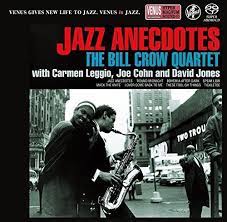
He authored a book called Jazz Anecdotes that was published by Oxford University Press in 1991. His autobiography, From Birdland to Broadway, was released by the same publisher two years later. Both were also the titles of his two albums as a leader.
As a sideman, he recorded 70 albums with Gerry Mulligan, Stan Getz, Zoot Sims, Bob Brookmeyer, Al Cohn, Clark Terry, Marian McPartland, J. J. Johnson, Al Haig, Jimmy Cleveland, Milt Jackson, Benny Goodman, Mose Allison, Jimmy Raney, Sal Salvador, Don Elliott, Teddy Charles, Manny Albam, Joe Morello, Bob Wilber, Eddie Bert, Jay McShann, Bob Dorough, Barbara Lea, Dick Sudhalter, Phil Woods, Dick Sudhalter, Ronnell Bright, Art Simmons, Rich Pearle, Spike Robinson, Claude Williamson, and Michelle Leblanc. Bassist Bill Crow continues to perform at the age of 92.
Daily Dose Of Jazz…
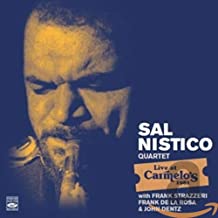
Frank de la Rosa was born on December 26, 1933 in El Paso, Texas. At age twenty he served in the US Army during the Korean War from 1953-1955, earning three medals and the GI Bill. After his discharge he attended the Los Angeles Conservatory of Music and Fine Arts, and began playing the bass at the age of 23.
Despite his late start in music education, Frank built an extraordinary career across the globe and performances with Sarah Vaughan, Nat King Cole, Chubby Checker, Harry “Sweets” Edison, and Don Ellis, to name a few.
He was also a part of the Don Menza & His ’80s Big Band, the Don Menza Sextet, Raoul Romero And His Jazz Stars Orchestra, René Bloch And His Big Latin Band, and the Don Ellis Orchestra.
Touring with Ella Fitzgerald, de la Rosa was a member of the Tommy Flanagan Trio from 1968 to 1972. He retired as a professional musician in 2003, however, the deer, dogs, and dandelions across his five acres of land enjoyed the daily melodies from his piano, bass, and/or cello until the summer of 2019 when bassist Frank de la Rosa passed away on July 5, at his home in Washougal, Washington. He was 85.
More Posts: bass,history,instrumental,jazz,music
Requisites
One Flight Up ~ Dexter Gordon | By Eddie Carter
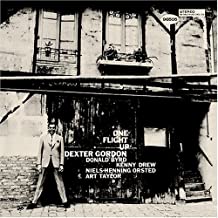
This next entry from the library is an album I first heard in 1967 during one of my Saturday stops to Record Rendezvous in Cleveland, Ohio. It introduced me to tenor saxophonist Dexter Gordon who steps into the spotlight with his second LP recorded after moving abroad, One Flight Up (Blue Note BLP 4176). It follows an excellent 1963 quartet album titled Our Man In Paris. Gordon was a staple on the jazz scene since the Bebop era in the forties while a member of Billy Eckstine’s Big Band and would become a major influence for two future giants, John Coltrane, and Sonny Rollins.
He chose to move abroad because he was treated much more fairly than here in the United States and was considered an equal rather than a second-class citizen. There was also plenty of work in some of the best jazz clubs Europe and France had to offer. Dexter is assisted here by Donald Byrd on trumpet, Kenny Drew on piano, Neils-Henning Orsted Pedersen on bass, and Art Taylor on drums. My copy used in this report is the 1967 US Liberty Records Stereo reissue (BST 84176).
Side One opens with Byrd’s Tanya occupying the entire first side and giving Dexter, Donald, and Kenny plenty of solo space. The rhythm section charts its course with a brief introduction developing into a haunting theme led by both horns. Dexter works his magic on the opening chorus with nearly six-minutes of joyful bliss. Donald shows off his chops next with a brilliant-toned performance that keeps the listener’s interest throughout. Kenny turns in one of his very best performances on the finale with Neils-Henning and Art providing the articulate foundation into the out-chorus and gentle dissolve.
Side Two commences at a slightly faster beat than Tanya with Coppin’ The Haven by Drew. The trio makes a casual, laid-back introduction evolving into Byrd and Gordon’s comfortable groove on the theme. Dexter opens with a terrific performance, then Donald takes over for a reading as smooth as a sled on fresh snow. Kenny shows he’s perfectly at home on the closer with a sharp interpretation possessing a light, refreshing beat before the ensemble reassembles for the climax.
The album concludes with the 1939 standard, Darn That Dream by Jimmy Van Heusen and Eddie DeLange, introduced in the Broadway musical, Swingin’ The Dream. This is a beautiful quartet performance by Dexter and the trio who give an intimate introduction to the melody. Dexter is the centerpiece here and his lead solo is captivating. Kenny draws the listener further into the song’s spell on the closer with a tender climax.
The album was recorded by the French engineer, Jacques Lubin, and the sound quality is spectacular with a mesmerizing soundstage transporting your listening chair to the studio alongside the musicians. Gordon’s career lasted nearly forty years, making some amazing records for a host of labels including Bethlehem, Prestige, Savoy, and SteepleChase. However, it was the five years he recorded for Blue Note (1961-1966) that are among the most precious jewels in his rich discography. He passed away on April 25, 1990, at sixty-seven from kidney failure and cancer of the larynx. If you’re a fan of Dexter Gordon or Donald Byrd, I highly recommend One Flight Up by Dexter Gordon, an album I feel is an essential addition for any jazz library that you shouldn’t miss!
~ Our Man In Paris (Blue Note BLP 4146/BST 84146) – Source: Discogs.com
~ Darn That Dream – Source: JazzStandards.com ~ Dexter Gordon – Source: Wikipedia.org © 2020 by Edward Thomas Carter
More Posts: choice,classic,collectible,collector,history,instrumental,jazz,music