

The Quarantined Jazz Voyager
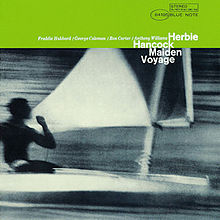
The Quarantined Jazz Voyager is pulling down from the shelves a timeless classic that has been a part of my collection since 1971. Maiden Voyage is the fifth album led by jazz musician Herbie Hancock and was recorded by Rudy Van Gelder on March 17, 1965, for Blue Note Records.
It is a concept album combining modal and hard bop modes aimed at creating an oceanic atmosphere. Many of the track titles refer to marine biology or the sea, and the musicians develop the concept through their use of space. The album was presented with the Grammy Hall of Fame Award in 1999.
The five compositions that comprise the album are Maiden Voyage, The Eye Of The Hurricane, Little One, Survival Of The Fittest and Dolphin Dance. The personnel on the date are pianist Herbie Hancock, trumpeter Freddie Hubbard, tenor saxophonist George Coleman, bassist Ron Carter, and drummer Tony Williams.
Stay diligent my fellow voyagers in being healthy, continue to practice social distancing, and don’t be so anxious to rush back to the new normal. It has been said that music soothes the savage beast, so listen to great music. I share that music to give you a little insight into the choices this voyager has made over the years during this sabbatical from jet setting investigations of jazz around the globe.
More Posts: adventure,club,genius,jazz,museum,music,preserving,restaurant,travel,voyager
Daily Dose Of Jazz…
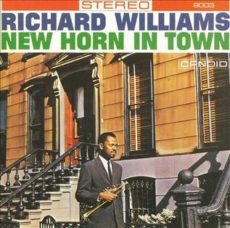
Richard Gene Williams was born in Galveston, Texas on May 4, 1931 and played tenor saxophone early in his life before picking up the trumpet as a teenager. While playing in local Texas bands, he attended Wiley College, majoring in music.
After serving in the Air Force from 1952–56, Williams toured Europe with Lionel Hampton. He returned to America and received a master’s degree at the Manhattan School of Music. In 1959, he played with Charles Mingus at the Newport Jazz Festival and recorded with MIngus that same year. The following year he recorded his only session as a leader, New Horn in Town on the Candid Records label featuring Reggie Workman, Leo Wright, Richard Wyands, and Bobby Thomas.
During the 1960s Richard was a sideman on numerous releases for Blue Note, Impulse!, New Jazz, Riverside, and Atlantic working with Oliver Nelson, Grant Green, Booker Ervin, Sam Jones, Rahsaan Roland Kirk, Les McCann, Lou Donaldson, Yusef Lateef, Gigi Gryce, Carmen McRae, Randy Weston, Charles Tolliver, Mose Allison, Eddie “Lockjaw” Davis, and Duke Jordan, among numerous others.
He also played with the big bands of Duke Ellington, Gil Evans, Thad Jones and Mel Lewis, Sam Rivers, and Clark Terry. Finding work on Broadway in pit orchestra productions of The Me Nobody Knows and The Wiz, and appeared on the original Broadway cast recordings of both musicals. Williams led his own bands in New York jazz clubs and in addition to jazz trumpet, he performed with classical orchestras, playing piccolo trumpet and flugelhorn. Trumpeter Richard Williams passed away on November 4, 1985 from kidney cancer in his Jamaica, New York home, at the age of 54.

More Posts: bandleader,history,instrumental,jazz,music,trumpet
Daily Dose Of Jazz…
Everett Barksdale, born April 28, 1910 in Detroit, Michigan, played bass and banjo before settling on guitar. During early 1930 he moved to Chicago, Illinois where he joined Erskine Tate’s band. He recorded for the first time with violinist Eddie South in 1931, who he remained with until 1939.
A move to New York City saw Everett become a member of the Benny Carter Big Band. Around that same time, he recorded with Sidney Bechet and during the 1940s, he worked for CBS as a session musician.
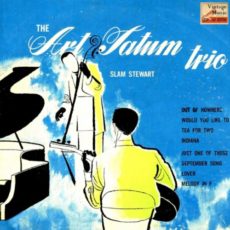
As a sideman, Barksdale played guitar in many genres, working with vocalists Dean Barlow, Maxine Sullivan, the Blenders, and the Clovers. He played on the hit Love Is Strange by Mickey & Sylvia, was the music director for the Ink Spots, and beginning in 1949, he worked with pianist Art Tatum until Tatum died in 1956.
During the Fifties and Sixties, he was part of the ABC house band and played on recordings with a who’s who list of vocalists and musicians not limited to Lena Horne, Sammy Davis Jr., Dinah Washington, Sarah Vaughan, Milt Hinton, Buddy Tate, Chet Baker, Red Allen, Harold Vick, Oscar Brown Jr., J. J. Johnson, Clark Terry, Kai Winding, Louis Armstrong, The Drifters and Ben E. King. He also played guitar in the studio for pop and soul musicians such as.
Guitarist and session musician Everett Barksdale retired from active performance in the 1970s, moved to the West Coast and passed away in Inglewood, California on January 29, 1986.

More Posts: guitar,history,instrumental,jazz,music
Daily Dose Of Jazz…
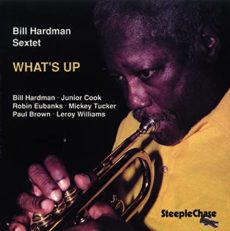
Bill Hardman was born William Franklin Hardman, Jr. on April 6, 1933 in Cleveland, Ohio. Growing up he worked with local players like Bobby Few and Bob Cunningham and while in high school he appeared with Tadd Dameron. After graduating he joined Tiny Bradshaw’s band.
Hardman’s first recording was with Jackie McLean in 1956, later playing with Charles Mingus, Art Blakey and the Jazz Messengers, Horace Silver, and Lou Donaldson. He led a group with Junior Cook and recorded as a leader: Saying Something on the Savoy label. The album received critical acclaim in jazz circles but was little notoriety with the general public. He had three periods in as many decades with Art Blakey’s Jazz Messengers, though his misfortune was not to be with the Messengers at the time of their popular Blue Note recordings. Blakey occasionally featured him playing several extended choruses unaccompanied.
Though he was a crackling hard bop player with blazing technique, crisp articulations, and a no-frills sound, he never received commercial success like his colleagues Donald Byrd, Freddie Hubbard, and Lee Morgan.
Bill later incorporated into his sound the fuller, more extroverted romantic passion of a Clifford Brown – a direction he would take increasingly throughout the late-1960s and 1970s. As a leader, he recorded six albums, as a sideman he recorded more than three dozen with Dave Bailey, Walter Bishop Jr., Charles Earland, Curtis Fuller, Benny Golson, Eddie Jefferson, Ronnie Mathews, Jimmy McGriff, Hank Mobley, Houston Person, Mickey Tucker, Steve Turre, Mal Waldron, and Reuben Wilson.
Hard bop trumpeter and flugelhornist Bill Hardman passed away on December 5, 1990 in Paris, France.
More Posts: bandleader,flugelhorn,history,instrumental,jazz,music,trumpet
Daily Dose Of Jazz…
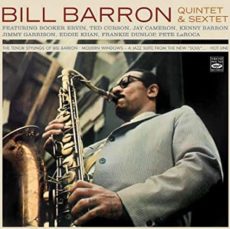
William Barron, Jr. was born on March 27, 1927 in Philadelphia, Pennsylvania where he spent his formative years. Moving to New York City in 1958 and came to the jazz world’s attention when he first appeared on a Cecil Taylor recording in 1959, later recorded extensively with Philly Joe Jones, after which he co-led a fine post-bop quartet with Ted Curson.
His younger brother, pianist Kenny appeared on all of the sessions that the elder Barron led. Other musicians he recorded with included Charles Mingus and Ollie Shearer.
Barron spent much of the remainder of his career as an educator, directing a jazz workshop at the Children’s Museum in Brooklyn, teaching at City College of New York, and becoming the chairman of the music department at Wesleyan University.
His day job made it possible for him to consistently record non-commercial music for Savoy, recording that label’s last jazz record in 1972, and Dauntless and Muse. The Bill Barron Collection is housed at the Institute of Jazz Studies of the Rutgers University Libraries,
Tenor and soprano saxophonist William Barron Jr., who never compromised his music or received much recognition, passed away in Middletown, Connecticut on September 21, 1989.

More Posts: bandleader,history,instrumental,jazz,music,saxophone