

Daily Dose Of Jazz…
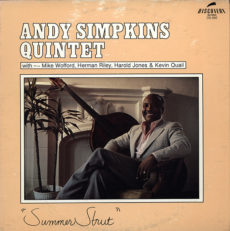
Andrew Simpkins was born on April 29, 1932 in Richmond, Indiana and first became known as a member of the group The Three Sounds, with which he performed from 1956 to 1968. After departing he joined George Shearing until 1974, and from 1979 to 1989 toured with Sarah Vaughan.
In the Seventies he settled in Los Angeles, California and became respected as a top-quality bassist and widely known as a solid and reliable studio musician.He performed with singers Carmen McRae and Anita O’Day, instrumentalists Gerald Wiggins, Monty Alexander, Buddy DeFranco, Don Menza, and Stéphane Grappelli, and many others.
He recorded three albums as a leader and also played acoustic bass on the 1997 Cover Album recording with Pat Boone titled In a Metal Mood: No More Mr. Nice Guy. Throughout his career not only did he record prolifically with The Three Sounds, he recorded with Kenny Burrell, Victor Feldman, Lalo Schifrin and Joe Williams.
Bassist Andy Simpkins passed away of stomach cancer on June 2, 1999 in Los Angeles.
Sponsored By


#preserving genius
More Posts: bass
Daily Dose Of Jazz…
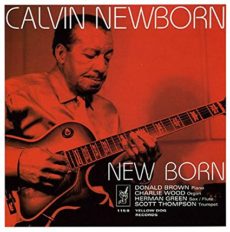
Edwin Calvin Newborn (was born on born April 27, 1933 in Whiteville, Tennessee and is the brother of pianist Phineas Newborn Jr. with whom he recorded between 1953 and 1958. They formed an R&B band, with their father Phineas Newborn Sr. on drums and Tuff Green on bass, trumpeter Willie Mitchell and tenor saxophonist Ben Branch. The group was the house band at the Plantation Inn Club in West Memphis, Arkansas, from 1947 until 1951 and recorded as B. B. King’s band on his first recordings in 1949, and also the Sun Records sessions in 1950.
Calvin gave guitars lessons to Howlin’ Wolf and was friends with Elvis Presley, who frequented his gig at the Plantation Inn Club two nights a week. Presley also used to eat at the Newborns’ house and browse their music store for gospel records. The group left West Memphis in 1951 to tour with Jackie Brenston as the Delta Cats in support of the record Rocket 88. It was considered by many to be the first rock and roll record ever recorded, and was the first Billboard number one record for Chess Records.
Following his R&B period he transitioned into jazz and played with Earl Hines starting in 1959. The early Sixties saw him touring with Lionel Hampton, Jimmy Forrest, Wild Bill Davis, Al Grey, Freddie Roach, Booker Little, George Coleman. Frank Strozier, and Louis Smith. Newborn also worked with Ray Charles, Count Basie, Hank Crawford, Sun Ra, Lou Donaldson, Bobby Hutcherson and David “Fathead” Newman among others. His 1980 album Centerpiece hit No. 35 on the U.S. Billboard jazz albums chart, but much of his earlier material was not reissued on CD until 2005.
Since the 1970s he remained mostly in Memphis, Tennessee, where he played regularly in local clubs well into the 1990s. Guitarist Calvin Newborn currently resides in Jacksonville, FL and continued to perform throughout Northeast Florida until his transition on December 1, 2018, aged 85.
Sponsored By

#preserving genius
More Posts: guitar

Daily Dose Of Jazz…
Fred Anderson was born on March 22, 1929 in Monroe, Louisiana and learned to play the saxophone by himself when he was a teenager. Moving with his family to Evanston, Illinois in the 1940s he studied music formally at the Roy Knapp Conservatory in Chicago, Illinois and had a private teacher for a short time.
He was one of the founders of the Association for the Advancement of Creative Musicians (AACM) and an important member of the musical collective. In the early 1960s Fred formed his own group and performed his original compositions with drummer Vernon Thomas, bassist Bill Fletcher, and his partner for many years, trumpeter Billy Brimfield.
During this period he recorded several notable avant garde albums as a sideman with saxophonist Joseph Jarman, As If It Were the Seasons and Song For which included one of his composition Little Fox Run. By 1972 he put together the Fred Anderson Sextet, with trombonist George Lewis, reedist Douglas Ewart, bassist Felix Blackman, drummer Hamid Drake and Iqua Colson on vocals. Throughout the Seventies he toured Europe, recorded in Austria, and recorded his first record as leader, Another Place in Germany.
He opened the short-lived performance-workshop space Birdhouse in honor of Charlie Parker, and in 1983 took over ownership of the Velvet Lounge in Chicago, which quickly became a center for the city’s jazz and experimental music scenes. The club expanded and relocated in the summer of 2006. Before that, his eclectic Beehive bar in west Chicago was a draw where musicians from around the world drank beer and played, mostly for each other.
Though remaining active as a performer, Anderson rarely recorded for about a decade beginning in the mid-1980s but by the Nineties he resumed a more active recording schedule, both as a solo artist, and as a collaborator with younger performers. He mentored a host of young musicians not limited to Hamid Drake, Harrison Bankhead, David Boykin, Nicole Mitchell, Justin Dillard, Aaron Getsug, Josh Abrams, Fred Jackson, Jr., George Lewis, Karl E. H. Seigfried, Isaiah Sharkey, and Isaiah Spencer.
Chicago avant-garde tenor saxophonist Fred Anderson, who was rooted in the swing and hard bop idioms but incorporated innovations from free jazz, passed away on June 24, 2010.
Sponsored By

#preserving genius
More Posts: saxophone
Daily Dose Of Jazz…
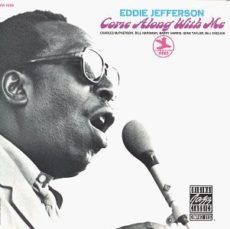
Gene Taylor was born Calvin Eugene Taylor on March 19, 1929 in Toledo, Ohio. Beginning his career in Detroit, Michigan he worked with Horace Silver from 1958 until 1963, then joined the Blue Mitchell Quintet, with whom he recorded and performed until 1965.
From 1966 until 1968, he toured and recorded with Nina Simone, including a Taylor composition she recorded titled Why? (The King of Love is Dead), written following the assassination of Martin Luther King, Jr. He then began teaching music in New York City public schools.
Working with Judy Collins from 1968 until 1976, Gene made numerous television appearances accompanying Simone and Collins. He went on to record with Junior Cook, Barry Harris, Coleman Hawkins, Junior Mance, Eddie Jefferson, Eric Kloss and Duke Pearson.
Double-bassist and songwriter Gene Taylor never led a recording session before passing away on December 22, 2001 in Sarasota, Florida where he had been living since 1990.
Sponsored By

www.whatissuitetabu.com
#preserving genius
More Posts: bass
Daily Dose Of Jazz…
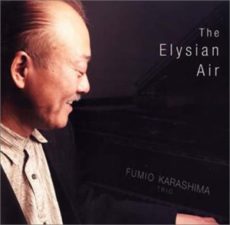
Fumio Karashima was born on March 9, 1948 in Oita, Japan and began playing the piano at the age of three. He attended Kyushu University where his father was a music teacher.
He moved to New York City in 1973, staying for one year before returning to Japan. Back home, in 1975 he joined drummer George Ohtsuka’s band. In 1980 Fumio joined Elvin Jones’ Jazz Machine, a relationship that lasted for five years, and included four tours of Europe and the United States.
Switching his playing direction to being principally a solo pianist, however, he also led a quintet from 1988 to 1991. During the 1990s he frequently toured internationally. Pianist Fumio Karashima passed away from cancer at age 68 on February 24, 2017 in Tokyo, Japan.
Sponsored By
#preserving genius
More Posts: piano