

Daily Dose Of Jazz…
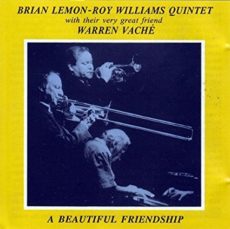
Roy Williams was born on March 7, 1937 in Bolton, Lancashire, England and began his career as a trombonist during the British trad jazz movement of the 1950s. He played with trumpeter Mike Peters and clarinetist Terry Lightfoot in the early Sixties, then joined trumpeter Alex Welsh’s Dixieland outfit in 1965, replacing Roy Crimmins. While with Welsh, he played with visiting American jazz players as Wild Bill Davison, Bud Freeman, and Ruby Braff.
Williams left Welsh in 1978 and joined Humphrey Lyttlelton’s band, staying with the latter for four years. In the ’80s he began working freelance and soon became a first call trombone playing with clarinetist Peanuts Hucko, tenor saxophonist Scott Hamilton, trumpeter Bent Persson and clarinetist John Barnes. He performed with The World’s Greatest Jazz Band.
Among Roy’s recordings are Gruesome Twosome on the Black Lion label, and Interplay for Sine Records, both with Barnes. In 1998 he co-led a swing-oriented quintet date with saxophonist Danny Moss titled Steamers! on the Nagel-Heyer label. Though not as active as he was up through the Nineties, trombonist Roy Williams won numerous jazz polls, toured Europe and the United States and remains a popular presence when he’s on the British mainstream jazz scene.


#preserving genius
More Posts: trombone
Daily Dose Of Jazz…
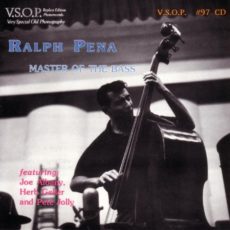
Ralph Pena was born February 24, 1927 in Jarbidge, Nevada and started out playing baritone saxophone and tuba before switching to the bass. At age 15 he began playing professionally with Jerry Austin from 1942 to 1944. He went to college in San Francisco and became a fixture in the West Coast jazz scene.
Among his many associations were Nick Esposito, Art Pepper, Vido Musso, Cal Tjader, Billy May, Barney Kessel, Stan Getz, Charlie Barnet, Shorty Rogers, Jimmy Giuffre, Buddy DeFranco, Bob Brookmeyer. In the 1960s, Pena worked with Ben Webster, George Shearing, Frank Sinatra, Joe Pass, Nancy Wilson, Ella Fitzgerald, Anita O’Day and many others. He recorded and released a couple of albums with Pete Jolly between 1958 and 1962.
Bassist Ralph Pena, who lead one record session, he did lead his own groups on an occasional basis before his early death at age 42 on May 20, 1969 in Mexico City, Mexico.
Sponsored By

#preserving genius
More Posts: bass
Daily Dose Of Jazz…
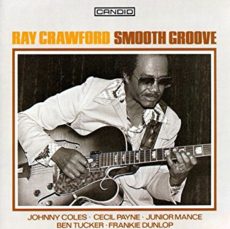
Ray Crawford was born on February 7, 1924 in Pittsburgh, Pennsylvania. During the war years from 1941-1943 he played tenor saxophone and clarinet with Fletcher Henderson but tuberculosis forced him to give them up.
Switching to guitar he became an important part of Ahmad Jamal’s early groups from 1949 to 1955. Ray’s ability to make his guitar sound like bongos by hitting it was soon adopted by Herb Ellis. He went on to record with Gil Evans from 1959 to 1960, then played off and on with Jimmy Smith from 1958 into the Eighties.
In the Sixties he settled in Los Angeles, California. He led fairly obscure records for Candid in 1961 that were not released until the 1980s, and also recorded for Dobre and United National record labels in the Seventies. Guitarist Ray Crawford, who played mainly in the hard bop and soul jazz genres, passed away on December 30, 1997 in his hometown of Pittsburgh.
#preserving genius
More Posts: guitar
Daily Dose Of Jazz…
Calvin Massey was born on January 11, 1928 in Philadelphia, Pennsylvania and studied trumpet under Freddie Webster. Following his education on the trumpet he and played in the big bands of Jay McShann, Jimmy Heath, and Billie Holiday.
In the late 1950s he led an ensemble with Jimmy Garrison, McCoy Tyner, and Tootie Heath, while John Coltrane and Donald Byrd occasionally played with them. Towards the end of the decade he gradually receded from active performance and concentrated on composition. Some of Cal’s compositions that were recorded are Bakai by Coltrane, Assunta, Father and Son by Freddie Hubbard, Message from Trane by Jackie McLean, These Are Soulful Days by Lee Morgan, Fiesta by Philly Joe Jones and Cry of My People by Archie Shepp. Horace Tapscott and McCoy Tyner also recorded his work.
He played and toured with Shepp from 1969 until 1972. An outspoken activist, Massey’s political standpoint was radical and his work was strongly connected with the Civil Rights Movement of the 1960s and ’70s. The Black Panthers were an inspiration for The Black Liberation Movement Suite which he created with Romulus Franceschini. The Suite was performed three times at Black Panther benefit concerts. Massey’s ideology resulted in him getting blacklisted or whitelisted according to Fred Ho from major recording companies and only one album was recorded under his name.
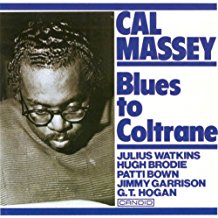
He also performed in The Romas Orchestra with Romulus Franceschini, and had The Music of Cal Massey: A Tribute, recorded by Fred Ho, Quincy Saul and the Green Monster Band. Cal’s only album recorded as a leader two days after his birthday in 1961, Blues to Coltrane, on Candid label, was not released until fifteen years later in 1987. He composed all the songs and the personnel with him on this session were Julius Watkins on French horn, pianist Patti Brown, bassist Jimmy Garrison, Hugh Brodie on tenor saxophone, and G. T. Hogan on drums.
Trumpeter and composer Cal Massey passed away from a heart attack at the age of 43 in New York City, New York on October 25, 1972.
Sponsored By
#preserving genius
More Posts: trumpet
Daily Dose Of Jazz…
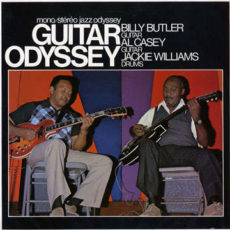
Jackie Williams was born on January 02, 1933 in Harlem, New York City, New York. Growing up in the fertile jazz atmosphere of the city, he also absorbed the dance grooves of rhythm and blues. Citing Papa Joe Jones as one of his greatest influences, by the mid 1950s he was playing for dancers and soon became a first call musician for recording sessions. He is a recipient of Yale University’s Duke Ellington Fellowship Medal
For 18 years Jackie played with Doc Cheatham at Greenwich Village’s Sweet Basil and performed and recorded with Buck Clayton on a U.S. State Department tour of the Middle East and Africa. He has also been a sideman with Bobby Hackett, Illinois Jacquet, Earl Hines, Duke Ellington, Alberta Hunter, Buddy Tate, Billy Butler, Al Casey, Stéphane Grappelli, Johnny Guarnieri, Jimmy Shirley, Buddy Tate, Slam Stewart, Barbara Morrison, Milt Hinton, Dizzy Gillespie, Maxine Sullivan, Vic Dickenson, Jay McShann, Bobby Short, Teddy Wilson and Errol Garner to name a few.
At one time or another during his career Williams was a member of The Cliff Smalls Septet, The Dan Barrett Octet, The Howard Alden / Dan Barrett Quintet, Warren Vaché Quartet, Warren Vaché, Jr. And His All-Stars, Statesmen of Jazz, The Floating Jazz Festival Trio and many others.
Drummer Jackie Williams is currently a member of the Junior Mance Trio.
Sponsored By
Voices From The Community
#preserving genius
More Posts: drums