

Daily Dose Of Jazz…
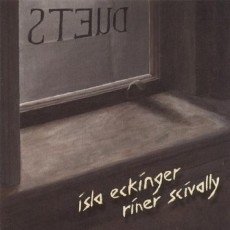
Isla Eckinger was born on May 6, 1939 in Dornach, Switzerland and played cello as a child, moving to the trombone during his teenage years. After studying trombone at the Conservatory in Basel, he taught himself to play the bass.
As a professional musician Isla made his debut playing with Oscar and Miriam Klein. In the 1960s, he accompanied on tour with Ben Webster, Buck Clayton, Don Byas and Johnny Griffin.
After a move to Munich, Eckinger began working with Mal Waldron, Joe Haider and Philly Joe Jones. From 1970 to 1976 he became an educator, teaching at the Swiss Jazz School while working with Haider, Peter Giger and Heinz Bigler in Group Four for Jazz.
With a new quartet with Waldron, Steve Lacy and Manfred Schoof, Eckinger toured Japan in 1975, and Italy with Chet Baker the following year. By the end of the 1970s he belonged to Wolfgang Engstfeld’s quartet, then worked with Klaus Weiss, Fritz Pauer and also with Dizzy Gillespie.
Mid-1980 saw Isla in Los Angeles, California recording with Chuck Manning. He played with Roman Schwaller and Jimmy Cobb as well as with Charly Antolini, Andy Scherrer and Paul Haag. Double bassist, vibraphonist and trombonist Isla Eckinger transitioned on April 8, 2021.

Give The Gift Of Knowledge

Daily Dose Of Jazz…
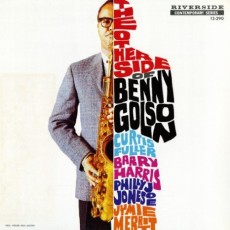
Jymie Merritt was born James Raleigh Merritt on May 3, 1926 in Philadelphia, Pennsylvania. His mother was a choral director, voice and piano teacher and his father a businessman and author. After serving in the U.S. Army during WWII from 1944 to 1946 he returned home to work for a short time in his father’s real estate business. After a brief flirtation with the clarinet he was inspired by a Duke Ellington recording featuring bassist Jimmy Blanton. Encouraged by his mother he studied with Philadelphia Orchestra double bassist Carl Torello and at the Ornstein School of Music
Over the course of his career Merritt has worked in jazz, R&B and blues. In the early 1950s he toured with rock and roll pioneers Bullmoose Jackson and Chris Powell moving on to work with legendary bluesman B.B. King from 1955 to 1957. In 1957 he moved to Manhattan to work with Art Blakey and the Jazz Messengers featuring his friend Benny Golson, as well as Bobby Timmons and Lee Morgan. He touring and recording with Blakey extended until 1962, when an unknown ailment forced him to stop touring.
By 1964 Merritt was back, working with the trumpeter and vocalist Chet Baker and is featured prominently in Baker’s unfinished autobiography published under the title As Though I Had Wings: The Lost Memoir. From 1965 to 1968 he worked with drummer, composer and activist Max Roach, not only in the rhythm section but as a composer, recording his Downbeat Magazine Critic Poll for Best Jazz Composer “Nommo” on Roach’s critically acclaimed 1966 Atlantic album The Drum Also Waltzes. He left in the late 1960s to work with Dizzy Gillespie and appear with him on the Dick Cavett Show.
One of Jymie most productive showcases as a composer was his reuniting recording of trumpeter Lee Morgan’s 1970 Blue Note release Live at the Lighthouse featuring his composition Absolutions that has become a jazz classic. In 1962 he formed and fronted the Forerunners with Odean Pope, Kenny Lowe, Donald Bailey and September Wrice and they evolved into a music cooperative exploring his system of chord inversions, harmonics, and unique approaches to composition and rehearsals, producing a lexicon of its own known as the Forerunner system or concept.
This group performed regularly in and around Philadelphia for five years, until he joined Roach’s band. Pope would also join Roach’s band, playing with him into the 1970s. Forerunner was on and off periodically from the 1960s through the 1980s, depending on what band Merritt was playing with at the time as well as how his health was. Of the second incarnation in 1982 saxophonist Bobby Zankel, Alan Nelson, Odean Pope, Julian Pressley, Colmore Duncan and Warren McLendon. Approaching his 90th birthday Merritt continues to rehearse and perform with the current incarnation of The Forerunners, many of whom have been with the ensemble from its inception.
In 2013, along with bassist Reggie Workman, he received the Clef Club of Philadelphia’s Living Legend Jazz Award as well as the Jazz Heritage Award and the Don Redman Heritage Award. Double-bassist electric-bass pioneer, bandleader and composer Jymie Merritt, who mainly performed as a sideman with Art Blakey, Sonny Clark, Curtis Fuller, Benny Golson, Lee Morgan and Jimmy Witherspoon, passed away on April 10, 2020 of liver cancer in Philadelphia, aged 93.
Jazz Is Global – Share
More Posts: bass
Daily Dose Of Jazz…
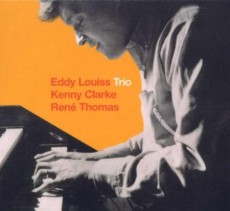
Eddy Louiss was born May 2, 1941 in Paris, France. Throughout his life his primary instrument was the Hammond organ, but as a vocalist, he was a member of Les Double Six of Paris from 1961 through 1963. He would worked with Kenny Clarke, Rene Thomas and Jean-Luc Ponty and was a member of the Stan Getz Quartet with Thomas and Bernard Lubat. This group recorded Getz’s album Dynasty in 1971.
In duet, Eddy recorded with pianist Michel Petrucciani in 1994 and with accordionist Richard Galliano in 2002. His later recordings, for example, Sentimental Feeling and Récit proche combined jazz with rock and world music.
Louiss spent most of his career leading his own group in France, but twice has made particularly notable recordings, both on organ. He played piano with Johnny Griffin in the mid-’60s, and in 1964, he was awarded the Prix Django Reinhardt.
Hammond organist Eddy Louiss, who left the world a catalogue of some twenty recordings as a leader, passed away on June 30, 2015.
Give A Gift Of Jazz – Share
Daily Dose Of Jazz…
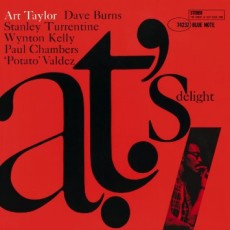
Arthur S. Taylor, Jr. was born in New York City on April 6, 1929 and as a teenager he joined a local Harlem band that featured Sonny Rollins, Jackie McLean and Kenny Drew. By the late Forties and into the Fifties he was playing in the bands of Howard McGee, Coleman Hawkins, Buddy DeFranco, Bud Powell, George Wallington, Art Farmer, Gigi Gryce and Donald Byrd.
After leaving Byrd he formed his own group, Taylor’s Wailers but between 1957 and 1963 he toured with Byrd, recorded with Miles Davis and John Coltrane, performed with Thelonious Monk and was a member of the original Kenny Dorham Quartet of 1957.
In 1963 he moved to Europe, where he lived mainly in France and Belgium for 20 years, playing with local groups and jazz musicians Johnny Griffin, John Bodwin, and Woody Shaw while he was in Paris. He returned to the States to help his ailing mother and continued freelancing. In 1993 Art organized a second band called Taylor’s Wailers.
He recorded five albums as a leader and 116 albums as a sideman with some of the most influential jazz musicians of the day – Gene Ammons, Dorothy Ashby, Benny Bailey, Kenny Burrell, Paul Chambers, Sonny Clark, James Clay, Jimmy Cleveland, Arnett Cobb, Pepper Adams, Walter Davis Jr., Red Garland, Eddie “Lockjaw” Davis, Continuum, Matthew Gee, Benny Golson, Dexter Gordon, Slide Hampton, Bennie Green, Tiny Grimes, Elmo Hope, Frank Foster, Erne Henry, Milt Jackson, Thad Jones, Clifford Jordan, Duke Jordan, Ken McIntrye, Lee Morgan, Oliver Nelson, Cecil Payne, Horace Silver, Dizzy Reece, Jimmy Smith, Mal Waldron, Julian Priester, Charlie Rouse, Kai Winding, J.J. Johnson, Toots Thielemans, Randy Weston, Sonny Stitt, Jack McDuff, Stanley Turrentine, and the list goes on and on.
Art Taylor helped define the sound of modern jazz drumming and authored Notes and Tones, a book based on his interviews with other musicians. He passed away in Manhattan’s Beth Israel Hospital on February 6, 1995.
Inspire A Young Mind
More Posts: drums

Daily Dose Of Jazz…
Jerome Harris was born April 5, 1953 in Flushing, New York and was already a skilled musician by the time he entered Harvard University with the intent of becoming a psychiatrist. During his college years he became known as a guitarist on campus who played in a variety of bands, from R&B to free jazz, including a fusion band with fellow student, drummer Akira Tana.
After graduation he decided to focus on music full-time and first began appearing on recordings during the late ’70s. He came to prominence in 1978 playing bass guitar and guitar with tenor saxophonist Sonny Rollins, with whom he would perform and record intermittently until the mid-1990s. Jerome went on to work with drummers Jack DeJohnette, Paul Motian, Bob Moses, David Krakauer, Ray Anderson, Amina Claudine Myers, Don Byron and Marty Ehrlich among others.
He has recorded four albums as a bandleader for Muse, Polygram, New World and Stereophile record labels. His recording sideman duties have been wth Robert Dick, Bill Frisell, Julius Hemphill, Hank Roberts, Pheeroah Aklaff, Kenny Werner, Malias, Ned Rothenberg, George Russell and Bob Stewart, to name a few.
In addition to performing he played a major role in a 1999 New York City tribute concert to Joni Mitchell, in which he wrote many of the transcriptions and arrangements. He has toured internationally in various ensembles to Japan with Rollins, the Middle East and India with Jay Hoggard, Africa with Oliver Lake and the United States with Bob Previte’s Latin for Travelers. Guitarist and bassist Jerome Harris continues to perform, record and tour.
Dose A Day-Blues Away
More Posts: guitar