

Daily Dose Of Jazz…
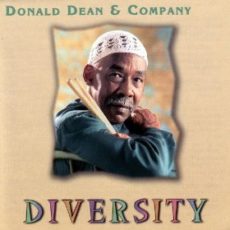
Donald Dean was born on June 21, 1937. ) He attended the University of Kansas, studying drums and Music Therapy, and playing snare drums in the marching band. He also played tympani, marimba, bells and snare drum in the university’s Symphony Orchestra. While matriculating, he played in a quartet with Nathan Davis on reeds, Elaine Brown Davis on piano, and trumpeter Carmel Jones.
His most famous recording was with Les McCann, Leroy Vinegar and Eddie Harris on the soul jazz album Swiss Movement, recorded live on June 21, 1969 at The Montreux Jazz Festival. He would go on to record a total of eight albums with McCann including Second Movement and Layers. Dean appeared as a jazz musician in the Tom Cruise/Jamie Foxx movie Collateral, has worked with Kenny Dorham, Jimmy Smith, George Gilliam, Carmel Jones and harold Land to name a few.
The Los Angeles Jazz Institute houses The Donald Dean Collection that includes reel to reel tapes of Sunday sessions at The Lighthouse that he recorded between 1952 and 1955. The collection also features over 700,000 photographic prints and negatives documenting both the southern and northern California scene from the mid 1960s through the late 1990s.
He has recorded on the Atlantic, Verve, Fresh Sound and Posi-Tone record labels, releasing two albums as a leader or co-leader. Drummer Donald Dean continues to perform at the age of 79 leading his own quartets and quintets.
Sponsored By

More Posts: drums
Daily Dose Of Jazz…
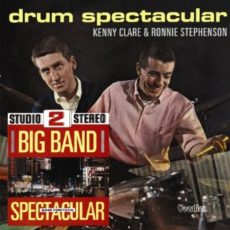
Kenneth Clare was born on June 8, 1929 in Leytonstone, London, England and played with Oscar Rabin on English radio in his early 20s. Following this, he played with Jack Parnell and then with Johnny Dankworth for an extended period in the 1950s and early 1960s. In the latter decade he played with Ted Heath and Ronnie Stephenson as well as playing in the studios as a member of Sounds Orchestral.
Clare played drums for the Kenny Clarke-Francy Boland Big Band in 1963 to 1966 when Clarke was unavailable. But from 1967 through 1971, when the band folded, he was a regular paired with Clarke in what became a two-drummer band for performances, concerts, and at least 15 recordings issued by various labels.
He accompanied singers including Ella Fitzgerald, Tony Bennett and Cleo Laine. On December 5, 1971 he performed in concert at Queen Elizabeth Hall with fellow drummers Buddy Rich and Louie Bellson. Drummer Kenny Clare, who also did extensive work for radio, television, film, and commercials, passed away December 21, 1984.

Put A Dose In Your Pocket
More Posts: drums
Daily Dose Of Jazz…
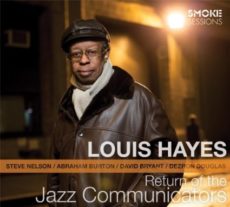
Louis Hayes was born May 31, 1937 in Detroit, Michigan. His father played drums and piano and his mother the piano. His early jazz influence was big bands on the radio, drummer Philly Joe Jones and was mentored by Papa Jo Jones.
As a teenager Hayes led a band in Detroit and worked with Yusef Lateef and Curtis Fuller from 1955 to 1956. Louis often teamed up with Sam Jones, in freelance settings, led a group at clubs in Detroit before he was 16. He moved to New York in August 1956 to replace Art Taylor in Horace Silver’s Quintet from 1956–1959, then joined the Cannonball Adderley Quintet from 1959–1965 followed by succeeding Ed Thigpen in the Oscar Peterson Trio from 1965–1967.
Leaving Peterson he formed a series of groups, which he led alone or with others; among his sidemen were Freddie Hubbard, Joe Henderson, Kenny Barron and James Spaulding. He rejoined Peterson in 1971. Forming the Louis Hayes Sextet in 1972, it evolved into the Louis Hayes-Junior Cook Quintet and the Woody Shaw-Louis Hayes Quintet with Rene McLean. After Shaw left the group in 1977, Hayes continued to lead it as a hard-bop quintet.
From the 1970s onward Louis recorded and performed with John Coltrane, Kenny Burrell, Freddie Hubbard, Joe Zawinul, Nat Adderley, Gene Ammons, Bobby Timmons, Hank Mobley, Booker Little, Al Cohn, Kenny Drew, James Clay, Dexter Gordon, Terry Gibbs, Bennie Green, Grant Green, Barry Harris, Johnny Hodges, Sam Jones, Clifford Jordan, Johnny lytle, Phineas Newborn Jr., Tommy Flanagan, Cecil Taylor, McCoy Tyner, Ray Brown, Gary Bartz, Tony Williams and the list goes on.
He has led recording sessions for Vee-Jay, Timeless, Muse, Candid, Steeplechase and TCB record labels. Drummer Louis Hayes mentors young jazz artists, continues to perform with a variety of other musicians both old and young, leads his own band and since 1989 with Vincent Herring formed the Cannonball Legacy Band.
Give The Gift Of Knowledge
More Posts: drums
Daily Dose Of Jazz…
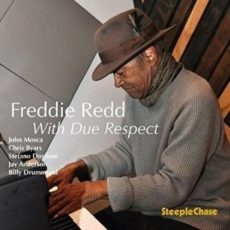
Freddie Redd was born on May 29, 1928 and grew up in New York City and after losing his father when he was a one year old, he was raised by his mother, who moved around Harlem, Brooklyn and other neighborhoods. An autodidact, he began playing the piano at a young age and took to studying jazz seriously upon hearing Charlie Parker during his military service in Korea.
Upon discharge from the Army in 1949 he worked with drummer Johnny Mills, and then in New York played with Tiny Grimes, Cootie Williams, Oscar Pettiford and the Jive Bombers. In 1954 he was playing with Art Blakey, followed with a tour of Sweden in 1956 with Ernestine Anderson and Rolf Ericson. Freddie’s greatest success came in the late 1950s when he was invited to compose the music and perform as actor and musician in both The Living Theatre’s New York stage production of The Connection, which was also used in the subsequent 1961 film. Redd led a Blue Note album featuring his music for the play. which featured Jackie McLean on alto sax. However, his success in the theater production did not advance his career in the United States, and shortly afterwards he moved to Europe living in Denmark and France.
Returning to the West Coast in 1974 he became a regular on the San Francisco scene and recorded intermittently up until 1990. His creative lines, particular voicings and innovative compositions have led him to work with Jackie McLean, Tina Brooks, Paul Chambers, Howard McGhee, Milt Hinton, Lou Donaldson, Benny Bailey, Charles Mingus, Louis Hayes, Al McKibbon, Billy Higgins, Osie Johnson, Gene Ammons, Tommy Potter, Joe Chambers and many more. He contributed organ to James Taylor’s original 1968 recording of Carolina In My Mind.
Over the course of his career hard-bop pianist and composer Freddie Redd, who passed away in New York City on March 17, 2021, aged 92, recorded fourteen albums as leader and was one of the last of the pioneers of the hard-bop golden age.
Sponsored By
Voices From The Community
More Posts: piano
Daily Dose Of Jazz…
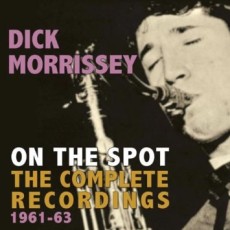
Richard Edwin Morrissey was born May 9, 1940 in Horley, England. Better known to the world as Dick Morrissey, he was self-taught and started playing clarinet in his school band, The Delta City Jazzmen, at the age of sixteen with fellow pupils Robin Mayhew, Eric Archer, Steve Pennells, Glyn Greenfield and young brother Chris on tea-chest bass. He then joined the Original Climax Jazz Band. This stint he followed with becoming a member of the Gus Galbraith Septet and was introduced to Charlie Parker by alto-sax player Peter King. This prompted him to begin specializing on tenor saxophone.
Making his name as a hard bop player, Dick appeared regularly at the Marquee Club in 1960 and recorded his first solo album for Fantana Records It’s Morrissey, Man! the next year at the age of 21. It featured pianist Stan Jones, drummer Colin Barnes, and The Jazz Couriers founding member bassist Malcolm Cecil.
Spending most of 1962 in Calcutta, India as part of the Ashley Kozak Quartet, he played three 2-hour sessions seven days a week. Returning to the UK Dick formed a quartet with Harry Smith, Phil Bates, Bill Eyden, Jackie Dougan or Phil Seamen. They recorded three albums between 1963 and 1966,played regular gigs at The Bull’s Head and Ronnie Scott’s, and played with Ian Hamer, South and
During this time he also played extensively in bands led by Ian Hamer and Harry South, The Six Sounds, performed briefly with Ted Heath’s Big Band, John Dankworth and his Orchestra, was a part of Eric Burdon and The Animals Big Band with Stan Robinson, Al Gay, Paul Carroll, Ian Carr, Kenny Wheeler and Greg Brown.
He would go on to tour and/or record with visiting musicians Brother Jack McDuff, Jimmy Witherspoon, J. J. Jackson, Sonny Stitt and Ernest Ranglin. He would win many Melody Maker Jazz Polls, toured and recorded with Average White Band, team up with guitarist Jim Mullen of Brian Auger’s Oblivion Express and released seven albums of their 16-year association.
Throughout his career as a leader of his own combos, Morrissey he was an in-demand musician playing with Tubby hayes, Bill LeSage, Roy Budd, Charlie Watts, Georgie Fame, Anie Ross, Dusty Springfield, Paul McCartney, Freddie Mack, Orange Juice, Herbie Mann, Shakatak, Peter Gabriel, David Fathead Newman, Boz Scaggs, Johnny Griffin, David Sanborn, Steve Gadd, Richard Tee, Billy Cobham, The Brecker Brothers, Sonny Fortune, Teddy Edwards and the list of players goes on and on. He is known for playing the haunting saxophone solo on the Vangelis composition Love Theme for the 1982 film Blade Runner.
Tenor saxophonist Dick Morrissey, who also played soprano saxophone and flute, passed away on November 8, 2000, aged 60, in Kent, England after many years battling various forms of cancer.
Inspire A Young Mind