

Daily Dose Of Jazz…
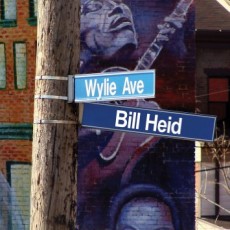
Bill Heid was born August 11, 1948 in Pittsburgh, Pennsylvania and came of age hanging out in the clubs that proliferated the Hill District like the Hurricane Bar and the Crawford Grill. With all the jazz greats regularly playing in town during the Sixties he took every opportunity to sit in on piano and learn from these masters. In addition he had hometown natives Ahmad Jamal, Art Blakey, Errol Garner, George Benson, Eddie Jefferson, Mary Lou Williams and Stanley Turrentine to learn from.
Bill took these lessons and experiences and headed West to Detroit and on to Chicago, building a solid blues resume, touring and recording as a pianist with Jimmy Witherspoon, Koko Taylor, Alberta Adams and Fenton Robinson amongst many others. He also played jazz piano on two major Impulse/MCA recordings for Chicago guitarist Henry Johnson.
As an organist Heid has produced several jazz albums as a leader during the mid to late Nineties for Muse/Westside and Savant labels. He spent a number of years in Japan and has toured all over the world as a Jazz Ambassador for the U.S. State Department. Soul jazz and hard bop pianist and organist Bill Heid currently performs at different venues in the Washington, DC area.

Dose A Day – Blues Away
Daily Dose Of Jazz…
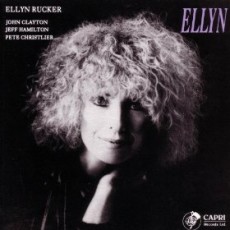
Ellyn Rucker was born in Des Moines, Iowa of July 29, 1937 and she started playing piano when she was eight, discovered jazz at 13, and studied classical piano at Drake University. However, it wasn’t until 1979 that she decided to become a full-time musician.
Rucker toured Europe several times both with and without Spike Robinson, recorded a small catalogue of several albums for Capri Records, has a full-length video Live In New Orleans on Leisure Jazz label, and has performed at festivals and clubs around the U.S. and Europe.
Though she is not a household name to jazz fans around the globe Ellyn Rucker is a fixture on the Denver, Colorado jazz scene. The Bill Evans influenced hard bop and bop-based pianist and vocalist continues to perform, record and tour.
Take A Dose On The Road

Daily Dose Of Jazz…
Tim Warfield, Jr. was born in York, Pennsylvania, began studying the alto saxophone at age nine. He switched to tenor saxophone during his first year at William Penn Sr. High School and participated in various musical ensembles. He won many jazz soloist awards including coming in second out of forty competitors at the Montreal Festival of Music in Canada. After high school, Warfield attended Howard University in Washington, D.C. After two years of matriculation he left to lead and co-lead several groups in the Central Pennsylvania, Baltimore and Washington area.
In 1990 he was chosen to be a member of trumpeter Marlon Jordan in his quintet. The following year he was selected to record Tough Young Tenors on the Island/Antilles label, joined George Wein’s Jazz Futures, Also in 1991, Warfield placed third at the Thelonious Monk International Jazz Saxophone Competition. From 1994 to 1999, he was a member of bassist Christian McBride’s group, and then began a six-year collaboration with Nicholas Payton.
Warfield has recorded eight albums on the Criss Cross label as a beginning with his debut release of A Cool Blue, selected as one of the top ten recordings of the year in a 1995New York Times critic’s poll. as was his 1998 recording Gentle Warrior (featuring Cyrus Chestnut, Tarus Mateen, Clarence Penn, Terell Stafford, and Nicholas Payton.
Tenor saxophonist Tim Warfield is currently serving as a board member and Chair of the Music Committee for the Central Pennsylvania Friends of Jazz as well as an artist-in-residence at Messiah College. He continues to record, tour and perform in the hard bop, Neo-Bop,, post bop and straight-ahead jazz genres.
Inspire A Young Mind
More Posts: saxophone
Daily Dose Of Jazz…
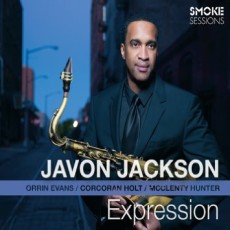
Javon Anthony Jackson was born June 16, 1965 in Carthage, Mississippi and raised in Denver, Colorado by parents who were musicians. His mother played the piano, and his father played trumpet, but he didn’t begin playing alto saxophone until age 10. By 16 he changed to the tenor saxophone and was taught by pianist Billy Wallace.
He briefly enrolled at the University of Denver prior to spending part of 1985-86 at Berklee College of Music, which he abandoned to become a Messenger with Art Blakey. Jackson would later finish his undergraduate degree and obtained a master’s degree from the State University of New York at Purchase where he later taught.
The hard bop, soul and mainstream tenor saxophonist has played with the Harper Brothers, Benny Green, Freddie Hubbard and Elvin Jones among others. He has fourteen albums as a leader, mainly on the Criss Cross and Blue Note labels. In between performing, touring or recording, he heads the Jackie McLean Institute of Jazz at the Hartt School at the University of Hartford and has been doing so since 2013.
Give The Gift Of Knowledge
More Posts: saxophone

Daily Dose Of Jazz…
Pepsi Auer was born Josef Auer on June 14, 1928 in Munich, Germany. He first played accordion in a youth orchestra, then he taught himself to play the vibraphone in 1936. A move to America in 1945 saw him performing in jazz clubs and by 1949 he moved to the piano. He would go on to work in the combo of Freddy Christmann in 1954, ultimately taking leadership two years later.
Pepsi worked with Freddie Brocksieper in 1958, the German All Stars in ’58, worked and toured from 1958 to 1960 with Albert Mangelsdorff jazz ensemble and then with Kurt Edelhagen. By the Sixties his style of approach mimicked Bud Powel and Horace Silver and in 1962 he worked in the Bayerischen Rundfunks.
Auer accompanied Stan Getz, Eric Dolphy and Benny Bailey on their tours of Germany, as well as with Miriam Klein. He would team up once again with Freddie Brocksieper from 1955-1964 and participate in recording sessions as well as with the German All Stars. From the mid-1960s he worked as a studio musician and increasingly composed music for television such as “A Summer With Nicole”.
In 1967 he took part in the Montreux Jazz Festival as a member of the Jazz Orchestra of the Bayerischer Rundfunk, where he and Don Manza were co-leaders. Pianist, vibraphonist and composer Pepsi Auer passed away on March 29, 2013.
Jazz Is Global – Share
More Posts: piano,vibraphone