

Daily Dose Of Jazz…
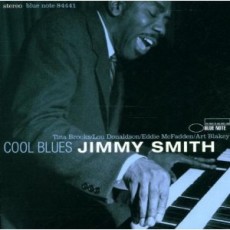
Jimmy Smith was born James Oscar Smith on December 8, 1925 in Norristown, Pennsylvania. He began as a pianist but switched to organ after hearing Wild Bill Davis, purchasing his first Hammond, renting a warehouse and emerging a year later with a fresh new sound. He was instrumental in revolutionizing the playing of the instrument. It only took one time for Alfred Lion to hear him play before signing him to Blue Note in 1956. It was the second album, “The Champ” that established him as a new star on the jazz scene, followed by “The Sermon”, “Home Cookin’” “Midnight Special” and “Back at the Chicken Shack”.
Forty sessions later Jimmy left Blue Note for Verve Records dropping his first album Bashin’ with a big band led by Oliver Nelson. With this album selling well he went on to collaborate over the next decade with Lalo Schifrin, Wes Montgomery, Kenny Burrell, Lou Donaldson, Lee Morgan, Stanley Turrentine, Grady Tate, Jackie McLean, George Benson and many other jazz greats of the day.
In the 1970s, Smith opened a supper club in Los Angeles where he played regularly; his career resurged in the 80s recording for Blue Note, Verve, Milestone and Elektra with Quincy Jones, Frank Sinatra, Michael Jackson, Dee Dee Bridgewater, B.B. King, Etta James and Joey DeFrancesco.
Smith’s virtuoso improvisation technique popularized the Hammond B3 and his style on fast tempo pieces combined bluesy “licks” with bebop-based single note runs, ballads had walking bass lines and up-tempo tunes he played the bass line on the lower manual with use of the pedals for emphasis of a string bass. He influenced the likes of Jimmy McGriff, Brother Jack McDuff, Richard “Groove” Holmes, Larry Goldings and Joey DeFrancesco as well as many rock keyboardists like Brian Auger or more recently The Beastie Boys.
Jimmy Smith, Hammond B3 pioneer in the hard bop, mainstream, funk and fusion jazz genres, was honored as an NEA Jazz Master shortly before his death on February 8, 2005 in Scottsdale Arizona.
More Posts: organ
Daily Dose Of Jazz…
Joseph Rudolph Jones was born on July 15, 1923 in Philadelphia Pennsylvania. The name “Philly Joe” was used to avoid confusion with Jo Jones, the drummer from the Count Basie Orchestra, who became known as “Papa Jo Jones”. In 1947 he became the house drummer at New York’s Café Society, playing with the leading bebop players of the day. His most important influence among them was Tadd Dameron.
Jones toured and recorded with Miles Davis Quintet from 1955 to 1958 — a band that became known as “The Quintet”. Miles also acknowledged that Jones was his favorite drummer (in fact, in his autobiography, Davis admitted to asking other drummers to play that “Philly Joe lick”, with mixed results). He organized the Davis Quintet in 1955 so that he and Davis would not have difficulties finding competent local musicians to play with them.
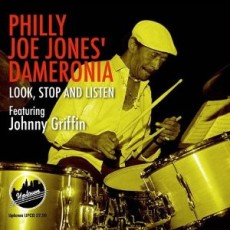
From 1958 onwards he worked as a leader, but continued to work as a sideman with other musicians, including Bill Evans and Hank Mobley. Evans also openly admitted that Philly Joe was his all-time favorite drummer. For two years (1967-69) he taught at a specially organized school in Hampstead, London but was prevented from otherwise working in the UK by the Musicians’ Union. From 1981 he helped to found the group Dameronia, dedicated to the music of the composer Tadd Dameron, and led it until his death on August 30, 1985.
More Posts: drums
Daily Dose Of Jazz…
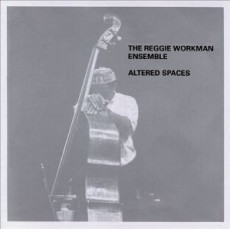
Reggie Workman was born Reginald Workman on June 26, 1937 in Philadelphia, Pennsylvania has been lauded for his work with both John Coltrane and Art Blakey. The double bassist, known for his avant-garde jazz and hard bop playing was a member of jazz groups led by Gigi Gryce, Roy Haynes, Wayne Shorter and Red Garland.
It was in 1961 that Workman joined Coltrane’s quartet, replacing Steve Davis and became a part of Trane’s “Live At The Village Vanguard” sessions, which has since become a legendary album. He also worked along with second bassist Art Davis on “Ole Coltrane”.
After a European tour Workman left the quartet and went on to play with James Moody, Yusef Lateef, Pharoah Sanders, Herbie Mann, Thelonious Monk, and became a Jazz Messenger. He has recorded several albums as a leader and with Archie Shepp, Lee Morgan and David Murray.
Reggie Workman has recorded seven albums as a leader and nearly four-dozen as a sideman working with Booker Little, Oliver Lake, Duke Jordan, Bobby Hutcherson and Grant Green among many others. He is currently a professor at The New School for Jazz and Contemporary Music in New York City.
More Posts: bass
Daily Dose Of Jazz…
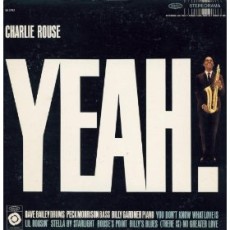
Charlie Rouse was born on April 6, 1924 in Washington, DC. He played tenor saxophone and flute, developing a distinctive nasal tone complimenting a bop-oriented style. Rouse moved very little, looked straight-ahead and wore a solemn expression when he played. He became highly influential by association with Thelonious Monk from 1959 to 1970. He would later become a founding member of Sphere, a band that paid tribute to Monk’s music.
Throughout the forties Rouse worked with Billy Eckstine, Dizzy Gillespie, Duke Ellington, made his recording debut with Tadd Dameron, and as the 50’s opened he was a part of Count Basie’s octet, and worked with Clifford Brown and Oscar Pettiford. He co-led the Jazz Modes with Julius Watkins and would go on to work with Mal Waldron. He would record, as a leader gaining some recognition by the eighties; with Carmen McRae on her classic Carmen Sings Monk project, and his last recording would be a Monk tribute concert.
The hard bop tenor and flautist died of lung cancer at the age of 64 in Seattle, Washington on November 30, 1988. Coincidently, Monk’s patroness NIca de Koenigswarter died the same day in New York City.
Daily Dose Of Jazz…
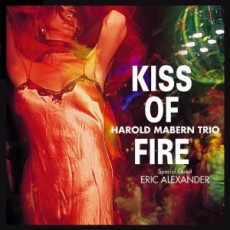
Harold Mabern was born on March 20, 1936 in Memphis, Tennessee and initially started learning the drums before turning his attention to the piano. Attending Douglass High School he played with Frank Strozier, George Coleman, Booker Little but was most influenced by the piano of Phineas Newborn Jr. After graduating from high school he moved to Chicago where he went to street school listening to Ahmad Jamal and others in clubs to increase his proficiency.
Early in his career Harold played in Chicago with Walter Perkins’ MJT + 3 in the late 1950s before moving to New York in 1959. Heading straight to Birdland where he met Cannonball Adderley who introduced him to Harry “Sweets” Edison who was looking for a replacement for Tommy Flanagan. A quick audition was followed by an offer and a few week later they were in the studio recording with Jimmy Forrest.
Mabern grew his reputation as a sideman and in the tradition of hard bop and soul jazz, the pianist worked with Lionel Hampton, the Jazztet, Donald Byrd, Miles Davis, J. J. Johnson, Lee Morgan, Hank Mobley, Sonny Rollins, Freddie Hubbard, Wes Montgomery, Joe Williams and Sarah Vaughan to name a few.
In the late 1960s and early 1970s, Mabern led four albums for Prestige Records and recorded with Stanley Cowell’s Piano Choir. Harold Mabern also recorded as a leader for DIW/Columbia and Sackville and toured with the Contemporary Piano Ensemble.
Pianist Harold Maben has twenty sessions as a leader and another six-dozen as a sideman in his catalogue. In more recent years, Harold is a frequent instructor at the Stanford Jazz Workshop, has recorded extensively with his former William Patterson University student, the tenor saxophonist Eric Alexander and continues to perform and tour.

More Posts: piano