

Daily Dose Of Jazz…
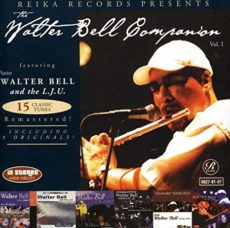
Walter Bell was born in Philadelphia, Pennsylvania on October 31, 1959 and is a self taught flutist and jazz historian. He moved to Richmond, Virginia to hone his craft and it was after this period of years that he rose to national prominence before moving back home. He is not one to double on saxophone, but stays true to his instrument having mastered the entire family of flutes from bass to piccolo. Carrying on the tradition of Herbie Mann, Hubert Laws, Yusef Lateef and Rhasaan Roland Kirk he focuses on jazz and Latin for his repertoire.
The founder and co owner of his own small label, Reika Records, Bell has released nine projects thus far. He performs nationally, has over 30 players that he rotates through his group, the Latin Jazz Unit. An in demand performer, he continually festivals, college & club dates and private receptions.
Flautist Walter Bell continues to perform and record, is the host a bi-monthly radio show on Washington D.C.’s WPFW Pacifica 89.3, performs a Sunday jazz brunch Hibachi in Philadelphia and still has time to produce and score TV themes for New Millenium studios with actor Tim Reid in Virginia.

Give The Gift Of Knowledge

More Posts: flute
Daily Dose Of Jazz…
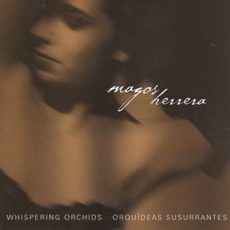
Magos Herrera was born in Mexico City, Mexico on October 24, 1972 and started her career as a vocalist upon graduating in 1992 from the Musicians Institute in Los Angeles. Following this, she continued her studies under Russian opera teacher Konstantin Jadan, perfecting her vocal technique, and later moved to Boston, for specialized instruction on contemporary improvisation.
She released five albums between 2000 and 2006 while living in Mexico City, then moved to New York City in 2008 and promptly became part of the local scene after a highly successful performance at the New York Winter Jazz Festival. She has recorded and participated in multiple projects including the album Stones World: The Rolling Stones Project II with saxophonist Tim Ries, The Music of Chick Corea with pianist Elio Villafranca and for contemporary composer Paola Prestini for VIA project, among others.
In 2009 Herrera released her album Distancia on the Sunnyside Records label to wide critical acclaim, co-produced by Tim Ries and featuring pianist Aaron Goldberg and guitarist Lionel Loueke. She has worked with John Patitucci, Luis Perdomo, Adam Rogers, Tim Hagans, Rogerio Boccato, and Alex Kautz, Javier Limón, Fito Páez, Eugenia León, Grégoire Maret and Chabuco. She has toured globally at clubs and jazz festivals throughout the Americas, Europe and Asia.
As an educator Magos teaches vocal technique and improvisation at the Fermatta Music Academy and DIM Music School in Mexico City. She has been a guest professor for master classes and clinics at Berklee College in Boston, Berklee Latino in Colombia, Central College in Pella, Iowa, Miami Dade College, Kula Lumpur Music Academy, Escuela Superior de Música in Mexico City, JazzUV in Xalapa, and held academic residencies in Swarnabhoomy Academy of Music in Tamil Nadu, India, the Carnegie Hall Musical Exchange Program in 2012, and the Langnau Jazz Camp in Switzerland in 2016.
Jazz singer-songwriter, producer and educator Magos Herrera has been nominated and received several awards. Currently based out of New York City, she is continuing to expand her 20-year career that embraces the Spanish, English, and Portuguese languages.
Give A Gift Of Jazz – Share
More Posts: vocal
Daily Dose Of Jazz…
Carli Muñoz was born Carlos C. Muñoz, on October 16, 1948 in Puerto Rico. A self-taught pianist, his music of choice was jazz, European avant-garde and American pop music. Among his early influences were ragtime, early American ballads, boogie woogie and classical music, especially that of Erik Satie and Edgard Varèse.
When Carli turned 16 he headed to New York City with a rock band he co-founded with Jorge Calderon called The Living End, AKA: Space, and for 18 months was the house band at a New York club. He later moved to Los Angeles, California where he worked with Charles Lloyd, George Benson, Wilson Pickett, Jan and Dean, The Association, Chico Hamilton, Wayne Henderson, Les McCann, Peter Cetera and Evie Sands.
From 1970 through 1981, Muñoz toured with the Beach Boys, playing Hammond B3 and piano. Following this period in his career in 1985 he returned to Puerto Rico and stayed out of the spotlight. 1998 saw him opening a restaurant, Carli Cafe Concierto.
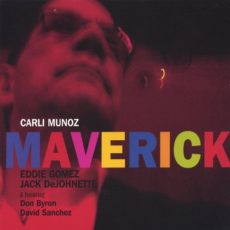
His most recent releases include a solo piano project Love Tales, Both Sides Now, with bassist Eddie Gómez, drummer Joe Chambers and flautist Jeremy Steig, Live at Carli’s Vol. 1, Live at Carli’s Vol 2 and Live at Carli’s Vol 3, recorded live at Carli Cafe Concierto, and Maverick with Eddie Gómez, drummer Jack DeJohnette, Don Byron on clarinet and tenor saxophonist David Sánchez, and a tribute album In My Soul, in memory of both Carl and Dennis Wilson.
Pianist Carli Muñoz, sometimes spelled Munoz, continues to perform jazz in his restaurant and often returns to the mainland to perform and record.
Put A Dose In Your Pocket
More Posts: piano

Daily Dose Of Jazz…
Bebo Valdés was born Dionisio Ramón Emilio Valdés Amaro on October 9, 1918 in Quivicán, Cuba. He started his career as a pianist in the nightclubs of Havana during the 1940s, replacing René Hernández as pianist and arranger in Julio Cueva’s band. In 1946 the band recorded Rareza del Siglo, one of his most famous mambos and from 1948 to 1957 he worked as pianist and arranger for the vedette Rita Montaner, who was the lead act in the Tropicana cabaret.
His orchestra, Sabor de Cuba, and that of Armando Valdés, alternated at the Tropicana, backing singers such as Benny Moré and Pío Leyva. Bebo played a role in the adaptation of the mambo into the big band format from the previously performed charangas during the late 1940s and 1950s. He developed a new rhythm to compete with Perez Prado’s mambo, called the batanga. He was also an important figure in the incipient Afro-Cuban jazz scene in Havana, taking part in sessions commissioned by American producer Norman Granz during 1952.
By the late 1950s he was recording with Nat “King” Cole and in 1960, along with Sabor de Cuba’s lead vocalist Rolando Laserie, Bebo defected from Cuba to Mexico. He then lived briefly in the United States before touring Europe, and eventually settled in Stockholm, spreading the techniques of Cuban music and Latin jazz. His career got a late boost in 1994 when he teamed up with saxophone player Paquito D’Rivera to release a CD called Bebo Rides Again. 2000 saw him in the film Calle 54 by Fernando Trueba giving his piano playing a wider audience and in 2003, Valdés and flamenco singer Diego El Cigala, recorded the album Lágrimas Negras (Black Tears).
During his career Bebo won seven Grammy Awards, His last musical production was recorded with his son in 2008, Bebo y Chucho Valdés: Juntos para Siempre (Together Forever). For that recording they won the Grammy for Best Latin Jazz Album.
Pianist, bandleader, composer and arranger Bebo Valdés, who led two famous big bands, was being treated for Alzheimer’s disease, which he had suffered for several years, when he passed away in Stockholm, Sweden, on March 22, 2013 at age 94.
Inspire A Young Mind
More Posts: piano
Daily Dose Of Jazz…
Peter Michael Escovedo was born on July 13, 1935 in Pittsburg, California of Mexican heritage. With his two brothers, he formed the Escovedo Brothers Latin Jazz Sextet, before Santana hired him and his brother Coke to play in his band.
Long well known on the San Francisco Bay Area music scene for several decades, in 2002 Pete made a notable national television appearance on the “By the Hand of the Father” episode of the PBS Austin City Limits program. He would go on to lead the 14-24 piece Latin big band Azteca.
Escovedo, along with his sons Juan and Peter Michael recorded with Latin Rock group El Chicano and their 3 piece percussion is featured on the studio album.
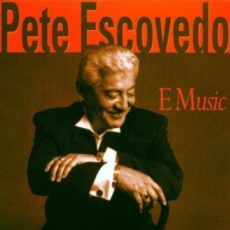
Percussionist Pete Escovedo has recorded eleven albums as a leader for Concords Jazz, Crossover and Picante labels, Fantasy and EsGo/Fantasy. He continues to tour, perform and record Latin Jazz at 80 years old.
Sponsored By


More Posts: percussion