

Daily Dose Of Jazz…
Guillermo Serpas was born on August 1, 1969 in San Salvador, El Salvador and grew up in an environment of rich musical tradition of legendary singers and masterful guitarists of the popular folklore. A gifted musician he was inspired him to learn the highly versatile and lyrical classical guitar. By his early teens he was studying with Maestro Candido Morales.
In 1983, the family moved to Calgary, Alberta bringing the young artist new artistic experiences to embrace. He immersed himself in the music genres of blues, jazz and rock. Guillermo soon joined several local bands and experimented with these different styles, while keeping his focus on classical guitar. He went on to acquire formal studies at the University of Calgary, graduating with a Bachelors Degree in music in 1996.
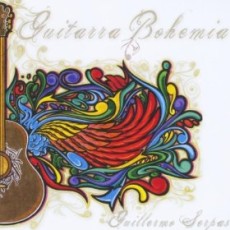
With his deep Latin roots ever present in his music Serpas has infused rhythmic elements of jazz, salsa, bolero, samba, blues and rock in his performing. Always present is the exotic percussion from his Latin American folklore creating a unique mosaic of sound. He released his debut recording Mi Sol y MI Luna in 2006 with his sophomore project following in 2011 titled Guitarra Bohemia. Guitarist Guillermo Serpas continues to perform, record and tour.

Give A Gift Of Jazz – Share
More Posts: guitar
Daily Dose OF Jazz…
Claudia Acuña was born July 31, 1971 in Santiago, Chile and raised in Concepcion. She was inspired as a child to perform a variety of music, including folk, pop and opera by Victor Jara and Violetta Parra. Her attention turned to American popular music and jazz at the age of 15 when she first heard Erroll Garner, Sarah Vaughan and Frank Sinatra. Upon returning to her birthplace in 1991, she quickly gained prominence on the local jazz scene through live performances and radio broadcasts with visiting artists.
By 1995, Acuña had decided to move to New York City and she began performing at jam sessions and clubs including the Zinc Bar, Smalls and with her own band at the Jazz Gallery. During this period she met pianist/composer Jason Lindner, who remains her musical director. She released her debut album, Wind from the South in 1999 for Verve Records followed by Rhythm of Life in 2001 and Luna in 2004.
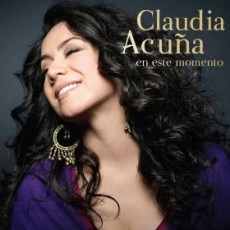
In 2009 she moved to the Marsalis Music label and recorded her first session En Este Momento. Claudia has been featured on various recordings with Peck Almond, George Benson, Joey Calderazzo, Avishai Cohen, Mark Elf, Tom Harrell, Antonio Hart, Arturo O’Farrill and Guillermo Klein. She has been the co-curator of a Chilean music festival, the spokesperson for World Vision Chile, her cover of the Antonio Carlos Jobim tune “Suddenly” was featured on the soundtrack for the movie Bossa Nova.
Venturing outside the jazz medium the vocalist garnered substantial exposure by recording a single with House producers MKL and Soy Sos of 3 Generations Walking titled Slavery Days. Vocalist Claudia Acuña continues to perform, tour and record for her Cambridge, Massachusetts based record label, Marsalis Music.
Inspire A Young Mind
More Posts: vocal
Daily Dose Of Jazz…
William “Billy” Taylor was born July 24, 1921 in Greenville, North Carolina but his family moved to Washington, DC when he was five years old. Growing up in a musical family, learning to play guitar, drums and saxophone as a child but most successfully on the piano. He took classical piano lessons with Henry Grant, who had educated Duke Ellington a generation earlier.
His first professional appearance was playing keyboard at the age of 13 and was paid one dollar. He attended Dunbar High School, the U.S.’s first high school for African-American students. He went to Virginia State College, majored in sociology but pianist Dr. Undine Smith Moore noticed young Taylor’s talent on piano, changed his major to music, graduating with a degree in music in 1942.
After graduation a move to New York City saw Billy playing piano professionally from 1944, first with the Ben Webster Quartet on 52nd Street. He met Art Tatum the same night, who became his mentor. He went on to perform with Machito developing his love for Latin music, a tour of Europe with the Don Redman Orchestra, and remained to work Paris and the Netherlands. Retuning to New York he worked with Bob Wyatt, Sylvia Sims and Billie Holiday in a successful show called Holiday on Broadway. A year later, he became the house pianist at Birdland performing with Charlie Parker, J. J. Johnson, Stan Getz, Dizzy Gillespie and Miles Davis. He would become the longest playing pianist ever in the history of the club.
In 1949, Taylor published his first book, a textbook about bebop piano styles. In 1952 Taylor composed one of his most famous tunes, I Wish I Knew How It Would Feel To Be Free, which subsequently achieved more popularity with the civil rights movement of the 1950s and 1960s. Nina Simone covered the song in her 1967 album Silk & Soul and the instrumental is used by the BBC for it’s long running television Film program.
Billy made dozens of recordings in the 1950s and 1960s, had a thriving broadcast career and in 1958, he became the Musical Director of NBC’s The Subject Is Jazz, the first ever television series focusing on jazz. The then new National Educational Television Network (NET) produced the 13-part series that hosted Duke Ellington, Aaron Copland, Bill Evans, Cannonball Adderley, Jimmy Rushing and Langston Hughes and others.
He founded the Jazzmobile in 1961 providing an arts education program via workshops, master classes, lecture demonstrations, arts enrichment programs, outdoor summer mobile concerts, special indoor concerts and special projects. Taylor worked as a DJ and program director on New York radio station WLIB, his trio was a regular feature of the Hickory House on West 55th Street, and from 1969 to 1972 became the first Black American to be musical director and lead a talk show band on The David Frost Show.
By the Eighties the Jazzmobile was producing shows for National Public Radio, receiving a Peabody Award for Excellence in Broadcasting Programs. In 1981, after being profiled by CBS News Sunday Morning he was hired as an on-air correspondent and conducted more than 250 interviews with musicians. He received an Emmy Award for his segment on Quincy Jones. These are just two of the many awards he has received over the course of his career.
By the end of the decade he formed his own “Taylor Made” record label to document his own music. In 1997, he received the New York state governor’s art award. Suffering from a stroke in 2002 that affected his right hand did not stop him from performing almost until his death. He died after a heart attack on December 28, 2010, in Manhattan, at the age of 89. His legacy was honored in a Harlem memorial service on January 11, 2011, featuring performances by Taylor’s final working trio – bassist Chip Jackson, drummer Winard Harper and long-time Taylor associates Jimmy Owens, Frank Wess, Geri Allen, Christian Sands and vocalist Cassandra Wilson.
Inspire A Young Mind
More Posts: piano
Daily Dose Of Jazz…
Vince Guaraldi was born Vincent Anthony Dellaglio on July 17, 1928 in San Francisco, California. Growing up in the North Beach area, taking the name of his stepfather Tony Guaraldi after being adopted and being around his maternal uncle was a musician, singer and whistle all became an important influence on his blossoming musical career. He attended Lincoln High School, went on to San Francisco State University and then enlisted and served as an Army cook during the Korean War.
His first recording was a self-titled LP recorded in 1953 with the Cal Tjader Trio and released early the following year. By 1955, Guaraldi had his own trio with Eddie Duran and and Dean Reilly. Reuniting with Tjader in 1956 he became an integral part of two bands that the vibraphonist assembled, the first band played mainly straight jazz with Al Torre on drums and Eugene Wright on bass and Luis Kant playing congas and bongos. The second band included Al McKibbon, Mongo Santamaria, Willie Bob, Paul Horn and Jose “Chombo” Silva. He made a big splash with his performance with Tjader at the 1958 Monterey Jazz Festival.
Vince left the group early in 1959 to pursue his own projects full-time. He probably would have remained a well-respected but minor jazz figure had he not written an original number to fill out his covers of Antonio Carlos Jobim/Luis Bonfá tunes on his 1962 album, Jazz Impressions of Black Orpheus. His label, Fantasy Records released the single Samba de Orpheus with his original Cast Your Fate To The Wind on the B-side trying to catch the building bossa nova wave. As providence would have radio DJs began flipping it over and playing the B-side and the gentle, likeable tune stood out from everything else on the airwaves and became a grassroots hit and won the Grammy for Best Original Jazz Composition.
Guaraldi would go on to record with Brazilian guitarist Bola Sete, began experimenting with electric piano and then composed a series of Latin influenced waltz tempos and jazz standards for the Eucharist chorus at the San Francisco Grace Cathedral. Through contact with Peanuts television producer Lee Mendelson, he was commissioned to score the upcoming Christmas special and played what would become Linus and Lucy over the phone two weeks later. The Vince Guaraldi Trio with drummer Jerry Granelli and bassist Fred Marshall recorded the soundtrack and he would go on to compose scores for seventeen Peanuts television specials, plus the feature film A Boy Called Charlie Brown.
Pianist and composer Vince Guaraldi passed away at age 47 on February 6, 1976. The evening before, he had dined at Peanuts producer Lee Mendelson’s home and was reportedly not feeling well, complaining of indigestion-like chest discomfort that his doctor had told him was nothing to worry about. The following evening, after concluding the first set at Butterfield’s Nightclub in Menlo Park, California with his interpretation of the Beatles’ Eleanor Rigby, Guaraldi and drummer Jim Zimmerman returned to the room they were staying in that weekend at the adjacent Red Cottage Inn, to relax before the next set. Walking across the room he just collapsed. That was it. The cause of death has been variously described as a heart attack or an aortic aneurysm. He had just finished recording the soundtrack for It’s Arbor Day, Charlie Brown earlier that afternoon. He left us a modest catalogue of some 32 albums as a leader or co-leader, 14 notable appearances as a sideman and another eleven showcasing or featuring his music.
Give A Gift Of Jazz – Share

Daily Dose Of Jazz…
Reedman Dexter Payne was born on July 5, 1951 in Denver, Colorado. The clarinet was his first instrument and went on to master the alto and baritone saxophones adding them to his arsenal. His early influences were Artie Shaw, Buddy DeFranco, Benny Goodman, Stan Getz, Zoot Sims, Gerry Mulligan,Benny Carter, Johnny Hodges and Lester Young.
A very lyrical and melodic player, Dexter plays swing, bop, cool jazz, and Brazilian jazz as well as other forms of music including Latin. In 2000 he played with Brazilian musician Thiago de Mello, recorded the album Inspiration in 2003, with Brazilian guitarist Antonio Mello,
He followed with his sophomore release in 2005 release Another Feeling with producer Arnaldo De Souteiro on his Jazz Station label. He recorded again in 3006 and 2007 which de Mello produced and released Our Time to Remember. Clarinetist and saxophonist Dexter Payne continues to perform, record and tour.
Put A Dose In Your Pocket