

Daily Dose Of Jazz…
Pablo “Chino” Nunez was born on June 25, 1961, adopted as an infant, the only son of Puerto Rican immigrants and raised in New York City’s Sunset Park section of Brooklyn. Inspired and encouraged at a young age, he attributes his success to the “masters” he studied as well as idolizing many instrumentalists and vocalists most notably Tito Puente, Orestes Villato, Miles Davis, Gil Evans, Nicky Marrero, The Beatles, The Jackson 5, James Brown, and Ella Fitzgerald among others.
Self-taught, Chino’s career spans four decades he established himself as a percussionist, multi-Instrumentalist, producer, arranger, composer, recording artist, band leader, and educator. He is a multiple Grammy, Latin Grammy and Billboard nominee and winner. He has amassed hundreds of music credits as a producer including the documentary film, “Pedro “Cuban Pete” Aguilar: Dancing En Clave”. He has toured with a who’s who list of performers and has garnered critical acclaim with his Chino Nunez Orchestra.
Nunez has recorded and performed with Tito Puente, Hector Lavoe, Celia Cruz, Johnny Pacheco, Marc Anthony, El Gran Combo de Puerto Rico, Ray Barretto, Willie Colon, Ruben Blades, Gilberto Santa Rosa, Larry Harlow, Tito Nieves, Spanish Harlem Orchestra and a host of others. He has performed all over the world including Lincoln Center, Carnegie Hall, North Sea Jazz Festival, Madison Square Garden, Montreal Jazz Festival, the Tito Puente Amphitheatre and Bellas Arte Performing Arts Center in San Juan, Puerto Rico, to name a few.
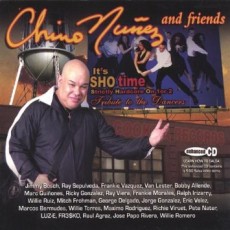
He creates a unique and rhythmic swing fusing Salsa, Big Band, Latin Jazz, Christian, Gospel, Bachata, Reggaeton, Hip Hop and R & B. On Broadway he has performed in “The Life of Celia Cruz”, “Evita”, “Cape Man”, “Lion King”, and “A Tale of Two Cities” featuring his arrangement “Another 100 People”. In 2005, he released his debut album Chino Nunez & Friends, A Tribute to the Dancers, It’s ShoTime. Producer of voice-overs, jingles, radio and television and commercials, Chino Nunez continues to perform and tour worldwide.

Dose A Day – Blues Away
More Posts: percussion
Daily Dose Of Jazz…
Karl Latham, born on June 9, 1961 is currently based in New York. He received a B.S.S. from Ohio University and studied music performance at Rutgers University, Ohio University and Berklee College of Music, including private studies with drumming greats Gary Chester and Joe Morello.
Latham is known for his exceptional ability to dig into a variety of musical styles, playing straight-ahead jazz, avant-garde, funk, rock, Latin, and more. As a freelance performer he has performed with wide spectrum of notable artists such as Bernie Worrell, Dave Valentine, Dave Samuels, Chuck Loeb, Ali Ryerson, Claudio Roditi, Clark Terry, John Lee, Andy Snitzer, The Dizzy Gillespie Alumni All-Stars, Slide Hampton; Edgar Winter, Johnny Winter, Yotam Silberstein, Charlie Elgart, Michal Urbaniak, The Real Deal Big Band and for the Broadway hit musical “Bring it On” just to name a few of his drumming exploits.
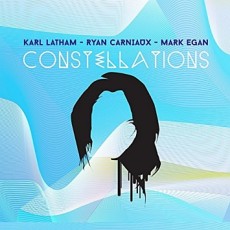
Karl is widely recognized as a veteran of the modern European Jazz scene since 1993, has released 7 CDs with Atilla Zoller, Randy Brecker, Cameron Barnes, Seamus Blake, Joel Frahm, Joe Lovano and others. He is a member of the electric jazz jam group, Unit1, with Mark Egan and John Hart, was ranked 7th drums, in the 2013 35th Annual Jazz Station Poll. He is also a member of “Constellations” with Ryan Carniaux and Mark Egan and is co-leader of Big Fun(K) with saxophonist/composer Don Braden and has released two CD’s as a leader. In addition to performing, recording and touring he is a long-standing adjunct professor at several New Jersey colleges and teaches workshops, master classes and clinics in the USA and abroad.
Put A Dose In Your Pocket
More Posts: drums
Daily Dose Of jazz…
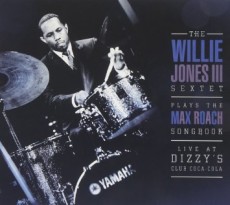
Willie Jones III was born on June 8, 1968 in Los Angeles, California. His initial exposure to music came from his father Willie Jones II, an accomplished jazz pianist. With his guidance and inspiration the young drummer began studying with acclaimed drummers and music instructors. By the time he was in his teens her was performing with numerous distinguished musicians. He completed his training at California Institute of the Arts under the tutelage of Albert “Tootie” Heath.
As a co-founder of the group Black Note, he took the West Coast bop movement and gave it a hard swing, propelling them into first place in the John Coltrane young Artist Competition in 1991. He would go on to become a semifinalist the following year at the Thelonious Monk Jazz Drum Competition, and eventually the group released four albums. He has played, toured, and/or recorded with Milt Jackson, Horace Silver, Arturo Sandoval, Roy Hargrove, Peter Zak, Hank Jones, Cedar Walton, Herbie Hancock, Eric Reed, Kurt Elling and Wynton Marsalis Jazz at Lincoln Center.
Jazz musicians appreciate his exceptional speed and control together with his use of a wide range of textures that characterize most of his playing. He is a master of many styles and moves quickly and easily between bebop, big band, avant-garde, Latin jazz grooves, hard bop and swing.
He has released several albums under his own name as a leader and on his indie label, WJ3 Records. His music has been sampled, however, he has filed a lawsuit in 2014 against California rapper Kendrick Lamar for allegedly sampling “The Thorn” illegally in Lamar’s song Rigamortis. Drummer Willie Jones III continues to perform, record and tour both as a leader and sideman.
Jazz Is Global – Share
More Posts: drums
Daily Dose Of Jazz…
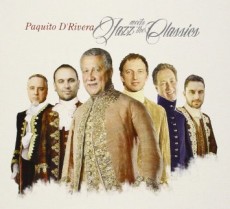
Paquito D’Rivera was born on June 4, 1948 in Havana, Cuba. He performed at age 10 with the National Theater Orchestra, studied at the Havana Conservatory of Music, and at 17, became a featured soloist with the Cuban National Symphony.
Through the Sixties and Seventies Paquito was dissatisfied playing under the constraints placed on his music by a communist Cuban government that described jazz and rock as imperialist music. After meeting with Che Guevara the idea of leaving Cuba became more than a thought. In early 1981, while on tour in Spain, he sought asylum with the American Embassy, leaving his homeland, wife and child behind in search of a better life with a promise to get them out.
With family support already in the States, D’Rivera settled into the New York jazz scene and became something of a phenomenon after the release of his first two solo albums, Paquito Blowin in 1981 and Mariel the following year. Throughout his career in the U. S. his albums have hit the top of the jazz charts and have shown his ability playing bebop, classical and Latin/Caribbean music. He is the only artist to ever have won Grammy Awards in both Classical and Latin Jazz categories.
Paquito also plays with the Ying Quartet, Turtle Island String Quartet, Mark Summer, Alon Yavnai, Yo-Yo Ma, as well as the National, London, Puerto Rico, Costa Rican and Simon bolivar Symphony Orchestras and the London and Florida Philharmonic Orchestras.
With his band, Paquito D’Rivera Quintet consisting of Peruvian bassist Oscar Stagnaro, Argentinean trumpeter Diego Urcola, American drummer Mark Walker and pianist Alex Brown they have won a Latin Grammy for Best Latin Jazz Album for Live At The Blue Note for a total of seven and has also won fourteen Grammy Awards.
Alto and soprano saxophonist, clarinetist, composer and bandleader Paquito D’Rivera has to date 72 albums as a leader and another 5 as a sideman playing with Dizzy Gillespie and Lalo Schifrin. He has received the National Medal of Arts, NEA Jazz Master, Jazz Legend Award, Two honorary Doctorates, and the Presidents Award from the IAJE amongst numerous others, continues to perform, record and tour.
Take A Dose On The Road
Daily Dose Of Jazz…
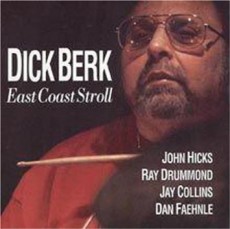
Richard Alan Berk was born on May 22, 1939 in San Francisco, California. He studied at the Berklee College of and played in the Boston area early in the 1960s.
In 1962 he moved to New York City and played with Ted Curson and Bill Barron in a quintet until 1964. Following this Dick played with Charles Mingus, Mose Allison, Freddie Hubbard, and Walter Bishop Jr. among others.
A move to Los Angeles late in the decade saw Berk playing with Milt Jackson, George Duke, Cal Tjader, John Hicks, Ray Drummond, Ted Curson, Don Friedman, . Jean-Luc Ponty and Blue Mitchell, to name a few. He went on to establish the Jazz Adoption Agency in the early 1980s, played well into the 2000s; among this group’s alumni are Andy Martin, Mike Fahn, Nick Brignola, John Noagormey, Keith Saunders, Tad Weed and John Patitucci.
He recorded eight albums as a leader and another nine as a sideman. Drummer and bandleader Dick Berk passed away on February 8, 2014 at the age of 74.
Dose A Day – Blues Away
More Posts: drums