

Daily Dose Of Jazz…
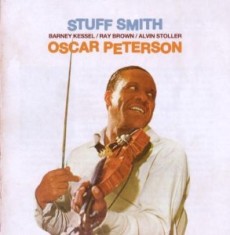
Hezekiah Leroy Gordon Smith was born August 14, 1909 in Portsmouth, Ohio and was better known in the jazz circles as violinist Stuff Smith. He studied violin with his father, cites Louis Armstrong as his primary influence and inspiration to play jazz, and like Armstrong, was a vocalist as well as instrumentalist.
In the 1920s, Smith played in Texas as a member of Alphonse Trent’s band. After moving to New York he had a regular gig with his sextet at the Onyx Club starting in 1935, performed with Coleman Hawkins as well as with younger musicians such as Charlie Parker, Dizzy Gillespie and later Sun Ra.
After signing with Vocalion in 1936, Stuff had a big hit with “I’se A Muggin'” and was billed as Stuff Smith and his Onyx Club Boys. He recorded for Decca in 1937 and Varsity in 1939-1940. He is well known for the song “If You’re A Viper” and is featured in several numbers on the Nat King Cole Trio album, After Midnight.
Part of Smith’s performance at what is considered the first outdoor jazz festival, the 1938 Carnival of Swing on Randall’s Island turned up unexpectedly on audio engineer William Savory’s discs, which were self-recorded off the radio at the time, then long-sequestered.
Smith was critical of the bebop movement, although his own style represented a transition between swing and bebop. He is credited as being the first violinist to use electric amplification techniques on a violin. He contributed to the 1938 tune “It’s Wonderful” often performed by Louis Armstrong and Ella Fitzgerald throughout their careers.
He moved to Copenhagen in 1965, performed actively in Europe, record with Oscar Peterson, Niels-Henning Orsted Pederson, Kenny Drew, Alex Riel, Stephane Grappelli and Jean Luc Ponty among others until his passing away in Munich on September 25, 1967.
Stuff Smith, one of the jazz industry’s preeminent violinists of the swing era is one of the 57 jazz musicians photographed in the 1958 portrait “A Great Day In Harlem”.

Put A Dose In Your Pocket
The Jazz Voyager
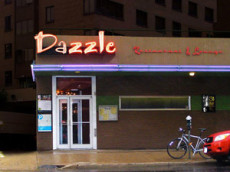
Dazzle Restaurant and Lounge: 930 Lincoln Street, Denver, Colorado / Telephone: 303-839-5100 Fax: 303-839-5102 / info@dazzlejazz.com / Web: dazzlejazz.com / Contact: Miles Snyder or Donald Rossa.
DazzleJazz presents an authentic jazz club experience unlike anything in Colorado. You will expect a high quality of service, food and drink to accompany the intimate showcase of local, national and international musicians. The club has been listed as “One of the Top 100 Jazz Clubs in the World” by Downbeat Magazine and “Best Jazz Club” by Westword. They strive to be a positive and unique part of the Denver community. Cool cocktails, fine cuisine and jivin’ jazz!
Sponsored By

Daily Dose Of Jazz…
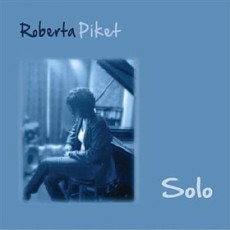
Roberta Piket was born on August 9, 1966 in Brooklyn, New York. Her father, the composer Frederick Piket, gave her first piano lessons when she was seven. She began playing jazz in her early teens, studying jazz piano with Walter Bishop, Jr and classical piano with Vera Wels. After graduating from prestigious Hunter College High School, she entered the joint double-degree program at Tufts University and the New England Conservatory of Music, earning a Bachelor’s Degree in Computer ScienceAll Postsfrom the former and a Bachelor’s Degree in Jazz Studies from the latter. She studied privately with Fred Hersch, Stanley Cowell, Jim McNeely, Bob Moses, Richie Beirach and Sofia Rosoff.
Roberta’s swinging and inventive straight-ahead jazz playing as well as her powerful and sensitive work in creative improvised music has gained her the respect of the jazz community. She has been a side woman performing or recording with David Liebman, Rufus Reid, Billy Hart, Michael Formanek, Lionel Hampton, Mickey Roker, Billy Mintz, Harvey Wainapel, Eliot Zigmund, Benny Golson, Ratzo Harris and the BMI/NY Jazz Orchestra.
Having appeared twice on Marian McPartland’s Piano Jazz, Piket has performed in Europe and japan as well both as a side woman and leader of her own trio and was a finalist in the Thelonious Monk BMI Composers’ Competition. She has released ten albums under her own name and frequently make the “best of” lists of the major jazz magazines and earning rave reviews in Jazz Times, Downbeat, the Washington Post, and Jazziz. A musical pioneer in several ways, Roberta is the first and only woman leader with a release on the prestigious Criss Cross label.
As an educator Roberta hold master classes at the Eastman School of Music, Rutgers University, Cal Arts, Duke University, the Northwestern University Composers’ Colloquium, among others around the world; has taught at the Litchfield Jazz Camp and the Vermont Jazz Center and has coached ensembles at Long Island University and maintained several private students.
Pianist and composer Roberta Piket occasionally performs on B3 organ, as she continues to record, perform and tour throughout Europe America and Japan.
Give A Gift Of Jazz – Share
Daily Dose Of Jazz…
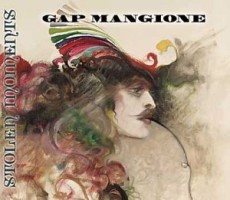
Gaspare “Gap” Mangione was born July 31, 1938 in Rochester, New York and learned to play the piano as a child. Along with his Grammy-winning flugelhornist brother Chuck, they started performing together as the Jazz Brothers in 1958 and eventually recorded three albums for Riverside Records.
In 1968, Gap Mangione released his first solo album, “Diana in the Autumn Wind”, featured new compositions and arrangements, and was conducted by Chuck Mangione. The 1970s brought more solo albums along with tours with his own group and many as featured pianist in his brother’s orchestral performances.
By the Eighties, Gap began spending less time on the road and more time playing in and around Rochester. In 1990, he formed the Gap Mangione New Big Band, which remains the premier dance and concert big band in the Rochester area. The New Big Band has released four recordings since 1998.
Many major rappers and producers, including Jaylib, Talib Kweli, Guerilla Black, Ghostface Killah, Slum Village and People Under The Stars have sampled Gap’s “Diana in the Autumn Wind” for their recent works.
Gap Mangione has received the Artist of the Year Award from the Arts & Cultural Council of Greater Rochester, continues to make regular appearances at Rochester locations, among them the Woodcliff Hotel and Spa, Pier 45 at the Port, as well as the Rochester International Jazz Festival. The composer, arranger, bandleader and pianist continues to play with his brother.
Put A Dose In Your Pocket
More Posts: piano
Daily Dose Of Jazz…
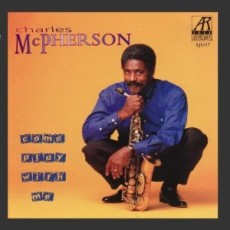
Charles McPherson was born on July 24, 1939 in Joplin, Missouri but grew up in Detroit, Michigan. As a teenager he played with Barry Harris, played the Detroit scene through the Fifties and in 1959 moved to New York City. Along with his Detroit partner Lonnie Hillyer joined Charles Mingus in 1960, a relationship that lasted until 1972.
The alto saxophonist, had a short-lived quintet with Hillyer in ’66, and then broke out on his own after leaving Mingus to become a full-time leader. A move to San Diego in 1978 became home while recording for such labels as Prestige, Mainstream, Xanadu, Discovery and Arabesque during his prolific career.
McPherson, a Charlie Parker disciple, who brought his own lyricism to the bebop idiom, was commissioned to help record ensemble renditions of pieces from Charlie Parker used on the 1988 “Bird” film soundtrack. To date he has 25 albums as a leader to his credit and another sixteen as a sideman working with the likes of Toshiko Akiyoshi, Kenny Drew, Charles Tolliver, Clint Eastwood, Art Farmer and Sam Jones. The saxophonist has remained a stable figure in modern mainstream jazz.
Jazz Is Global – Share
More Posts: saxophone