

Daily Dose Of Jazz…
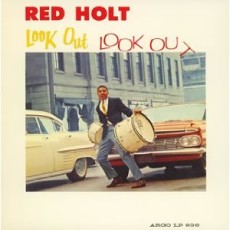
Redd Holt was Isaac Holt born on May 16, 1932 in Rosedale, Mississippi. His interest in drums and percussion began as a child and he bought his first drum set when he was a sophomore at Crane Technical High School. Graduating from high school in 1951, he attended the Cosmopolitan School of Music in Chicago and then received advanced musical instruction at the Chicago School of Music.
Between 1954 and 1966 Holt was part of the original Ramsey Lewis Trio that spawned the classic hit singles “Hang on Sloopy” and “In Crowd.” He was co-founder and leader of Young-Holt Unlimited from 1966 to 1974, creating another hit, “Soulful Strut,” and the successful single, “Wack Wack”, used in the movie Harriet the Spy and various other movies and commercials.
Redd has directed the Gumption Performing Artists Workshop, received the Jazz Master Award from the Midwest Arts, a Lifetime Achievement Award from Indianapolis Radio Sounds of Jazz, and the Grand Master of Time Award from the Jazz Institute of Chicago and the DuSable Museum of African American History.
As a jazz educator drummer Redd Holt has been active for many years in Urban Gateways, a nonprofit organization providing multicultural performing, and visual and literary arts programs. He continues to perform his percussion and vocal skills at jazz clubs, festivals, theaters and concerts around the world.

Give The Gift Of Knowledge
More Posts: drums
Daily Dose Of Jazz…
Julian Joseph was born May 11, 1966 in London, England. As a jazz pianist, bandleader, composer, arranger and broadcaster he has worked solo, in his all-star big band, trio, quartet, forum project band or electric band.
Joseph’s style combines a respect for the modern developments in jazz piano with its history and works in both contemporary and traditional situations with his music. He is also active in jazz education helping to form the jazz syllabus for the Associated Board of the Royal Schools of Music in Great Britain.
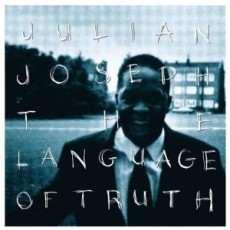
Starting with his first album The Language of Truth in 1991, Julian has a total of seven albums to date, one single, and a soundtrack to his credit, and a baker’s dozen as a sideman. He has focused on live performance such as, at the London Jazz Festival, also broadcasting as he hosts several radio shows on BBC Radio 3, including Jazz Line-up and the celebrated Jazz Legends as well as composing and teaching.
He has also made two jazz television series for Meridian, a jazz series for Sky TV’s Artsworld Channel and the documentary A Festival of Jazz Piano for the BBC in Wales directed by Celia Lowenstein. He continues to perform and record.
Jazz Is Global – Share
More Posts: arranger,broadcaster,composer,educator,piano
Daily Dose Of Jazz…
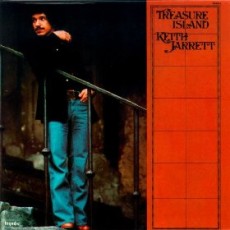
Keith Jarrett was born on May 8, 1945, in Allentown, Pennsylvania and had significant early exposure to music. He possessed absolute pitch and displayed prodigious musical talents as a young child. He began piano lessons just before his third birthday, and at age five he appeared on a TV talent program and by seven had given his first classical piano recital. During his teens he began leaning towards jazz, turned down classical training in Paris and attended Berklee College of Music
He started his career with Art Blakey and after his tenure as a Jazz Messenger moving on to play with Charles Lloyd and Miles Davis. Since the early 70s he has enjoyed a great deal of success in jazz, jazz-fusion, and classical music; as a group leader and a solo performer. His improvisations draw not only from the traditions of jazz but from other genres as well, especially Western classical music, gospel, blues, blues and ethnic folk music.
Jarrett has received the Polar Music Prize, the Leonie Sonning Music Prize, was inducted into the Down Beat Down Beat Hall of Fame, played with Jack DeJohnette, Charles Lloyd, Charlie Haden, Paul Motian, Dewey Redman, Airto Moreira, Palle Danielson and Jan Garbarek among others.
Jarrett’s compositions and the strong musical identities of the group members gave this ensemble a very distinctive sound. The quartet’s music is an amalgam of free jazz, straight-ahead post-bop, gospel music, and exotic, Middle-Eastern-sounding improvisations. He has played as a soloist, trio, returned also to classical music, incorporates vocalizations of grunts, squeals and tuneless singing. He continues to compose, record, perform and tour.
In 2003, Jarrett received the Polar Music Prize, the first (and to this day only) recipient not to share the prize with a co-recipient,[1] and in 2004 he received the Leonie Sonning Music Prize. In 2008, he was inducted into the Down Beat hall of Fame in the magazine’s 73rd Annual Readers’ Poll. He continues to tour and record.
Take A Dose On The Road
Daily Dose Of Jazz…
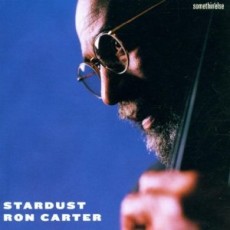
Ron Carter was born May 4, 1937 in Ferndale, Michigan and started playing the cello at the age of 10, but when his family moved to Detroit, he ran into difficulties regarding the racial stereotyping of classical musicians and instead moved to bass. He attended Cass Technical High School and later the Eastman School of Music, played in the later Philharmonic Orchestra. He received his bachelor’s degree at Eastman in 1959, and in 1961 a master’s degree in double bass performance from the Manhattan School of Music.
His first jobs as a jazz musician were with Jaki Byard and Chico Hamilton and made his first records were made with Eric Dolphy and Don Ellis in 1960. Ron led his first date as leader, “Where?”with Dolphy and Mal Waldron and a date “Out There” with Dolphy, George Duvivier and Roy Haynes playing advanced harmonies and concepts were in step with the third stream movement. He truly came to fame in the early ‘60s in the second great Miles Davis quintet with Herbie Hancock, Wayne Shorter and Tony Williams.
Over the course of his career, Carter who is also an acclaimed cellist has appeared on over 2,500 albums make him one of the most-recorded bassists in jazz history. He has played with Sam Rivers, Freddie Hubbard, Duke Pearson, Lee Morgan, McCoy Tyner, Andrew Hill, Horace Silver, Joe Henderson, Hank Jones and too many more to name.
He was a member of the New York Jazz Quartet, the Classical Jazz Quartet, was a Distinguished Professor Emeritus of the Music Department of The City College of New York after twenty years teaching and received an honorary Doctorate from the Berklee College of Music. He is currently on the faculty of the Julliard School teaching bass in the school’s Jazz Studies program, sits on the Advisory Committee of the Board of Directors of The Jazz Foundation of America.
Inspire A Young Mind
Daily Dose Of Jazz…
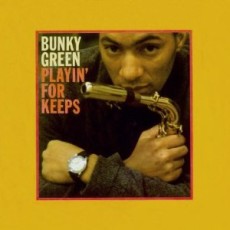
Vernice “Bunky” Green was born on April 23, 1935 in Milwaukee, Wisconsin. Originally strongly influenced by Charlie Parker, it was Charles Mingus’ sparing use of notation and his belief that there was no such thing as a wrong note that made a deep impression and had a lasting influence on Green’s own style.
Green began playing the alto saxophone around Milwaukee, mainly at a local club called “The Brass Rail.” His first big break came when he was hired in New York City by Charles Mingus to replace Jackie McLean in the 1960s. This was followed by a move to Chicago, Illinois that gave him the opportunity to perform with Sonny Stitt, Louie Bellson, Andrew Hill, Yusef Lateef and Ira Sullivan.
Gradually withdrawing from the public eye to develop a career as a leading jazz educator, Bunky taught at Chicago State University from 1972-1989 and in the 1990s took up the directorship of the Jazz Studies Program at the University of North Florida in Jacksonville. He also served a term as the president of the IAJE/International Association for Jazz Education and has been elected to the Jazz Education Hall of Fame.
Green recorded several fine albums beginning in the 1960s working with Wynton Kelly, Jimmy Cobb, Elvin Jones, Jason Moran and Lonnie Plaxico; was leader of the Vanguard label in the 70s, and awarded the coveted 5 Star Review from Down Beat Magazine for his 1989 commemoration of his parents death with “Healing The Pain”. Bunky Green continues to record and pursue his educator endeavors. He is currently Professor Emeritus and Director of Jazz Studies Emeritus at the University of North Florida.
Give The Gift Of Knowledge