

Daily Dose Of Jazz…
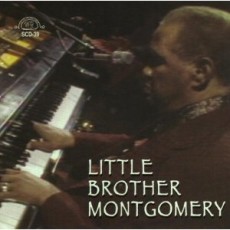
Eurreal Wilford “Little Brother” Montgomery was born on April 18, 1906 in the sawmill town of Kentwood, Louisiana across Lake Pontchartrain from New Orleans where he spent much of his childhood. As a child he looked like his father, Harper Montgomery, and was called Little Brother Harper. The name evolved into Little Brother Montgomery, a nickname that stuck. He started playing piano at the age of 4, and by age 11 he was playing at various barrelhouses in Louisiana.
Montgomery, largely self-taught, was an important blues pianist with an original style; however, he was also quite versatile working in jazz bands including larger ensembles that used written arrangements. Although he did not read music, he learned band routines by ear and once through an arrangement he had it memorized. He was a singer with an immediately recognizable, rather affecting wobble: an oral historian as full of musical anecdotes as his musical influence and frequent visitor, Jelly Roll Morton.
Early on he played the Black lumber and turpentine camps in Louisiana and Mississippi, then with the bands of Clarence Desdunes and Buddy Petit. He first went to Chicago from 1928 to 1931, making his first recordings and from 1931 through 1938 he led a band in Jackson, Mississippi. By 1942 Montgomery moved back to Chicago, toured other cities and Europe with a repertoire alternating between blues and traditional jazz. During the ‘60s his fame grew and he continued to make many recordings, including on his own record label, FM Records.
Never straying too far from the blues Montgomery appeared at many blues and folk festivals during the following decade and was considered a living legend, a link to the early days of blues and New Orleans. Little Brother Montgomery passed away on September 6, 1985 in Champaign, Illinois.

Jazz Is Global – Share
Daily Dose Of Jazz…
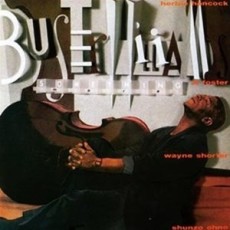
Charles Anthony Williams was born April 17, 1942 in Camden, New Jersey. His father was a bassist and his teacher, preparing lessons for him each day, stringing his bass and demanding practice everyday after school.
Nicknamed Buster, he started his professional career in Philadelphia in 1959 working with Jimmy Heath, then went on to play and record with the Gene Ammons – Sonny Stitt quintet from 1960-61. Leaving the quintet he moved to Los Angeles and played behind Betty Carter, Sarah Vaughan and Nancy Wilson through the decade. He also worked with The Jazz Crusaders, Bobby Hutcherson/Harold Land Quintet and Miles Davis.
In 1969, Williams moved to NYC, joined the Herbie Hancock Mwandishi Sextet and for the next three years doubled on acoustic and electric bass. In the ‘70s he worked with Mary Lou Williams and the Ron Carter Quartet and in 1975 released his debut album “Pinnacle”. Since the ’80s, Williams has appeared as a sideman on a significant number of sessions with notable jazz instrumentalists and vocalists, Chet Baker, Kenny Barron, Dexter Gordon, Carmen McRae, Illinois Jacquet, Frank Morgan, McCoy Tyner, Shirley Horn, Woody Shaw, Stanley Cowell and the list continues.
With opportunities to lead his own sessions being rare, in 2008 Buster began releasing a series of live albums exclusively for download through his company, Buster Williams Productions. A solid supportive player, he has made subtle swing, a precise rhythm and superb technique the landmark of his playing.
Put A Dose In Your Pocket
More Posts: bass

Daily Dose Of Jazz…
Milton “Shorty” Rogers was born Milton Rajonsky on April 14, 1924 in Great Barrington, Massachusetts. He worked first as a professional trumpeter with Will Bradley and Red Norvo. For two years beginning in 1947 he worked extensively with Woody Herman and then from 1950 to1951 he played with Stan Kenton.
Rogers appeared on Shelly Manne’s 1954 album “The Three and the Two” along with Jimmy Guiffre, later recording with Guiffre showing his experimental side, resulting in an early form of avant-garde jazz. Settling in Los Angeles in the early fifties, by 1953 he was recording as a leader with RCA through 1962 that incorporated avant-garde, cool jazz and the “hot” style of Count Basie, who was a great inspiration for him.
Shorty’s composer credits include Mr. Magoo cartoon “Hotsy Footsy” and the Looney Tune “Three Little Bops”, scored the Brando film “The Wild One” and the Sinatra vehicle “The Man With The Golden Arm”. Becoming better known for his skills as a composer and arranger than as a trumpeter in the early ‘60s he stopped performing on trumpet, left the jazz scene and concentrated on writing for television and film for many years.
In 1982, he returned to the trumpet and jazz and by the 1990s formed a Lighthouse All Stars group with Bud Shank, Bill Perkins and Bob Cooper. Trumpeter, composer and arranger Shorty Rogers, a figurehead in the West Coast era of “cool jazz” passed away on November 7, 1994.
Dose A Day-Blues Away
More Posts: trumpet
Daily Dose Of Jazz…
Alejandro Santos was born on April 11, 1956 in Buenos Aires, Argentina. He is widely-recognized both in his home country of Argentina and internationally as an extraordinary flutist and multi-instrumentalist playing the piccolo, bass flute, native wood-flutes, tenor and soprano sax, piano, and synthesizers.
He has developed a career as a composer with a unique style, which fuses modern jazz with traditional Argentinean rhythms like candombe, tango, and folk music. He has collaborated on recording and performing projects with Dino Saluzzi, Gonzalo Rubalcaba, Anthony Jackson, Bob Moses, Claudio Roditi, Toquinho, Maria Creuza, Fito Paez and others. Since 2001 he has steadily worked with Al Di Meola’s World Symphony and has recorded on De Meola’s latest album “Flesh on Flesh”.
Alejandro released three solo albums with RCA and GNA/Invasion Records, one of them: 5 Carnavales 4, released in the States, received excellent reviews and reached into the top 30 jazz playlist of the Gavin Report magazine. Alejandro Santos currently performs with his quartet that includes bandoneon, bass and drums.
Jazz Is Global – Share
More Posts: flute,piano,piccolo,saxophone,synthesizer
Daily Dose Of Jazz…
Joey DeFrancesco was born in Springfield, Pennsylvania on April 10, 1971 into a family of musicians – a multi-instrumentalist grandfather and Hammond B3 player father. Joey DeFrancesco started playing the piano at the age of four, switching to the B3 shortly after. By age six, he was sitting in on his father’s gigs; by ten playing out on his own and sitting in with organ legends like Jack McDuff and Richard “Groove” Holmes. He went to high school with bassist Christian McBride, where the two were often scolded for altering their big band charts.
At seventeen years old Miles Davis asked Joey to join his band, touring Europe and recording Amandla with Davis. He became well known in the 1990s, however, through his work with John McLaughlin’s trio Free Spirits. He has also played with jazz guitarists Pat Martino, Paul Bollenback, Jimmy Bruno, Dave Stryker, Danny Gatton as well as trumpet player Big Jim Henry and many others.
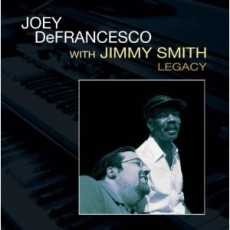
DeFrancesco’s career as a leader began with his first recordings on Columbia, and later with Muse, Big Mo, and HighNote. He listened to and learned from Jimmy Smith, ultimately paying homage with his 1999 release “The Champ”. In 2000 he recorded the album “Incredible!” with Jimmy and finished “Legacy” shortly before Smith’s passing in 2005. He has also paid tribute to Don Patterson with “Tribute to Don Patterson: The Philadelphia Connection” released in 2004.
Jazz organist, trumpeter and vocalist Joey DeFrancesco, who has been selected by the Down Beat Critics and Readers Poll as the top jazz organist every year since 2003 and who consistently played an average of 200 nights a year on the road with various musicians, transitioned on August 25, 2022 at the age of 51.
Put A Dose In Your Pocket
More Posts: hammond organ,keyboard,saxophone,trumpet,vocal