

Daily Dose Of Jazz…
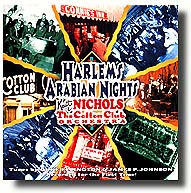
Keith Nichols was born on February 13, 1945 in Ilford, Essex, UK and took his first music lessons at age five on piano and accordion. As a youth he was a child actor and an award-winning accordionist, Great Britain Junior Champion in 1960.
He turned professional after graduating from Gulldhall School of Music, touring with the Levity Lancers for seven years playing trombone, piano and tuba. From the early 70s he has performed in concert ragtime at London’s South Bank, came to the U.S. in 1976 with Richard Sudhalter’s New Paul Whiteman Orchestra, recorded three solo albums for EMI and is a frequent sideman for the label and formed the Midnite Follies Orchestra focusing on the music of Duke Ellington and Cab Calloway.
He has gigged and recorded with Bing Crosby, arranged for the New York Jazz Repertory Company, Dick Hyman and the Pasadena Roof Orchestra, and has worked with Harry Gold, Digby Fairweather and Claus Jacobi.
The multi-instrumentalist, arranger and award-winning accordionist in his youth continues to perform and record prolifically in the UK, America and Europe with projects based in ragtime, and lectures at the Royal Academy of Music.
Daily Dose Of Jazz…
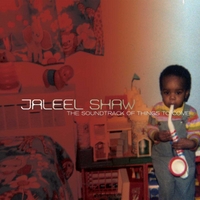
Jaleel Shaw was born February 11, 1978. Growing up in Philadelphia, PA, where he studied with saxophonist Rayburn Wright, Robert Landham, and jazz instructor Lovette Hines while attending the High School for Creative & Performing Arts, Shaw transferring and graduated from George Washington High School. During this period, John Blake and Grover Washington, Jr. also mentored him.
Upon graduating from high school, he received a full four-year tuition scholarship to Berklee College of Music, earned dual degrees in music education and performance Jaleel attended Berklee for four years, received the Billboard Endowed Scholarship for Outstanding Academic and Musical achievement, two Woodwind Dept. Chair Awards, The Outstanding Student Teacher Award, and The Boston Jazz Society Award.
After Berklee, Shaw went to Manhattan School of Music, received his Masters in Jazz Performance and was a finalist in the Thelonious Monk International Saxophone Competition. Jaleel has performed and toured throughout the U.S., Asia, Europe and Australia. The altoist is currently a member of the Roy Haynes Quartet and the Charles Mingus Big Band, performs in various New York clubs, has recorded two albums and leads his own quartet and quintet.
More Posts: saxophone
Daily Dose Of Jazz…
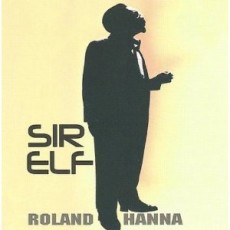
Roland Hanna was born on February 10, 1932 in Detroit, Michigan and began private classical piano lessons at an early age but had a strong interest in jazz. After graduation from Cass Technical High School and a two-year stint in the US Army, he continued his musical studies at the Eastman and Juilliard Schools of Music.
He worked with several big names, such as Benny Goodman and Charles Mingus in the 1950s, from 1967 to 1974 was a regular member of the Thad Jones-Mel Lewis Orchestra and was also a member of the New York Jazz Quartet during this decade. He also performed solo, contributed to orchestras, bands, and small groups; provided sensitive, sympathetic accompaniment to such artists Sarah Vaughn (also her musical director), Carmen McRae and Al Hibbler.
Hanna went into semi-retirement for most of the 1980s, though he played piano and wrote the song “Seasons” for Sarah’s 1982 album Crazy and Mixed Up, however, he returned to music later in the decade. Over the course of his career he recorded some 50 albums, formed a record label, became a tenured professor of music at Aaron Copeland School of Music, Queens College and City College of New York, and was knighted by Liberian President William Tubman for his humanitarian services to that country.
Sir Roland Hanna passed away on November 13, 2003 in Hackensack, New Jersey.
More Posts: piano
Daily Dose Of Jazz…
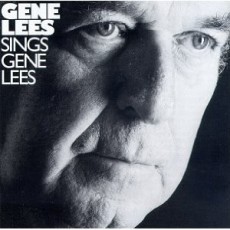
Frederick Eugene John “Gene” Lees was born in Canada on February 8, 1928 the eldest of four children. He began his writing career as a newspaper reporter in 1948 prior to moving to the U.S. and becoming a music critic at the Louisville Times in Kentucky. By the end of the Fifties he was editor of Down Beat magazine.
As a freelance writer, Lees wrote for Stereo Review, High Fidelity and the New York Times in the U.S. along with several Canadian publications like the Toronto Star and Maclean’s. As a biographer, Lees has written about Oscar Peterson, Lerner & Loewe, Henry Mancini, Woody Herman and about racism in jazz music in “Cats of Any Color: Jazz Black and White”.
Gene wrote nearly one hundred liner notes for artists as diverse as Stan Getz, John Coltrane and Quincy Jones. As a novelist he published “And Sleep Until Noon” in 1967 and his second book, “Song Lake Summer” was published in 2008. He won his first of five ASCAP-Deems Taylor Awards in 1978 for a series of articles published in High Fidelity about US music. Lees’ famous monthly “Jazzletter” was established in 1981, and contains musical criticism by Lees and others.
In the early 60s he studied composition by correspondence with the Berklee College of Music, piano with Tony Aless, guitar with Oscar Castro-Neves and became a lyricist translating and writing English lyrics for the Portuguese bossa nova tunes. He wrote the lyrics for Antonio Carlos Jobim’s Corcovado re-titled “Quiet Nights of Quiet Stars”, also “Someone To Light Up My Life”, “Song of the Jet”, “The Happy Madness” and “Dreamer”. He has said that Frank Sinatra’s recording of Quiet Nights was the definitive rendition. He also contributed lyrics to Milton Nascimento’s Bridges, Charles Aznavor Broadway concert, “One World, One Peace” – the poems of Pope John Paul II recorded by Sarah Vaughan and recorded Bridges – Gene Lees Sings Gene Lees.
Gene Lees, music critic, biographer, lyricist and journalist struggled with heart disease in his later years and died on April 22, 2010 in Ojai, California.
More Posts: biographer,critic,journalist,lyricist
Daily Dose Of Jazz…
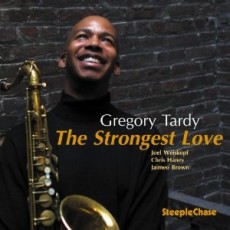
Gregory Tardy was born February 3, 1966 in New Orleans, Louisiana but was reared in Milwaukee, Wisconsin. His interest in music began studying classical clarinet. By high school he excelled in music, winning many awards and scholarships, studying with renowned clarinetists and preparing for a symphony career. Over time he was asked to play saxophone, filling missing gaps in various high school and college ensembles. But it was the prodding of his older brother that made him explore the music of John Coltrane, and decide to follow a jazz path.
Gregory’s passion for the saxophone took over his studies, he moved to St. Louis, played the jazz and blues scene, returned to New Orleans to further study, gigged with the Neville Brothers and ended up in bands led by Nicholas Payton, Jason and Ellis Marsalis. In 1992, Tardy recorded his first solo project “Crazy Love”, was picked up by Elvin Jones Jazz Machine, and moved to New York City.
His performance and recording lists a large array of prominence not limited to Tom Harrell, Dave Douglas, Wynton Marsalis, Jay McShann, Steve Coleman, Betty Carter, James Moody, Ravi Coltrane, Mark Turner, Dewey Redman, Chris Potter, Joe Lovano, Bill Frisell, Rashied Ali and John Patitucci. He has even brought his clarinet out of retirement playing with Andrew Hill, Steve Swallow, Stefan Harris and others.
Tardy continues to explore new territory while keeping in the tradition as he play his own music and perform in many great bands. As an educator he teaches private lessons and facilitates clinics around the world, but always speaking through his horn.