

Daily Dose Of Jazz…
Jason Marsalis was born on March 4, 1977 in New Orleans, Louisiana and is the youngest son of pianist Ellis Marsalis. Inheriting the virtuosity and compositional skills associated with the Marsalis family, Jason developed a distinctive, polyrhythmic drumming style. His first professional gig was with his father at the age of twelve, he studied classical percussion at Loyola University in New Orleans, and has worked as a sideman with straight-ahead combos, funk fusion bands, with Casa Samba, a Brazilian percussion ensemble and even a Celtic group.
Jason introduced percussionist Bill Summers to trumpeter Irvin Mayfield and together they co-founded the wildly successful Los Hombres Calientes. Then, at the height of that band’s popularity he left to join up with acclaimed pianist Marcus Roberts.
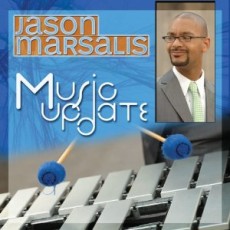
Most recently, Jason has been playing vibraphone, releasing his first album as a leader on vibes in 2009 titled “Music Update”. Earning 4.5 out of 5 stars in Downbeat Magazine, it showcases Jason playing the vibes with his working quartet as well as several over-dubbed drum ensembles titled the “Disciplines”.
Jason also continues to work as a sideman with among others Marcus Roberts, Ellis and Delfeayo Marsalis, John Ellis, Dr. Michael White and Shannon Powell. Along with his father and brothers, he is a recipient of the 2011 NEA Jazz Masters Award and is featured in the non-fiction film on New Orleans jazz culture, “Tradition Is A Temple”.
More Posts: drums,vibraphone
Daily Dose Of Jazz…
Michel Jean Legrand was born February 24, 1932, in Bécon-les-Bruyères outside Paris, France into a musical family. His father Raymond, a conductor and composer best known for the film score “Irma La Douce”. A virtuoso jazz and classical pianist, Michel studied at the Paris Conservatory for nine years from age 11, graduating with top honors as both composer and pianist.
In the early 1950s, Legrand was one of the first Europeans to work with jazz innovators such as Dizzy Gillespie and Stan Getz. While visiting the U.S. in 1958, Legrand collaborated with among others Miles Davis, John Coltrane, Bill Evans, Phil Woods, Ben Webster, Hank Jones and Art Farmer in an album of inventive orchestrations of jazz standards titled “Legrand Jazz”.
The following year he recorded an album of Paris-themed songs arranged for jazz piano trio, titled Paris Jazz Piano and nearly a decade later in 1968, he recorded At Shelly’s Manne-Hole a live trio session with bassist Ray Brown and drummer Shelly Manne, in which four of the compositions were improvised on the spot.
His piano style is reminiscent of Art Tatum, Erroll Garner, Oscar Peterson and Bill Evans from whom he has drawn influence. Throughout a prolific career Legrand has mixed jazz recordings with varied orchestral projects and film and television scores that number well above two hundred.
A number of his songs, including “What Are You Doing the Rest of Your Life”, “Watch What Happens”, “The Summer Knows”, “The Windmills Of Your Mind” and “You Must Believe In Spring” have become jazz standards covered frequently by other artists.
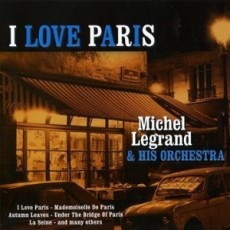
The composer, arranger, conductor, and pianist has won three Oscars out of 13 nominations, five Grammys and has been nominated for an Emmy. His first album “I Love Paris” at age 21 has become one of the best-selling instrumental albums ever released.
Always creative he has conducted orchestras in St. Petersburg, Vancouver, Montreal, Atlanta and Denver; has recorded over 100 albums collaborating with Phil Woods, Ella Fitzgerald, Ray Charles, Lena Horne, Perry Como, Johnny Mathis, Aretha Franklin, Frank Sinatra, Barbra Streisand, Sarah Vaughan, Shirley Bassey and the list grows as he continues to divide his time between America and France.
Daily Dose Of Jazz…
Samuel David “Dave” Bailey was born on February 22, 1926 in Portsmouth, Virginia. He studied drumming in New York City at the Music Center Conservatory following his stint in the Air Force in World War II.
Dave played with Herbie Jones from 1951-53, and later with Johnny Hodges, Charles Mingus, Lou Donaldson, Curtis Fuller, Billy Taylor, Art Farmer, Ben Webster, and Horace Silver. Between 1954 and 1968 he played on several recording sessions led by Gerry Mulligan, and during the 60s he also played with Clark Terry, Kenny Dorham, Lee Konitz, Cal Tjader, Roger Kellaway and Bob Brookmeyer.
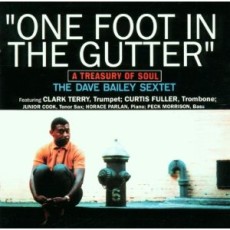
In 1957 and 1958 he performed at the Newport Jazz Festival and appeared in the documentary “Jazz on a Summer’s Day”. He recorded and released “One Foot In The Gutter” in 1960 on the Spanish label Lonehill Jazz. He followed up that recording with another “Gutter” release of the recording “Two Feet In The Gutter”. Although he is not commonly credited for his role in helping popularize the bossa nova in the ’60s, Bailey learned the rhythm while touring South America in 1959 and helped many American drummers master the sound.
A solid swing and bop drummer, Dave retired from music in 1969 and became a flight instructor. From 1973 he worked in music education in New York and among other pursuits, he served as executive director of The Jazzmobile in New York City.
More Posts: drums
Daily Dose Of Jazz…
Henry Threadgill was born February 15, 1944, in Chicago, Illinois and first performed as a percussionist in his high school marching band before taking up the baritone saxophone and later a large portion of the woodwind instruments. He soon settled upon the alto saxophone and flute as his main instruments.
He was one of the original members of the legendary AACM – Association for the Advancement of Creative Musicians in Chicago, working under the guidance of Muhal Richard Abrams before leaving to tour with a gospel band. In 1967, he enlisted in the Army, playing with a rock band in Vietnam through 1968. Discharged in 1969 he returned to Chicago, formed a trio that eventually became “Air”, one of the most celebrated and critically acclaimed avant-garde jazz groups of the 1970s and 1980s.
Threadgill had moved to New York City and began pursuing his own musical visions, exploring musical genres in innovative ways with his first nonet X-75. In the early Eighties, Threadgill created the Henry Threadgill Sextet, his first critically acclaimed ensemble as a leader, with two drummers as a single unit. He has recorded three albums under X-75 for About Time Records, reformed his sextet and released three albums on the Novus label.
Since the 90s Threadgill has continued to compose, create, perform and record music with various group configurations such as “Very Very Circus” and “Zooid” utilizing electric guitars, French horn, Latin percussion, accordion, cello and tuba.
Daily Dose Of Jazz…
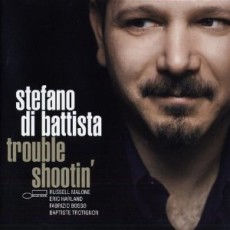
Stefano di Battista was born on February 14, 1969 in Rome Italy. He began studying the saxophone at the age of 13 years in a band made up primarily of boys. It was during this period that he discovered the fun of making music. By the time he was sixteen he had become interested in jazz and the sound of Art Pepper and found his mentor, Massimo Urbani.
Enrolling in The Conservatory, Stefano perfected his technique with classical tradition, graduated with honors and by twenty-one was playing in groups of various configurations. 1992 finds him playing the Calvi Jazz Festival and is invited to perform in Paris. Traveling between Rome and Paris he lands two engagements, is hired to play with the National Jazz Orchestra and his career takes off.
Di Battista put out “Volare”, his debut as a leader in 1997, has toured with the Elvin Jones Jazz Machine as well as performing with Jimmy Cobb, Walter Booker, Nat Adderley, Laurent Cugny, Aldo Romano, Jacky Terrasson and many others. The alto and soprano saxophonist continues to record, perform and tour both as a leader and sideman.
More Posts: saxophone