

Daily Dose Of Jazz…
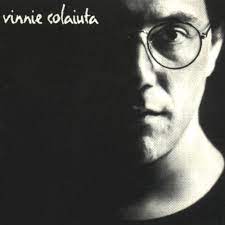
Vincent Peter Colaiuta was born on February 5, 1956 in Brownsville, Pennsylvania and was given his first drum kit when he was seven. He took to it naturally, with little instruction. By fourteen, the school band teacher gave him a book that taught him some of the basics and Buddy Rich was his favorite drummer until he heard the album Ego by Tony Williams, an event that changed his life. He started listening to organ groups, notably Jack McDuff, Jimmy McGriff and Don Patterson.
While matriculating through Berklee College of Music in Boston , Massachusetts at the time jazz fusion was on the rise, he listened to and admired Alphonse Mouzon and Billy Cobham. After leaving school, he played local gigs in Boston, joined a brief tour organized by Al Kooper, then worked in California on an album by Christopher Morris.
Returning to Boston, Colaiuta was drawn back to California by friends and took the bus from Boston to Los Angeles during the blizzard of 1978. After performing in jazz clubs, he won the audition to play drums for Frank Zappa, with whom he toured and appeared on the albums Joe’s Garage, Tinsel Town Rebellion, and Shut Up ‘n Play Yer Guitar.
In 1981, he left Zappa for the gig as a studio musician and recorded for the band Pages, Gino Vannelli, saxophonist Tom Scott, bassist Larry Klein, Joni Mitchell, touring with the latter. The late Eighties saw him as the house drummer for The Late Show Starring Joan Rivers. The band was led by Mark Hudson and was called the Party Boys and the Tramp.
By the end of the 1980s back as a studio musician he was recording albums, doing TV and film work during the day, and playing clubs at night. He worked with jazz musicians Herbie Hancock, Chick Corea, Buell Neidlinger, and the Buddy Rich Big Band. The 1990s he was with Sting, and released his debut solo album as well as two more as a leader.
He has won over fifteen Drummer of the Year awards from Modern Drummer magazine’s annual reader polls. These include ten awards in the “Best Overall” category. He was inducted into the Modern Drummer Hall of Fame in 1996 and the Classic Drummer Hall of Fame in 2014. Colaiuta has won one Grammy Award and has been nominated twice. Drummer Vinnie Colaiuta continues to perform, tour and record.

More Posts: bandleader,drums,history,instrumental,jazz,music

Daily Dose Of Jazz…
Bob Whitlock was born on January 21, 1931 in Roosevelt, Utah and began playing bass as a teenager. After relocating to Los Angeles, California was active as a session musician from the early 1950s. He was heard working with Gerry Mulligan, Art Pepper, Chet Baker, Stan Getz, Buddy DeFranco, Joe Albany, Jack Sheldon, Warne Marsh, and numerous others.
Late in the Fifties decade Bob led his own small group while attending the University of California. He went on to work in France in the early 1960s, playing with Zoot Sims, Vi Redd, Curtis Amy, Peggy Lee and Victor Feldman. Towards the end of the Sixties he worked with Joe Pass and extensively with George Shearing. In the 1970s he worked with Albany once again.
Between 1957 and 1972 he recorded fourteen albums as a sideman, never as a leader. Double-bassist Bob Whitlock transitioned on June 20, 2015 in Long Beach, California
More Posts: bandleader,bass,history,instrumental,jazz,music
Daily Dose Of Jazz…
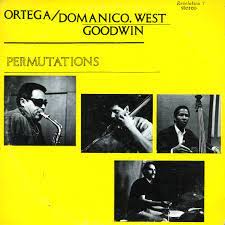
Charles Louis Domanico, better known professionally as Chuck Domanico, was born on January 20, 1944 in Chicago, Illinois. Settling in Los Angeles, California in the mid-1960s, for nearly forty years, he was a central jazz figure in Hollywood who contributed to many movies and TV programs.
Domanico worked with Frank Sinatra, Barbra Streisand, Carmen McRae, Joni Mitchell, Taj Mahal, Diane Schuur, Natalie Cole, and The Manhattan Transfer. He participated in instrumental jazz performances by Chet Baker, Henry Mancini, Shelly Manne, Oliver Nelson, John Klemmer, Roger Kellaway, Barney Kessel, and Art Pepper.
His bass can be heard in themes for television shows like M*A*S*H, Cheers and Frasier, and he contributed to the soundtracks of more than two thousand films.
Double bassist and bass guitarist Chuck Domanico, who played on the West Coast jazz scene, transitioned from lung cancer on October 17, 2002 at the age of 58.
More Posts: bass,bass guitar,history,instrumental,jazz,music

Daily Dose Of Jazz…
Alain Mion was born of French extraction on January 14, 1947 in Casablanca, Morocco but was raised in Paris, France.Influenced by Bobby Timmons, Ray Charles and Les McCann, his style varies between jazz, soul jazz and funky music. By the time he was 19 he formed his own trio and performed at the Blue Note. This subsequently led to him gigging at various festivals with Hank Mobley and Philly Joe Jones.
1974 Alain created the jazz funk group Cortex and recorded a dozen albums before embarking upon a career under his own name in 1982, recording to date eleven albums, such as Pheno-Men, Alain Mion in New York recorded with David Binney and Marc Johnson, and Some Soul Food recorded in Stockholm, Sweden with Patrik Boman and Ronnie Gardiner.
In 2008, he emerged with a new group, Alain Mion FunKey Combo with drums, bass and a saxophone section consisting of Italian and French musicians. He reinvented his new group Alain Mion & The New Cortex with the singer Adeline de Lépinay reprising the role originally performed by Mireille Dalbray on the Troupeau Bleu album.
In the United States, Alain Mion and Cortex’s songs have been sampled by several hip-hop artists including but not limited to Madlib, Fat Joe, DJ Day, MF DOOM, Wiz Khalifa, Curren$y, Mellowhype, Tyler The Creator, Rick Ross, and Lupe Fiasco.
Pianist, composer, arranger, and vocalist Alain Mion continues his exploration of the jazz idiom.
More Posts: arranger,bandleader,composer,history,instrumental,jazz,music,piano,vocal
Daily Dose Of Jazz…
Dannee Fullerton was born January 12, 1944 in Los Angeles, California and at the age of four, moved with his mother to Saudi Arabia, joining his father who worked for the Arabian American Oil Company. By 11, he was enrolled at the Institut Montana Zugerberg, an all boys international school in Switzerland. It was here that drums became a strong influence and his very first drum set was a pair of brushes and a set of bongo drums. Along with singing, Dannee played the guitar and the drums.
At 14, he started a band at the Institut and gave concerts 3 to 4 times a year, something that had never before been accomplished on that campus. By 15 Dannee attended a concert and on the bill was the Gerry Mulligan Quartet and the Benny Goodman Orchestra featuring Gene Krupa playing Sing,Sing,Sing. The effect upon hearing this music caused Fullerton to give away all his rock and roll albums and so he could seriously concentrate on jazz.
During these formative years, he taught himself and others to play Jazz and continued to hold jazz concerts at school. Creating the school’s first jazz club, convincing the Director to allow students to attend jazz concerts, he was able to see concerts by the Oscar Peterson Trio, Ella Fitzgerald, Duke Ellington, Count Basie, Louis Armstrong, J.J. Johnson, Stan Getz, The Modern Jazz Quartet, Ahmed Jamal, Cannonball Adderly, the John Coltrane Quartet and the Dave Brubeck Quartet… Dannee was now hooked on the jazz art form and was intent on learning it.
Graduating from high school, Fullerton attended Berklee College of Music and studied under Alan Dawson, Herb Pomeroy, John La Porta, and Jack Peterson. Later he studied privately with drummer Pete La Roca. He played sessions with Keith Jarrett, Mick Goodrick, Gene Perla, John Abercrombie, Sam Rivers, Sadao Watanabe, Byard Lancaster and other students at the time. He performed with the Keith Jarrett Trio for two years, in his Boston, Massachusetts trio.
Drafted into the US Army during the Vietnam era, he served in various Army bands over the next 24 years, serving in Europe, Korea, Okinawa and many locations within the United States. During his service Dannee performed with Maynard Ferguson, Herb Ellis, The Ink Spots, Bill Watrous, Bill Lohr, “Jazz Express” (Dannee’s own group) John Payne, Don Erdman, Kurt Black, Buddy Tate, Joe Newman, Mike Francis and Curt Warren to name a few.
Retiring from military service in 1989, he settled outside Tacoma, Washington. Drummer Dannee Fullerton, who never recorded professionally, continues to perform locally with Jack Percival, Sid Potter, Tim Eikholt, Tom Russell, Gary Black, Joe Bach, Roger Gard, Pete Lira, Bob McNamara, Ken Upton and Lance Buller, among others.
More Posts: bandleader,drums,history,instrumental,jazz,music