

Daily Dose Of Jazz…
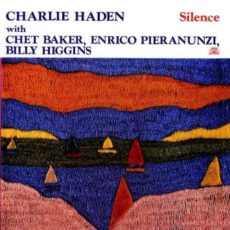
Charles Edward Haden was born on August 6, 1937 in Shenandoah, Iowa into a musical family who performed on the Haden Family radio show. He made his professional debut as a singer on the radio show when he was just two years old. He continued singing with his family until he was 15 but a bulbar form of polio affecting his throat and facial muscles sidelined him but a year earlier he had become interested in jazz after hearing Charlie Parker and Stan Kenton in concert.
Recovering from his bout with polio, Charlie began concentrating on the bass and soon set his sights on moving to Los Angeles, California to pursue his dream of becoming a jazz musician and in 1957 he realized his dream turning down a full scholarship at Oberlin College, which had no established jazz program at the time and attended Westlake College of Music.] His first recordings were made that year with Paul Bley, with whom he worked until 1959. He also played with Art Pepper for four weeks in 1957, and from 1958 to 1959, with Hampton Hawes whom he met through his friendship with bassist Red Mitchell and for a time shared an apartment with the bassist Scott LaFaro.
In May 1959, he recorded his first album with the Ornette Coleman Quartet, the seminal The Shape of Jazz to Come. Later that year, the Ornette Coleman Quartet moved to New York City, secured a six-week residency at the Five Spot Café that would represent the beginnings of free or avant-garde jazz.
By 1960, Haden’s narcotics addiction forced him to leave Coleman’s band, go into rehabilitation in 1963 in California, met his first wife and moved to the Upper West Side of New York City. He resumed his career in 1964, working with John Handy, Denny Zeitlin’s trio, performed with Archie Shepp in California and Europe and freelanced with Henry “Red” Allen, Pee Wee Russell, Attila Zoller, Bobby Timmons, Tony Scott, the Thad Jones/Mel Lewis Orchestra, Roswell Rudd, and returned to Ornette Coleman’s group in 1967.
Charlie went on to work with Keith Jarrett’s trio and his American Quartet, organized the collective Old and New Dreams, which consisted of Don Cherry, Dewey Redman, and Ed Blackwell from Coleman’s band. He founded his first band, the Liberation Music Orchestra at the height of the Vietnam War, working with arranger Carla Bley, exploring free jazz and political music. The original lineup consisted of Haden and Bley and Gato Barbieri, Dewey Redman, Paul Motian, Don Cherry, Andrew Cyrille, Mike Mantler, Roswell Rudd, Bob Northern, Howard Johnson and Sam Brown.
Over the course of his half-century career he established the Jazz Studies Program at California Institute of the Arts in Valencia, been honored as Jazz Educator of the Year and as a leader has won several Grammy Awards, recorded forty-six albums as well as 134 albums as a sideman with Geri Allen, Ray Anderson, Ginger Baker, Bill Frisell, Kenny Barron, Beck, Paul Bley, Jane Ira Bloom, Michael Brecker, Henry Butler, Alice Coltrane, John Coltrane, Robert Downey Jr., Dizzy Gillespie, Jim Hall, Tom Harrell, Joe Henderson, Fred Hersch, Laurence Hobgood, Rickie Lee Jones, Lee Konitz, Brad Mehldau, David Liebman, Abbey Lincoln, Helen Merrill, Pat Metheny, Bheki Mseleku, Yoko Ono, Joe Pass, Enrico Pieranunzi, Joshua Redman, Gonzalo Rubalcaba, John Scofield, Wadada Leo Smith, Ringo Starr and Masahiko Togashi.
Double bassist, bandleader, composer, educator and NEA Jazz Master Charlie Haden, who revolutionized the harmonic concept of bass playing in jazz passed away in Los Angeles, California on July 11, 2014, at the age of 76 after suffering from effects of post-polio syndrome and complications from liver disease.

Take A Dose On The Road

More Posts: bass
Daily Dose Of Jazz…
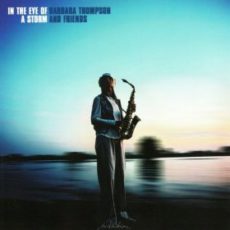
Barbara Gracey Thompson was born on July 27, 1944 in Oxford, United Kingdom. She studied clarinet, flute, piano and classical composition at the Royal College of Music, but it was the music of Duke Ellington and John Coltrane that caused her to shift her interests to jazz and saxophone.
Around 1970, Thompson she joined Neil Ardley’s New Jazz Orchestra and appeared on albums by Colosseum. Starting in 1975, she was a founding member of three bands, the first being the United Jazz and Rock Ensemble, with bandleaders Wolfgang Dauner, Volker Kriegel, Albert Mangelsdorff, Eberhard Weber, Ian Carr, Charlie Mariano, Ack van Rooyen and Jon Hiseman. The second was Barbara Thompson’s Jubiaba, a 9 piece Latin/rock band with Peter Lemer, Roy Babbington, Henry Lowther, Ian Hamer, Derek Wadsworth, Trevor Tomkins, Bill Le Sage and Glyn Thomas. The third, Barbara Thompson’s Paraphernalia, is her current working band with pianist Peter Lemer, vocalist Billy Thompson, bassist Dave Ball and Jon Hiseman on drums.
She was awarded the MBE in 1996 for services to music but due to her being diagnosed with Parkinson’s disease in 1997, she retired as an active saxophonist in 2001 with a farewell tour. Barbara went on to work exclusively as a composer exclusively, but returned to the stage in 2003 replacing the unwell Dick Heckstall-Smith during Colosseum’s “Tomorrow’s Blues” tour becoming a permanent member, and in 2005 she performed live with Paraphernalia in their “Never Say Goodbye” tour.
Thompson has worked with Andrew Lloyd Webber on musicals such as Cats, Starlight Express and Requiem. She has written several classical compositions, music for film and television, a musical of her own and has composed songs for her big band Moving Parts.
Sponsored By

www.whatissuitetabu.com
Daily Dose Of Jazz…
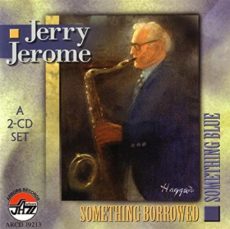
Jerry “Buck” Jerome was born on June 19, 1912 in Brooklyn, New York and began playing the saxophone in high school in Plainfield, New Jersey. In 1936 he was part of a national tour with bandleader Harry Reser and his Clicquot Club Eskimos.
He joined Glenn Miller’s original orchestra in 1937 and was a member until it broke up in 1938. He played on the Miller recording Doin’ the Jive in which in soloed. He then joined the Red Norvo band followed by taking a chair in the Benny Goodman Orchestra in 1938.
When Goodman broke up his band in 1940, Buck joined the Artie Shaw Orchestra. While with Shaw he appeared in the 1940 film Second Chorus starring Fred Astaire and Burgess Meredith.
Tenor saxophonist Jerry Jerome, who was a mainstay during the big band era and led four recording sessions, passed away on November 17, 2001.
Sponsored By


More Posts: saxophone
Daily Dose Of Jazz…
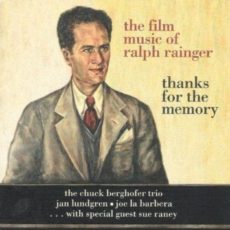
Chuck Berghofer was born Charles Curtis Berghofer on June 14, 1937 in Denver, Colorado. His interest in music began early coming from his grandfather who played with John Philip Sousa and his uncle who played tuba with the St. Louis Symphony. At eight he played trum and tuba in grade school until settling on the bass at the age of eighteen.
As a young adult he began venturing out to jazz clubs, gained an admiration to Ralph Peña and convinced him to take him on as a student. Berghofer played in high school trumpet and tuba and moved at eighteen to the double bass. Heavily influenced by Leroy Vinnegar, Paul Chambers and Ray Brown, he also admired the work of Scott LaFaro.
He went on to play with the Skinnay Ennis Orchestra, then joined Bobby Troup, Pete Jolly, Nick Martinis, Shelly Manne, Jack Sheldon, Conte Candoli, Frank Rosolino, Rahsaan Roland Kirk, Philly Joe Jones and was a member of the Abnuceals Emuukha Electric Symphony Orchestra.
He had a lengthy career in film, Berghofer, was also quite accomplished as a house jazz musician forming a semi-regular house band at Donte’s in Los Angeles with pianist Frank Strazzeri and drummer Nick Ceroli. They played with Roger Kellaway, Larry Bunker, Zoot Sims, Ray Charles, Bob Cooper, Ella Fitzgerald, Stan Getz, Peggy Lee, Shelly Manne, Gerry Mulligan, Art Pepper, Frank Rosolino, Carmen McRae, Seth MacFarlane, Barbra Streisand, Glen Campbell, Mel Torme and Frank Sinatra. Double bassist Chuck Berghofer continues to perform and record.
Inspire A Young Mind
More Posts: bass

Daily Dose Of Jazz…
Attila Cornelius Zoller was born on June 13, 1927 in Visegrád, Hungary and as a child was taught classical violin by his father, who was a professional violinist. By his teens, he switched to flugelhorn, then bass, and finally guitar.
Quitting school during the Russian occupation of Hungary following World War II, Attila began playing professionally in Budapest jazz clubs. He escaped Hungary in 1948 just before the permanent Soviet blockade of the country and began his serious music career after moving to Vienna in 1948. He formed a jazz group with accordionist and vibraphonist Vera Auer.
In 1954 Zoller left Austria for Germany in 1954, where he played with pianist Jutta Hipp, saxophonist Hans Koller and trombonist Albert Mangelsdorff. He was encouraged by Oscar Pettiford and Lee Konitz to move to America and did so in 1959 after winning a scholarship to the Lenox School of Jazz. There he studied with Jim Halland, roomed with Ornette Coleman and Don Cherry, whose influence sparked Zoller’s interest in free jazz.
Attila would go on to play and record with Chico Hamilton, Benny Goodman and Herbie Mann, Shirley Scott, Cal Tjader, Tony Scott, Jimi Hendrix, Stan Getz, Fred Nelson, Red Norvo, Jimmy Raney, Dave Pike, Herbie Hancock and Ron Carter, among others.
Zoller was the founding president of the Vermont Jazz Center (1985) where he also taught music until 1998. In 1995, he received the Lifetime Achievement Award from the New England Foundation for the Arts for his lifelong musical contribution to jazz. He was also a designer of musical instruments, patenting a bi-directional pickup for guitars in 1971 and helping to design his own signature line of guitars with different companies.
Guitarist Attila Zoller passed away on January 25, 1998 in Townshend, Vermont. He recorded more than two-dozen albums as a leader with Martial Solal, Hans Koller, Barre Phillips, Santi Debriano, Yoron Israel, Lee Konitz and Larry Willis among numerous others.
Enja Records released the tribute album of his music, Message To Attila in 2015 with Ron Carter, John Abercrombie, Mike Stern, Peter Bernstein, Pat Metheny, Jim Hall, Gene Bertoncini. He was awarded the Deutscher Filmpreis for Beste Filmmusik (best score) in Germany for the film Das Brot der frühen Jahre in 1962 and the Lifetime Achievement Award from the New England Foundation for the Arts.
Sponsored By
www.whatissuitetabu.com
More Posts: guitar